CAS 4290-13-5
:Santamarín
Descrizione:
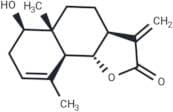
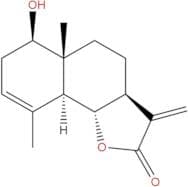
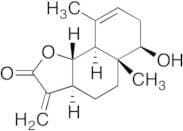
Santamarín, con il numero CAS 4290-13-5, è un composto chimico classificato come una lattone sesquiterpenica. È principalmente derivato da varie specie vegetali, in particolare quelle della famiglia Asteraceae. Santamarín è noto per il suo sapore amaro distintivo ed è spesso associato a determinate proprietà medicinali. Il composto presenta attività anti-infiammatorie e antimicrobiche, rendendolo di interesse nella ricerca farmacologica. La sua struttura presenta un anello di lattone, che contribuisce alla sua attività biologica. Santamarín si trova tipicamente in basse concentrazioni negli estratti vegetali e può essere utilizzato nelle pratiche di medicina tradizionale. Tuttavia, a causa della sua potenziale tossicità a dosi più elevate, si consiglia cautela nel considerare il suo uso. Le caratteristiche di solubilità del composto possono variare, risultando spesso più solubile nei solventi organici che in acqua. In generale, Santamarín rappresenta un'area affascinante di studio all'interno della chimica dei prodotti naturali, con ricerche in corso che esplorano il suo potenziale terapeutico e i meccanismi d'azione.
Formula:C15H20O3
InChI:InChI=1/C15H20O3/c1-8-4-5-11(16)15(3)7-6-10-9(2)14(17)18-13(10)12(8)15/h4,10-13,16H,2,5-7H2,1,3H3/t10-,11+,12+,13-,15-/m0/s1
InChI key:InChIKey=PLSSEPIRACGCBO-PFFFPCNUSA-N
SMILES:C[C@]12[C@@]([C@@]3([C@@](CC1)(C(=C)C(=O)O3)[H])[H])(C(C)=CC[C@H]2O)[H]
Sinonimi:- (3aS,5aR,6R,9aS,9bS)-3a,4,5,5a,6,7,9a,9b-Octahydro-6-hydroxy-5a,9-dimethyl-3-methylenenaphtho[1,2-b]furan-2(3H)-one
- Balchanin
- Eudesma-3,11(13)-dien-12-oic acid, 1β,6α-dihydroxy-, γ-lactone
- Naphtho(1,2-b)furan-2(3H)-one, 3a,4,5,5a,6,7,9a,9b-octahydro-6-hydroxy-5a,9-dimethyl-3-methylene-, (3aS,5aR,6R,9aS,9bS)-
- Naphtho[1,2-b]furan-2(3H)-one, 3a,4,5,5a,6,7,9a,9b-octahydro-6-hydroxy-5a,9-dimethyl-3-methylene-, [3aS-(3aα,5aβ,6β,9aα,9bβ)]-
- Santamarin
- Santamarine
- (3aS,5aR,6R,9aS,9bS)-6-hydroxy-5a,9-dimethyl-3-methylidene-4,5,6,7,9a,9b-hexahydro-3aH-benzo[g][1]benzofuran-2-one
- (3aS,5aR,6R,9aS,9bS)-6-hydroxy-5a,9-dimethyl-3-methylene-4,5,6,7,9a,9b-hexahydro-3aH-benzo[g]benzofuran-2-one
- (3aS)-2,3,3aβ,4,5,5a,6,7,9aβ,9bα-Decahydro-6α-hydroxy-5aα,9-dimethyl-3-methylenenaphtho[1,2-b]furan-2-one
Ordinare per
Purezza (%)
0
100
|
0
|
50
|
90
|
95
|
100
5 prodotti.
Santamarine
CAS:Santamarine has significant anticancer activity, can inhibit L1210 cells because of its cytotoxic,cytostatic and blocking mitosis and reducing uptake ofFormula:C15H20O3Purezza:98%Colore e forma:SolidPeso molecolare:248.32Santamarine
CAS:Applications Santamarine is a sesquiterpene lactone shows anticancer properties by inhibiting proliferation and inducing apoptosis.
References Mehmood, T., et al.: J. Cancer, 8, 1-11 (2017)Formula:C15H20O3Colore e forma:NeatPeso molecolare:248.32Santamarine
CAS:Santamarine is a bioactive compound, specifically a sesquiterpene lactone, which is derived from marine organisms, often isolated from certain species of marine algae or fungi. Its mode of action primarily involves interfering with microbial cell membranes and metabolic pathways, resulting in the inhibition of microbial growth and replication. This compound has demonstrated significant potential in scientific research, especially for its antimicrobial and anticancer properties. It is often employed in studies aimed at understanding microbial resistance mechanisms, drug development, and exploring novel therapeutic approaches. With its marine origin, Santamarine provides insights into unique biological processes and interactions that are not typically observed with terrestrial compounds, making it a valuable subject of study in both pharmacological and biochemical research contexts.Formula:C15H20O3Purezza:Min. 95%Colore e forma:PowderPeso molecolare:248.32 g/mol