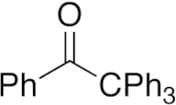
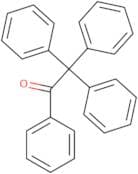
CAS 466-37-5
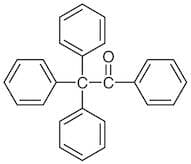
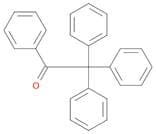
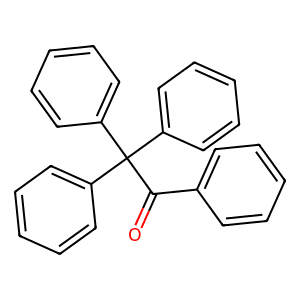
:1,2,2,2-Tetrafeniletilchetone
- β-Benzopinacolone
- Acetophenone, 2,2,2-triphenyl-
- Ethanone, tetraphenyl-
- Ethanone, 1,2,2,2-tetraphenyl-
- 1,2,2,2-Tetraphenylethanone
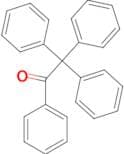
2,2,2-Triphenylacetophenone
CAS:Formula:C26H20OPurezza:>99.0%(GC)Colore e forma:White to Almost white powder to crystalPeso molecolare:348.452,2,2-Triphenylacetophenone
CAS:Formula:C26H20OPurezza:99%Colore e forma:SolidPeso molecolare:348.4364Ref: 10-F101515
1gPrezzo su richiesta5gPrezzo su richiesta25gPrezzo su richiesta100gPrezzo su richiesta2,2,2-Triphenylacetophenone
CAS:Prodotto controllatoApplications 2,2,2-Triphenylacetophenone is an endocrine disrupter that is medicated through estrogen receptors.
References Roncaglioni, A., et al.: SAR. QSAR. Environ. Res., 19, 697 (2008); Kuzmanich, G., et al.: Photochem. Photobiol., 10, 1731 (2011);Formula:C26H20OColore e forma:NeatPeso molecolare:348.452,2,2-Triphenylacetophenone
CAS:2,2,2-Triphenylacetophenone (TPAP) is an insoluble organic compound that is soluble in organic solvents. It can be prepared from phenol by the reaction of acetophenone with benzoyl chloride. TPAP has a high dielectric constant and is used as a solvent for polymers. This compound is also used as a hydrogen bond acceptor in the functional theory of acids and bases. The chemical structure of TPAP contains two electron-donating nitrogens that form a hydrogen bond with the anions found in polar solvents such as water or alcohols. These bonds are often responsible for the solubility of TPAP in these solvents. In addition, TPAP's functional groups allow it to participate in many organic reactions, including nucleophilic substitution reactions and oxidation reactions that produce chlorine atoms as byproducts.
Formula:C26H20OPurezza:Min. 95%Peso molecolare:348.44 g/mol