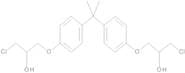
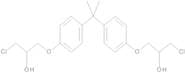
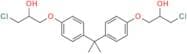
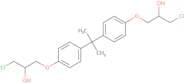
![1,1'-[propane-2,2-diylbis(benzene-4,1-diyloxy)]bis(3-chloropropan-2-ol)](/_next/image/?url=https%3A%2Fstatic.cymitquimica.com%2Fcas-image%2Fthumb-webp%2F308896-11-propane-22-diylbis-benzene-41-diyloxy-bis-3-chloropropan-2-ol.webp&w=3840&q=75)
CAS 4809-35-2
:1,1'-[propano-2,2-diylbis(benzene-4,1-diyloxi)]bis(3-cloropropan-2-olo)
Bisphenol A-bis(3-chloro-2-hydroxypropyl) ether
CAS:Formula:C21H26Cl2O4Colore e forma:NeatPeso molecolare:413.33Ref: 4Z-B-121011
5mgPrezzo su richiesta10mgPrezzo su richiesta25mgPrezzo su richiesta50mgPrezzo su richiesta100mgPrezzo su richiestaBisphenol A bis(3-chloro-2-hydroxypropyl) Ether
CAS:Prodotto controllatoApplications The epoxy resin bisphenol A diglycidyl ether (BADGE), its hydrolysis products and a chlorohydrin of BADGE (BADGE·2HCl), have been examined for their genotoxicity in the micronucleus test and mutagenicity in the Ames Salmonella assay.
References Suarez, S., et al.: Mutat. Res, 470, 221-228 (2000); Sueiro, R., et al.: Mutagenesis,16, 303-307 (2001).Formula:C21H26Cl2O4Colore e forma:White To Off-WhitePeso molecolare:413.33Ref: ST-EA-CP-B434004
10mgPrezzo su richiesta25mgPrezzo su richiesta50mgPrezzo su richiesta100mgPrezzo su richiestaBisphenol A bis(3-chloro-2-hydroxypropyl) ether
CAS:Bisphenol A bis(3-chloro-2-hydroxypropyl) ether is a chemical that has been used as an industrial solvent and as a coating for metals. It can be used in the production of plastics, including polycarbonates, epoxy resins, and polyesters. It can also be found in some food packaging. This chemical is also used to manufacture pesticides and other chemicals. Analytes such as bisphenol A are detected using liquid chromatography with photodiode array detection (LC-PDA). In this technique, analytes are separated by a mobile phase that flows through the column at a constant rate. The components of the mobile phase react with the analyte to produce charged ions which are then detected by the photodiode array detector. Bisphenol A bis(3-chloro-2-hydroxypropyl) ether is monitored using reaction monitoring or irradiation techniques. Reaction monitoring involves mixing the sample with an internal standard
Formula:C21H26Cl2O4Purezza:Min. 95%Peso molecolare:413.33 g/mol