CAS 481-74-3
:Crisofanolo
Descrizione:
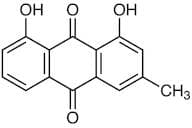
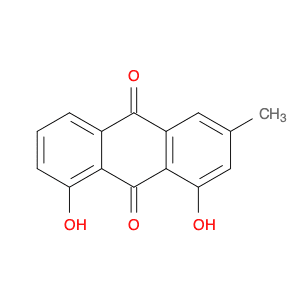
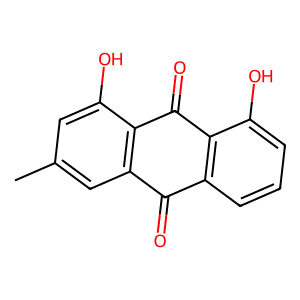
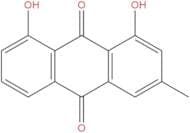
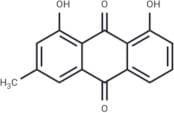
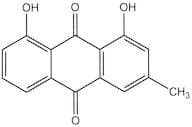
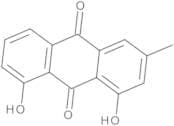
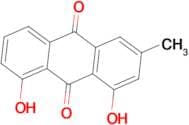
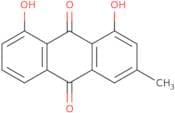
Crisofanolo, con il numero CAS 481-74-3, è un composto di antraquinone che si trova naturalmente principalmente in varie piante, tra cui il rabarbaro e alcune specie del genere Rheum. Presenta un aspetto cristallino giallo-arancione ed è noto per le sue potenziali proprietà terapeutiche, comprese attività anti-infiammatorie, antimicrobiche e anticancro. Crisofanolo è solubile in solventi organici come etanolo e acetone, ma ha una solubilità limitata in acqua. La sua struttura chimica presenta un gruppo idrossile, che contribuisce alla sua attività biologica e reattività. Oltre alle sue proprietà medicinali, Crisofanolo è studiato anche per il suo ruolo come colorante e pigmento in varie applicazioni. A causa della sua natura bioattiva, ha suscitato interesse nella ricerca farmacologica, sebbene siano necessari ulteriori studi per comprendere appieno i suoi meccanismi d'azione e le potenziali applicazioni in medicina. Come molte antraquinone, Crisofanolo può anche mostrare effetti citotossici, richiedendo una considerazione attenta nei contesti terapeutici.
Formula:C15H10O4
InChI:InChI=1S/C15H10O4/c1-7-5-9-13(11(17)6-7)15(19)12-8(14(9)18)3-2-4-10(12)16/h2-6,16-17H,1H3
InChI key:InChIKey=LQGUBLBATBMXHT-UHFFFAOYSA-N
SMILES:O=C1C=2C(C(=O)C=3C1=CC=CC3O)=C(O)C=C(C)C2
Sinonimi:- 1,8-Dihidroxi-3-Metilantraquinona
- 1,8-Dihydroxy-3-Methylanthracene-9,10-Dione
- 1,8-Dihydroxy-3-Methylanthraquinone
- 1,8-Dihydroxy-3-methyl-9,10-anthracenedione
- 1,8-Dihydroxy-3-methyl-9,10-anthraquinone
- 1,8-Dihydroxy-3-methyl-anthraquinone
- 1,8-Dihydroxy-3-methylanthrachinon
- 2-Methyl-4,5-dihydroxyanthraquinone
- 3-Methyl-1,8-dihydroxyanthraquinone
- 3-Methylchrysazin
- 4,5-Dihydroxy-2-methylanthraquinone
- 9,10-Anthracenedione, 1,8-dihydroxy-3-methyl-
- Anthraquinone, 1,8-dihydroxy-3-methyl-
- Chrysophanic acid
- Nsc 37132
- Nsc 646567
- Turkey Rhubarb
- Vedi altri sinonimi
Ordinare per
Purezza (%)
0
100
|
0
|
50
|
90
|
95
|
100
13 prodotti.
Chrysophanic Acid
CAS:Formula:C15H10O4Purezza:>98.0%(T)(HPLC)Colore e forma:Light yellow to Brown powder to crystalPeso molecolare:254.24Chrysophanol
CAS:Chrysophanol analytical standard provided with w/w absolute assay, to be used for quantitative titration.Formula:C15H10O4Purezza:(HPLC) ≥99%Colore e forma:PowderPeso molecolare:254.25Chrysophanol
CAS:Chrysophanol has anti-inflammatory activity through the suppression of NF-κB/caspase-1 activation in vitro and in vivo.Formula:C15H10O4Purezza:95%~99%Colore e forma:Yellow powderPeso molecolare:254.241Chrysophanol
CAS:Chrysophanol (Turkey Rhubarb) is an EGFR/mTOR pathway inhibitor, which can be found in rhubarb, and sorrel.Formula:C15H10O4Purezza:99.44% - 99.91%Colore e forma:Physical Description Golden Yellow Plates Or Brown Powder Melting Point 196°CPeso molecolare:254.24Chrysophanol
CAS:Formula:C15H10O4Purezza:≥ 98.0%Colore e forma:Orange to yellow or yellow-brown powder or crystalsPeso molecolare:254.24Ref: 4Z-C-402001
5mgPrezzo su richiesta10mgPrezzo su richiesta25mgPrezzo su richiesta50mgPrezzo su richiesta100mgPrezzo su richiestaChrysophanol
CAS:QuinoneFormula:C15H10O4Purezza:≥ 95.0 % (HPLC)Colore e forma:PowderPeso molecolare:254.24Chrysophanic Acid
CAS:Applications A topical ointment used in the treatment of dermal conditions such as eczema and herpes.
References McDougall, G., et al.: Food Chem., 119, 758 (2009), Lu, B., et al.: Phytochem. Anal., 20, 385 (2009), Liang, X., et al.: J. Pharm. Biomed. Anal., 51, 565 (2010),Formula:C15H10O4Colore e forma:NeatPeso molecolare:254.24Chrysophanic acid
CAS:Chrysophanic acid is a naturally occurring anthraquinone compound, which is typically extracted from plants such as rhubarb and senna. It is commonly found in species within the Polygonaceae family. This compound functions primarily through mechanisms that involve modulating cellular pathways, possessing anti-inflammatory, antimicrobial, and potential anticancer properties.
Formula:C15H10O4Purezza:Min. 95 Area-%Colore e forma:PowderPeso molecolare:254.24 g/mol