CAS 486-56-6
:Cotinina
Descrizione:
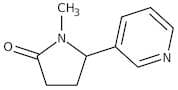
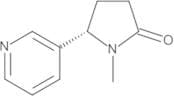
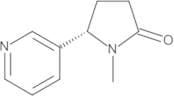
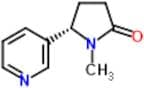
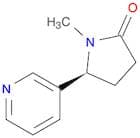
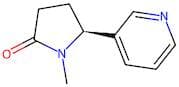
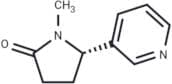
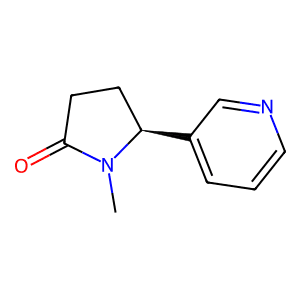
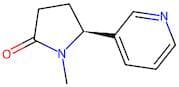
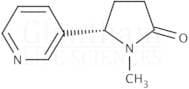
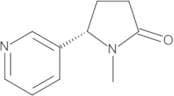
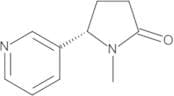
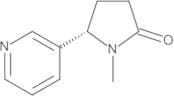
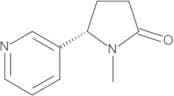
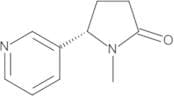
Cotinina è un alcaloide che si verifica naturalmente ed è un metabolita principale della nicotina, trovato principalmente nel tabacco. È classificato come un derivato della piridina e ha una formula molecolare di C10H12N2O. Cotinina è tipicamente un liquido incolore o giallo pallido con un odore caratteristico ed è solubile in acqua, alcol e solventi organici. La sua struttura presenta un anello di piridina, che contribuisce alle sue proprietà farmacologiche. Cotinina è spesso utilizzato come biomarcatore per l'esposizione al tabacco a causa della sua emivita relativamente lunga rispetto alla nicotina, rendendolo utile negli studi relativi alla cessazione del fumo e all'uso di tabacco. La sostanza mostra effetti psicoattivi lievi ed è stata studiata per le sue potenziali applicazioni terapeutiche, comprese le proprietà neuroprotettive. Inoltre, Cotinina è stato indagato per il suo ruolo nella modulazione degli effetti della nicotina sul sistema nervoso centrale. I dati di sicurezza indicano che Cotinina ha bassa tossicità, ma i suoi effetti possono variare in base al dosaggio e alla sensibilità individuale.
Formula:C10H12N2O
InChI:InChI=1S/C10H12N2O/c1-12-9(4-5-10(12)13)8-3-2-6-11-7-8/h2-3,6-7,9H,4-5H2,1H3/t9-/m0/s1
InChI key:InChIKey=UIKROCXWUNQSPJ-VIFPVBQESA-N
SMILES:CN1[C@@H](CCC1=O)C=2C=CC=NC2
Sinonimi:- (5R)-1-methyl-5-(pyridin-3-yl)pyrrolidin-2-one
- (5S)-1-Methyl-5-(3-pyridinyl)-2-pyrrolidinone
- (5S)-1-Methyl-5-pyridin-3-ylpyrrolidin-2-one
- (5S)-1-methyl-5-(pyridin-3-yl)pyrrolidin-2-one
- (S)-(-)-1-Methyl-5-(3-pyridyl)-2-pyrrolidinone
- (S)-Cotinine
- 2-Pyrrolidinone, 1-methyl-5-(3-pyridinyl)-, (5S)-
- 2-Pyrrolidinone, 1-methyl-5-(3-pyridinyl)-, (S)-
- Cotinin
- Cotinina
- Nih 10498
- Cotinine
- Vedi altri sinonimi
Ordinare per
Purezza (%)
0
100
|
0
|
50
|
90
|
95
|
100
(-)-Cotinine, 98%
CAS:(-)-Cotinine is used to activate a subpopulation of 3/ 62 nAChRs in monkey striatum. It binds nicotinic- and muscarinic-type acetylcholine receptors with minimal receptor desensitization and demonstrates antipsychotic drug-like properties in behavioral models, neuroprotective properties in neurodegeFormula:C10H12N2OPurezza:98%Colore e forma:White to cream to yellow to pale brown, Fused solid : Clear liquid as meltPeso molecolare:176.22Nicotine Related Compound C ((S)-1-methyl-5-(pyridin-3-yl)pyrrolidin-2-one)
CAS:Vegetable alkaloids, natural or reproduced by synthesis, their salts and other derivatives, nesoiFormula:C10H12N2OColore e forma:White Off-White PowderPeso molecolare:176.09496Cotinine, 10mM (in DMSO)
CAS:Cotinine, 10mM (in DMSO)Formula:C10H12N2OPurezza:≥98%Peso molecolare:176.22Cotinine
CAS:Cotinine (NIH-10498) is an alkaloid found in tobacco and is also the predominant metabolite of nicotine.Formula:C10H12N2OPurezza:98% - 99.94%Colore e forma:Viscous Oil SolidPeso molecolare:176.22Ref: 54-BUP11231
25mgPrezzo su richiesta50mgPrezzo su richiesta100mgPrezzo su richiesta500mgPrezzo su richiestaS-(-)-Cotinine
CAS:S-(-)-CotinineFormula:C10H12N2OPurezza:≥95%Colore e forma: pale orange low melting solidPeso molecolare:176.22g/molCotinine (Nicotine EP Impurity C, Nicotine USP Related Compound C)
CAS:Formula:C10H12N2OColore e forma:Colorless LiquidPeso molecolare:176.22(-)-Cotinine 100 µg/mL in Acetonitrile
CAS:Formula:C10H12N2OColore e forma:Single SolutionPeso molecolare:176.22(5S)-1-Methyl-5-(pyridin-3-yl)pyrrolidin-2-one ((-)-Cotinine)
CAS:Prodotto controllatoFormula:C10H12N2OColore e forma:NeatPeso molecolare:176.22Ref: ST-EA-CP-N8003
10mgPrezzo su richiesta25mgPrezzo su richiesta50mgPrezzo su richiesta100mgPrezzo su richiestaS-(-)-Cotinine
CAS:Prodotto controllatoStability Hygroscopic
Applications S-(-)-Cotinine is a major metabolite of Nicotine (N412450) in humans. It is a carcinogen.This compound is a contaminant of emerging concern (CECs)
References Thompson, J.A., et al.: J. Chromatog., 231, 53 (1982); Seeman, J.I., et al.: J. Org. Chem., 51, 1548 (1986); Nakajima, M., et al.: Drug Metab. Dispos., 24, 1212 (1996)Formula:C10H12N2OColore e forma:NeatPeso molecolare:176.22(S)-1-Methyl-5-(pyridin-3-yl)pyrrolidin-2-one
CAS:Formula:C10H12N2OPurezza:≥98%Peso molecolare:176.219S-(-)-Cotinine (1 mg/mL in Methanol)
CAS:Formula:C10H12N2OColore e forma:Single SolutionPeso molecolare:176.22