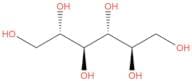
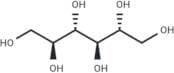
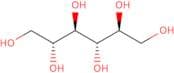
CAS 488-44-8
:Allitol
Descrizione:
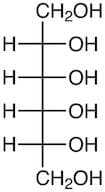
Allitol, con il numero CAS 488-44-8, è un alcol zuccherino derivato dalla riduzione degli zuccheri, specificamente dal mannitolo. È un solido cristallino bianco solubile in acqua, rendendolo adatto per varie applicazioni nelle industrie alimentari e farmaceutiche. Allitol è noto per il suo sapore dolce, simile a quello del saccarosio, ma ha un valore calorico inferiore, rendendolo una scelta popolare come sostituto dello zucchero in prodotti a basso contenuto calorico e senza zucchero. Inoltre, presenta proprietà umettanti, aiutando a trattenere l'umidità nei prodotti alimentari. Allitol non è cariogeno, il che significa che non contribuisce alla carie dentale, aumentando il suo fascino come dolcificante. Il suo profilo di sicurezza è generalmente considerato favorevole, con effetti collaterali gastrointestinali minimi rispetto ad altri alcoli zuccherini. In generale, Allitol funge da ingrediente versatile in varie formulazioni, contribuendo sia con dolcezza che con benefici funzionali.
Formula:C6H14O6
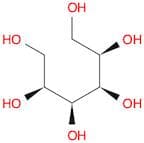
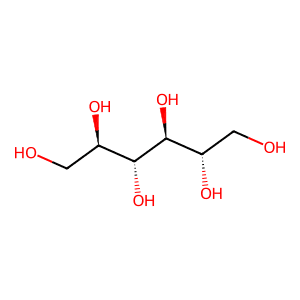
InChI:InChI=1/C6H14O6/c7-1-3(9)5(11)6(12)4(10)2-8/h3-12H,1-2H2/t3-,4+,5-,6+
InChI key:InChIKey=FBPFZTCFMRRESA-FBXFSONDNA-N
SMILES:[C@@H]([C@@H]([C@@H](CO)O)O)([C@H](CO)O)O
Sinonimi:- Allit
- Allodulcit
- Allodulcitol
- Allitol
Ordinare per
Purezza (%)
0
100
|
0
|
50
|
90
|
95
|
100
7 prodotti.
Allitol
CAS:Formula:C6H14O6Purezza:>98.0%(GC)Colore e forma:White to Almost white powder to crystalPeso molecolare:182.17Allitol
CAS:Allitol (d-allitol) is a substrate for the production of L-form ketoses and aldoses.Formula:C6H14O6Purezza:98% - 99.89%Colore e forma:SolidPeso molecolare:182.17Allitol
CAS:Allitol is a sugar alcohol that is used as a sweetener. It can be found naturally in some fruits and vegetables, but it can also be produced by hydrogenation of xylose. Allitol is metabolized by the liver and has been shown to inhibit fatty acid synthesis. It also has insulin-resistance effects, which may be due to its ability to inhibit the conversion of glucose into fatty acids. Allitol has been shown to decrease the levels of hydrochloric acid in the stomach, which may lead to an increase in gastric pH. Allitol will react with strong bases such as sodium hydroxide or potassium hydroxide to form d-talitol and polycarboxylic acid, respectively. Magnetic resonance spectroscopy (MRS) can be used to study the biochemical properties of allitol because it has a unique magnetic resonance spectrum (MRS).Formula:C6H14O6Purezza:Min. 98 Area-%Colore e forma:PowderPeso molecolare:182.17 g/mol