CAS 491-11-2
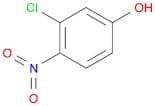
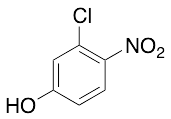
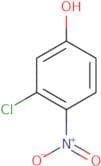
:3-Cloro-4-nitrofenolo
Descrizione:
3-Cloro-4-nitrofenolo, con il numero CAS 491-11-2, è un composto organico che presenta sia un gruppo cloro che un gruppo nitro attaccati a un anello fenolico. Questo composto è caratterizzato dalla sua forma solida cristallina di colore giallo pallido e ha una formula molecolare di C6H4ClN O3. Mostra un punto di fusione che tipicamente rientra in un intervallo specifico, indicando il suo stato solido in condizioni standard. La presenza dei gruppi cloro e nitro contribuisce alla sua reattività e lo rende un intermedio utile nella sintesi organica, in particolare nella produzione di coloranti, prodotti farmaceutici e agrochimici. 3-Cloro-4-nitrofenolo è anche noto per il suo potenziale impatto ambientale e tossicità, richiedendo una manipolazione e uno smaltimento accurati. La sua solubilità nei solventi organici, insieme a una solubilità limitata in acqua, riflette la sua natura idrofobica. Inoltre, può subire varie reazioni chimiche, comprese sostituzioni nucleofile e riduzioni, rendendolo un composto versatile nella ricerca chimica e nelle applicazioni industriali.
Formula:C6H4ClNO3
InChI:InChI=1/C6H4ClNO3/c7-5-3-4(9)1-2-6(5)8(10)11/h1-3,9H
InChI key:InChIKey=DKTRZBWXGOPYIX-UHFFFAOYSA-N
SMILES:N(=O)(=O)C1=C(Cl)C=C(O)C=C1
Sinonimi:- 2-Chloro-4-hydroxynitrobenzene
- 3-Chlor-4-nitrobenzolol
- Phenol, 3-Chloro-4-Nitro-
- 3-Chloro-4-nitrophenol
- 3-Chlor-4-nitrophenol
- 3-chloro-4-nitrophenol CAS NO.491-11-2
Ordinare per
Purezza (%)
0
100
|
0
|
50
|
90
|
95
|
100
5 prodotti.
3-Chloro-4-nitrophenol
CAS:Prodotto controllatoApplications 3-Chloro-4-nitrophenol was used as a reactant in the synthetic preparation of highly potent BTK and JAK3 dual inhibitors and it may also have antifungal activity.
References Ge, Yang, et al.: Euro. J. of Med. Chem., 143, 1847-1857 (2018); Gershon, H., et al.: Monatshefte fuer Chemie, 126(10), 1161-6 (1995)Formula:C6H4ClNO3Colore e forma:BeigePeso molecolare:173.553-Chloro-4-nitrophenol
CAS:3-Chloro-4-nitrophenol is a product of the reaction between resorcinol and dimethylaminopyridine in chloroform. It can be used as an acid binding agent, which is a type of compound that binds to acid pollutants in water. 3-Chloro-4-nitrophenol reacts with chloride ions to form the salt 3-chloro-4-nitrobenzoate, which can be easily removed from water by precipitation with sodium or potassium benzoate. The process begins by adding sodium ethoxide to a solution of 3CNP in methylene chloride. This creates an esterification reaction, which yields 3CNP and ethyl benzoate, a liquid that can be separated from the organic solvent. The organic solvent can then be evaporated under vacuum to leave behind 3CNP crystals.Formula:C6H4ClNO3Purezza:Min. 95%Colore e forma:PowderPeso molecolare:173.55 g/mol