CAS 495-18-1
:Acido benzoilidrossamico
Descrizione:
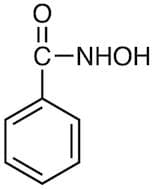
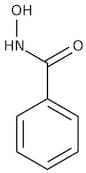
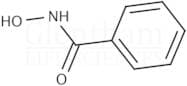
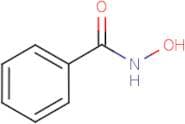
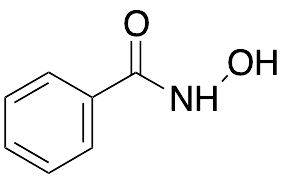
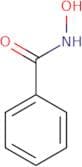
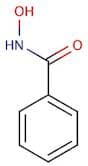
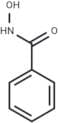
Acido benzoilidrossamico, con il numero CAS 495-18-1, è un composto organico caratterizzato dalla presenza di un gruppo funzionale acido idrossamico e di un anello benzenico. Appare tipicamente come un solido cristallino bianco a bianco sporco ed è solubile in solventi polari come acqua e alcoli. Il composto presenta una porzione di idrossilamina (-NHOH) attaccata a un gruppo benzilico, che contribuisce alla sua reattività e alle sue potenziali applicazioni. Acido benzoilidrossamico è noto per la sua capacità di chelare ioni metallici, rendendolo utile in vari campi, tra cui la chimica analitica e la biochimica. È stato studiato per il suo potenziale come inibitore di alcune enzimi, in particolare nel contesto dello sviluppo di farmaci e delle applicazioni terapeutiche. Inoltre, presenta proprietà che possono essere sfruttate nella sintesi di altri composti chimici. Come molti acidi organici, deve essere maneggiato con cura, poiché può essere irritante per la pelle e gli occhi. Devono essere seguiti i protocolli di sicurezza adeguati quando si lavora con questa sostanza.
Formula:C7H7NO2
InChI:InChI=1S/C7H7NO2/c9-7(8-10)6-4-2-1-3-5-6/h1-5,10H,(H,8,9)
InChI key:InChIKey=VDEUYMSGMPQMIK-UHFFFAOYSA-N
SMILES:C(NO)(=O)C1=CC=CC=C1
Sinonimi:- Benzamide, N-hydroxy-
- Benzenehydroxamic acid
- Benzhydroxamic acid
- Benzohydroximic acid
- Benzoylhydroxylamine
- Bham
- Brd 3493
- Hydroxybenzamide, n-
- Hydroxylamine, N-benzoyl-
- N-Benzohydroxamic acid
- N-Benzoylhydroxylamine
- N-Hydroxybenzamid
- N-hidroxibenzamida
- N-hydroxybenzamide
- Nsc 147248
- Nsc 3136
- Phenylhydroxamic acid
- Vedi altri sinonimi
Ordinare per
Purezza (%)
0
100
|
0
|
50
|
90
|
95
|
100
13 prodotti.
Benzohydroxamic Acid
CAS:Formula:C7H7NO2Purezza:>98.0%(T)Colore e forma:White to Almost white powder to crystalPeso molecolare:137.14Benzohydroxamic acid, 98%
CAS:Benzhydroxamic acid is used as precursor in the synthesis of novel mono-anionic and di-anionic hydroxamato complexes by reacting with BiPh3 and Bi(O(t)Bu)3, which has anti-bacterial activity against helicobacter pylori. It is used in the photometric determination of trace amounts of vanadium in alloFormula:C7H7NO2Purezza:98%Colore e forma:White or pink to pale brown, Crystalline powder or flakesPeso molecolare:137.14Benzhydroxamic acid
CAS:Formula:C7H7NO2Purezza:≥ 98.0%Colore e forma:White to light yellow crystalline powderPeso molecolare:137.14Benzohydroxamic Acid
CAS:Prodotto controllatoStability Moisture and Temperature Sensitive
Applications Benzohydroxamic Acid (cas# 495-18-1) is a compound useful in organic synthesis.
References Siliphaivanh, P., et al.: Bioorg. Med. Chem. Lett., 17, 4619 (2007), Serafimova, R., et al.: Chem. Res. Toxicol., 20, 1225 (2007), Fielding, A., et al.: Biochem., 47, 9781 (2008),Formula:C7H7NO2Colore e forma:White To BeigePeso molecolare:137.14Benzohydroxamic acid
CAS:Benzohydroxamic acid is a weak organic acid that is formed from the condensation of two molecules of benzoic acid. The thermodynamic data for this compound are available in the form of an equation and an enthalpy change. Benzohydroxamic acid interacts with metal hydroxides by forming metal complexes, which can be used as catalysts in transfer reactions. In addition, benzohydroxamic acid has been shown to inhibit HIV infection by inhibiting reverse transcriptase activity. This compound also undergoes hydrogen bonding interactions with other molecules due to its hydroxyl group and fatty acid moieties.Formula:C7H7NO2Purezza:Min. 95%Colore e forma:PowderPeso molecolare:137.14 g/molBenzohydroxamic Acid extrapure, 99%
CAS:Formula:C7H7NO2Purezza:min. 99%Colore e forma:White, Crystalline powder, Clear, ColourlessPeso molecolare:137.14Benzohydroxamic acid
CAS:Benzohydroxamic acid (BHA) is a chitin deacetylase (CDA) inhibitor with notable antifungal properties. It displays Ki values of 8.31 μM against Verticillium dahliae CDA and 9.83 μM against Puccinia striiformis f. sp. tritici CDA. BHA can restore the defense responses in infected host plants by upregulating the expression of defense-related genes, thereby reducing fungal growth and proliferation within the plants. It is applicable in the research of agricultural fungal diseases, such as cotton wilt and wheat stripe rust, caused by pathogens like Verticillium dahliae and Puccinia striiformis.Formula:C7H7NO2Colore e forma:SolidPeso molecolare:137.136Benzhydroxamic acid
CAS:Formula:C6H5CONHOHPurezza:99.0 min. %Colore e forma:White solidPeso molecolare:137.14