CAS 497-23-4
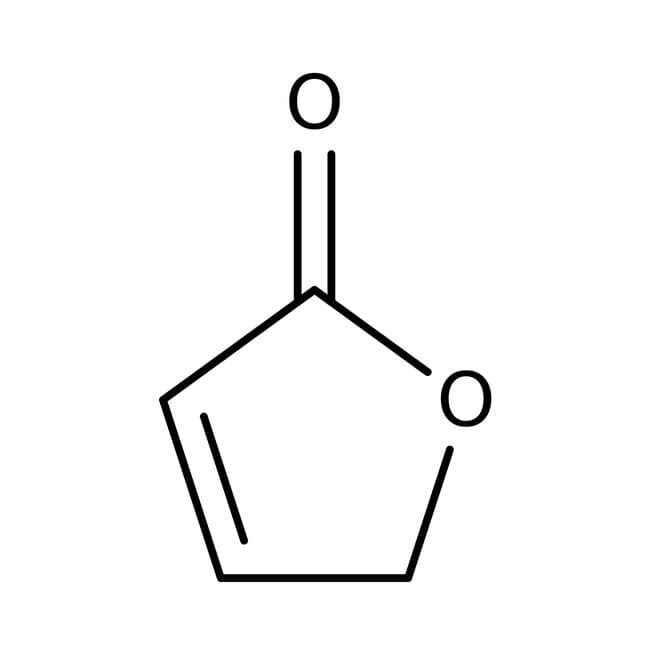
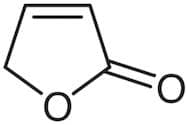
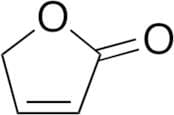
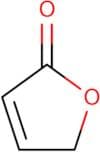
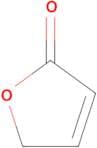
:2(5H)-Furanone
Descrizione:
2(5H)-Furanone, noto anche come 2-pirone, è un composto ciclico caratterizzato da un anello di lattone a sei membri contenente atomi di ossigeno e carbonio. Presenta un doppio legame tra gli atomi di carbonio adiacenti all'ossigeno, contribuendo alla sua reattività e stabilità. Questo composto è tipicamente incolore o giallo pallido e ha un odore dolce e fruttato, spesso associato a vari sapori e fragranze naturali. È solubile in solventi organici ed exhibit una solubilità moderata in acqua. 2(5H)-Furanone è noto per il suo ruolo nell'industria alimentare, dove viene utilizzato come agente aromatizzante, e ha anche applicazioni nella sintesi di prodotti farmaceutici e agrochimici. Il composto può subire varie reazioni chimiche, tra cui idrolisi e ossidazione, rendendolo un intermedio versatile nella sintesi organica. Inoltre, è stato studiato per le sue potenziali attività biologiche, comprese le proprietà antimicrobiche e antiossidanti. In generale, 2(5H)-Furanone è un composto importante sia in contesti industriali che di ricerca grazie alla sua unica struttura chimica e alle proprietà funzionali.
Formula:C4H4O2
InChI:InChI=1S/C4H4O2/c5-4-2-1-3-6-4/h1-2H,3H2
InChI key:InChIKey=VIHAEDVKXSOUAT-UHFFFAOYSA-N
SMILES:O=C1C=CCO1
Sinonimi:- 2(5H)-Furanone
- 2,5-Dihydrofuranone
- 2-Buten-1,4-olide
- 2-Buten-4-olide
- 2-Butenoic acid, 4-hydroxy-, γ-lactone
- 2-Oxo-2,5-dihydrofuran
- 2H-Furan-5-one
- 4-Hydroxy-2-butenoic acid lactone
- 4-Hydroxy-2-butenoic acid γ-lactone
- 5-Oxo-2,5-dihydrofuran-3-yl ester
- 5H-Furan-2-one
- Cratone
- Crotonic acid, 4-hydroxy-, γ-lactone
- Furan-2(5H)-on
- Isocrotonolactone
- Nsc 197009
- Nsc 51296
- furan-2(5H)-ona
- furan-2(5H)-one
- furanne-2(5H)-one
- g-Crotonolactone
- Δ<sup>α,β</sup>-Butenolide
- Δα,β-Butenolide
- α,β-Crotonolactone
- γ-Crotolactone
- Vedi altri sinonimi
Ordinare per
Purezza (%)
0
100
|
0
|
50
|
90
|
95
|
100
10 prodotti.
2(5H)-Furanone, 96%
CAS:2(5H)-Furanone is employed in the preparation of 5-substituted 2(5H) furanones (gamma-butenolides) catalyzed by bifunctional aminothiourea and aminosquaramide organocatalysts through direct aldol reaction with aromatic aldehydes. Further, it is used in the synthesis of lignans by Michael addition reFormula:C4H4O2Purezza:96%Colore e forma:Clear colorless to yellow, LiquidPeso molecolare:84.07Furan-2(5H)-one
CAS:Furan-2(5H)-oneFormula:C4H4O2Purezza:97%Colore e forma: faint yellow to light yellow liquidPeso molecolare:84.07g/molγ-Crotonolactone
CAS:Formula:C4H4O2Purezza:>93.0%(GC)Colore e forma:Colorless to Light orange to Yellow clear liquidPeso molecolare:84.072-Furanone
CAS:Stability Moisture Sensitive
Applications 2-Furanone is a heterocyclic organic compound that is used widely in the synthetic preparation of pharmaceutical goods.
References Kim, H.K., et al.: Plant. Pathol. J., 28, 259 (2012); Nam, S., et al.: J. Agr. Food. Chem., 60, 9097 (2012); Durchschein, K., et al.: Eur. J. Org. Chem., 2012, 4963 (2012);Formula:C4H4O2Colore e forma:NeatPeso molecolare:84.072(5H)-Furanone
CAS:2(5H)-Furanone is a naturally occurring compound that has been found to have hypoglycemic effects. Studies have shown that 2(5H)-furanone inhibits the activity of cox-2, an enzyme involved in the synthesis of prostaglandins, which are inflammatory compounds. This chemical may be useful as an anti-inflammatory agent and for the treatment of bowel diseases. 2(5H)-Furanone also has antimicrobial properties and has been shown to inhibit the growth of animal cells that are resistant to anticancer drugs. It binds to cell nuclei and disrupts DNA synthesis by competing with basic proteins for binding sites on DNA strands. The chemical structure of 2(5H)-furanone is very similar to butenolide, a natural plant compound used in traditional Chinese medicine; both compounds have been shown to inhibit COX-2 activity.Formula:C4H4O2Purezza:Min. 95%Colore e forma:Clear LiquidPeso molecolare:84.07 g/mol