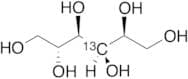
CAS 50-70-4
:Sorbitolo
- 7B5697N
- C*Sorbidex
- Cholaxine
- Clucitol
- Cystosol
- D-Glucitol
- D-Sorbit
- D-Sorbitol
- D-Sorbol
- Diakarmon
- Esasorb
- Glucarine
- Glucitol
- Gulitol
- Karion
- L-gulitol
- Multitol
- Neosorb
- Nivitin
- Plastilys
- Resulax
- Sionit
- Sionite
- Sionon
- Siosan
- Sorbierite
- Sorbilande
- Sorbilax
- Sorbit
- Sorbite
- Sorbitol-Syrup
- Sorbitur
- Sorbo
- Sorbol
- Sorbostyl
- Sorpart
- Glucitol, D-
- Vedi altri sinonimi
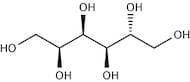
D-Sorbitol Powder extrapure, 98%
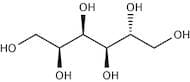
CAS:Formula:C6H14O6Purezza:min. 98%Colore e forma:White, Crystalline powder, Clear, ColourlessPeso molecolare:182.18D-Sorbitol Powder for molecular biology, 98%
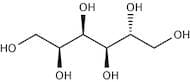
CAS:Formula:C6H14O6Purezza:min. 98%Colore e forma:White, Crystalline powder, Clear, ColourlessPeso molecolare:182.18D-Sorbitol Powder for tissue culture, 98%
CAS:Formula:C6H14O6Purezza:min. 98%Colore e forma:White, Crystalline powder, Clear, ColourlessPeso molecolare:182.18D-Sorbitol Powder ExiPlus, Multi-Compendial, 97%
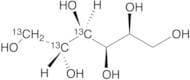
CAS:Formula:C6H14O6Purezza:min. 97%Colore e forma:White, Crystalline powder, Clear, ColourlessPeso molecolare:182.18D-Glucitol-4,5,6-13C3
CAS:Prodotto controllatoApplications Isotope labelled D-Glucitol is a sugar alcohol obtained from the reduction of glucose and is naturally found in various fruits such as apples, pears and peaches. D-Glucitol has been widely used as a sweetener, laxative, various medical applications and in cosmetic products.
References Wang, Z.J., et al.: Anal. BIoanal. Chem., 405, 3899 (2013); Vinarta, S.C., et al.: Carb. Poly., 92, 1107 (2013); Kaumanu, M.L., et al.: Soil. Biol. Biochem., 57, 644 (2013); Hailu, T., et al.: Anal. Biochem., 434, 181 (2013);Formula:C313C3H14O6Colore e forma:NeatPeso molecolare:185.15D-Glucitol-3-13C
CAS:Prodotto controllatoApplications Isotope labelled D-Glucitol is a sugar alcohol obtained from the reduction of glucose and is naturally found in various fruits such as apples, pears and peaches. D-Glucitol has been widely used as a sweetener, laxative, various medical applications and in cosmetic products.
References Wang, Z.J., et al.: Anal. BIoanal. Chem., 405, 3899 (2013); Vinarta, S.C., et al.: Carb. Poly., 92, 1107 (2013); Kaumanu, M.L., et al.: Soil. Biol. Biochem., 57, 644 (2013); Hailu, T., et al.: Anal. Biochem., 434, 181 (2013);Formula:CC5H14O6Colore e forma:NeatPeso molecolare:183.164