CAS 503-74-2
:Acido isovalerico
Descrizione:
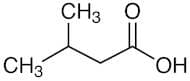
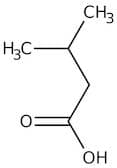
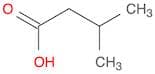
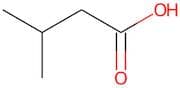
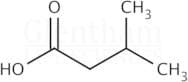
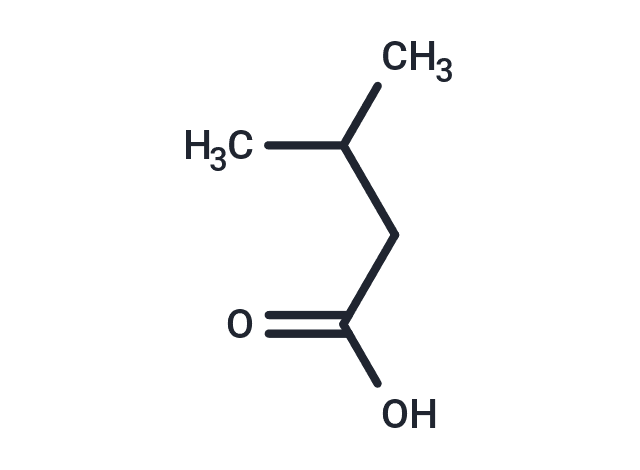
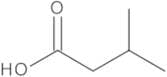
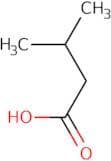
Acido isovalerico, noto anche come acido 3-metilbutanoico, è un acido grasso a catena ramificata con la formula molecolare C5H10O2. È caratterizzato da un odore pungente che ricorda piedi sudati o formaggio, attribuito alla sua presenza in determinati processi di fermentazione e come sottoprodotto del metabolismo delle proteine. Acido isovalerico è un liquido incolore a temperatura ambiente ed è solubile in acqua, alcol ed etere. La sua struttura presenta un gruppo funzionale acido carbossilico (-COOH) attaccato a una catena di cinque carboni, specificamente al secondo carbonio, che contribuisce alle sue proprietà uniche. Questo composto è utilizzato in varie applicazioni, tra cui agenti aromatizzanti, fragranze e come intermediario nella sintesi organica. Inoltre, Acido isovalerico gioca un ruolo nella biosintesi di alcuni aminoacidi ed è coinvolto nelle vie metaboliche. Le considerazioni di sicurezza includono i potenziali effetti irritanti sulla pelle e sulle mucose, rendendo necessarie adeguate procedure di gestione e stoccaggio in ambienti di laboratorio e industriali.
Formula:C5H10O2
InChI:InChI=1S/C5H10O2/c1-4(2)3-5(6)7/h4H,3H2,1-2H3,(H,6,7)
InChI key:InChIKey=GWYFCOCPABKNJV-UHFFFAOYSA-N
SMILES:C(C(C)C)C(O)=O
Sinonimi:- 3-Methyl Butylic Acid
- 3-Methyl-1-butanoic acid
- 3-Methyl-n-butyric acid
- 3-Methylbutanoate
- 3-Methylbutanoic acid
- 3-Methylbutyrate
- 3-Methylbutyric acid
- Acetic acid, isopropyl-
- Acide isovalerique
- Acido Isovalerico
- Butanoic acid, 3-methyl-
- Delphinic acid
- Isopentanoic acid
- Isopropylacetic acid
- Isovalerianic acid
- Isovaleriansaure
- Natural 3-methylbutyric acid
- Natural Isovaleric Acid
- Nsc 62783
- Valerianic-Iso Acid
- iso-Valeric acid
- β-Methylbutyric acid
- Vedi altri sinonimi
Ordinare per
Purezza (%)
0
100
|
0
|
50
|
90
|
95
|
100
11 prodotti.
Isovaleric Acid
CAS:Formula:C5H10O2Purezza:>99.0%(GC)Colore e forma:Colorless clear liquidPeso molecolare:102.13Isovaleric acid, 98%
CAS:A molecular entity capable of donating a hydron to an acceptor (Bronsted base). It is a favorable carbon source for cell growth. Moreover, it is a promising odor indicator. This Thermo Scientific Chemicals brand product was originally part of the Alfa Aesar product portfolio. Some documentation andFormula:C5H10O2Purezza:98%Colore e forma:Clear colorless, LiquidPeso molecolare:102.13Ref: IN-DA003R5S
10g21,00€25g20,00€100g24,00€500g37,00€100kgPrezzo su richiesta250kgPrezzo su richiestaIsovaleric acid
CAS:Formula:C5H10O2Purezza:≥ 99.0%Colore e forma:Clear, colourless liquidPeso molecolare:102.13Isovaleric acid
CAS:Isovaleric acid (Delphinic acid) is a naturally occurring aroma compound found in Bartlett pear brandies, vanilla beans, rape-honey, and banana.Formula:C5H10O2Purezza:97.89%Colore e forma:Colourless Clear LiquidPeso molecolare:102.13Isovaleric Acid
CAS:Prodotto controllatoApplications Isovaleric Acid (I917570) is a naturally occurring aroma compound found in Bartlett pear brandies, vanilla beans, rape-honey and banana.
Not a dangerous good if item is equal to or less than 1g/ml and there is less than 100g/ml in the package
References Blasioli S., et al.: J. Agr. Food Chem., 62, 337 (2014); Willner, B., et al.: J. Agr. Food. Chem., 61, 9583 (2013); Zhang, S., & Mueller, C.: J. Agr. Food. Chem., 60, 10433 (2012); Pino, J., & Febles, Y.: Food Chem., 141, 795 (2013)Formula:C5H10O2Colore e forma:ColourlessPeso molecolare:102.133-Methylbutanoic acid
CAS:3-Methylbutanoic acid is an antimicrobial agent that belongs to the group of isovaleric acids. It is a product of β-oxidation and has been shown to inhibit the growth of bacteria by reacting with their surface. 3-Methylbutanoic acid inhibits bacterial growth by binding to the pyrazole ring in DNA and altering its conformation, preventing DNA replication. This reaction occurs at a rate comparable to that of other fluoroquinolones, such as ciprofloxacin, levofloxacin, and norfloxacin. 3-Methylbutanoic acid has been shown to have antibacterial activity against both Gram-positive and Gram-negative bacteria, particularly those that are resistant to erythromycin or lincomycin.Formula:C5H10O2Purezza:Min. 95%Colore e forma:PowderPeso molecolare:102.13 g/mol