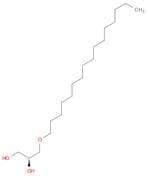
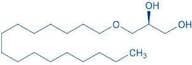
CAS 506-03-6
:Alcol chimilico
Descrizione:
Alcol chimilico, con il numero CAS 506-03-6, è un alcool grasso a catena lunga che deriva principalmente da fonti naturali, in particolare dall'olio del frutto della pianta Chimera. È caratterizzato dalla sua natura idrofobica a causa della sua lunga catena di idrocarburi, che normalmente consiste di 18 atomi di carbonio. Questa struttura conferisce proprietà come bassa solubilità in acqua e una tendenza ad agire come tensioattivo o emulsionante in varie formulazioni. Alcol chimilico è spesso utilizzato nelle industrie cosmetiche e di cura personale per le sue proprietà idratanti, poiché può aiutare a migliorare la texture e l'idratazione della pelle. Inoltre, può fungere da lubrificante e agente addensante in vari prodotti. La sostanza è generalmente considerata sicura per l'uso nei cosmetici, anche se, come molti alcol, può causare irritazione in individui sensibili. La sua stabilità chimica e compatibilità con altri ingredienti la rendono un componente prezioso nelle formulazioni destinate a migliorare i prodotti per la cura della pelle e dei capelli.
Formula:C19H40O3
InChI:InChI=1/C19H40O3/c1-2-3-4-5-6-7-8-9-10-11-12-13-14-15-16-22-18-19(21)17-20/h19-21H,2-18H2,1H3
InChI key:InChIKey=OOWQBDFWEXAXPB-IBGZPJMESA-N
SMILES:C(CCCCCCCCCCCCCC)COC[C@H](CO)O
Sinonimi:- (2S)-3-(Hexadecyloxy)-1,2-propanediol
- (2S)-3-Hexadecoxypropane-1,2-diol
- (S)-(+)-Chimyl alcohol
- 1,2-Propanediol, 3-(hexadecyloxy)-
- 1,2-Propanediol, 3-(hexadecyloxy)-, (2S)-
- 1,2-Propanediol, 3-(hexadecyloxy)-, (S)-
- 1-Hexadecyl-sn-glycerol
- 1-O-Hexadecyl-sn-glycerol
- 3-(Hexadecyloxy)-1,2-propanediol
- 3-(Hexadecyloxy)Propane-1,2-Diol
- Chimyl alcohol
- Nikkol Chimyl Alcohol 100
- Testriol
- α-Chimyl alcohol
- (S)-3-(Hexadecyloxy)propane-1,2-diol
- 3-(hexadecyloxy)-2-propanediol
- (S)-3-(Hexadecyloxy)-1,2-propanediol
- MONOCERYL GLYCERYL ETHER
- 1-O-hexadecyl-sn-glycerol (HG)
- 1-O-HEXADECYL-
- -glycerol (HG)
- sn
- SN
- 1-O-hexadecyl-
- 3-cetyloxypropane-1,2-diol
- 1-C16 Ether MG
- 1-hexadecylglycerol
- -GLYCEROL (HG);1-C16 ETHER MG
- 1-O-PALMITOYL-SN-GLYCEROL
- 1-o-hexadecylglycerol
- α-hexadecylglyceryl ether
- 3-hexadecoxypropane-1,2-diol
- Vedi altri sinonimi
Ordinare per
Purezza (%)
0
100
|
0
|
50
|
90
|
95
|
100
6 prodotti.
1-O-Hexadecyl-SN-Glycerol
CAS:Formula:C19H40O3Purezza:98%Colore e forma:SolidPeso molecolare:316.51911-O-Hexadecyl-sn-glycerol
CAS:1-O-Hexadecyl-sn-glycerol protects keratinocytes from UVB damage, reduces ROS and PGE2, and enhances coronary flow, cytoprotective and cardioprotective.Formula:C19H40O3Purezza:99.51%Colore e forma:SolidPeso molecolare:316.521-O-Hexadecyl-sn-glycerol
CAS:Prodotto controllatoApplications 1-O-Hexadecyl-sn-glycerol restores plasmalogen levels in Chinese hamster ovary (CHO) cells and human pulmonary arterial endothelial cells (PAEC). Plasmalogen may play a role in protecting animal cells against photosensitized killing.
References Zoeller, R., et al.: J. Biol. Chem., 263, 11590 (1988); Zoeller, R., et al.: Am. J. Physiol., 283, H671 (2002)Formula:C19H40O3Colore e forma:NeatPeso molecolare:316.5191-O-Hexadecyl-sn-glycerol
CAS:1-O-Hexadecyl-sn-glycerol is a glycol ether that is used as a surfactant and emulsifier in cosmetic products. It has been shown to have minimal toxicity, and to not be carcinogenic or teratogenic. 1-O-Hexadecyl-sn-glycerol has been shown to increase the stability of proteins in rat liver microsomes, and it also prevents the hydrolysis of carbohydrates. The surface glycoprotein adsorbed by 1-O-Hexadecyl-sn-glycerol may play an important role in the binding of monoclonal antibodies. This compound affects cellular calcium levels, with high concentrations resulting in increased cytosolic calcium concentrations. Zirconium oxide can replace calcium ions in 1-O-Hexadecyl-sn-glycerol for this purpose, although this substitution reduces enzyme activity.Formula:C19H40O3Purezza:Min. 95%Peso molecolare:316.52 g/mol1-O-Hexadecyl-sn-glycerol
CAS:Bachem ID: 4010402.
Formula:C19H40O3Purezza:> 99%Colore e forma:White PowderPeso molecolare:316.53