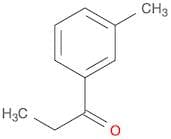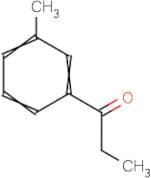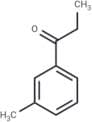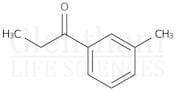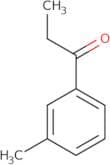
CAS 51772-30-6
:1-(3-Metilfenile)-1-propanone
- 1-(3-Methylphenyl)-1-propanone
- 1-(3-Methylphenyl)Propan-1-One
- 1-Propanone, 1-(3-methylphenyl)-
- M-Methylpropiophenone
- Propiophenone, 3′-methyl-
- 3′-Methylpropiophenone
- 3-Methylpropiophenone
- 1-M-tolylpropan-1-one
- Tolperisone Impurity 5
- ETHYL-M-TOLYL KETONE
- Einecs 257-405-2
- Vedi altri sinonimi
3'-Methylpropiophenone
CAS:3'-MethylpropiophenonePurezza:97%Colore e forma:LiquidPeso molecolare:148.20g/mol3'-Methylpropiophenone
CAS:3'-Methylpropiophenone is an aromatic ketone containing a benzene ring, widely used in biochemical experiments and drug synthesis research.Formula:C10H12OColore e forma:SolidPeso molecolare:148.23''-Methylpropiophenone
CAS:Formula:C10H12OPurezza:≥ 98.0%Colore e forma:Clear, light-yellow to yellow liquidPeso molecolare:148.20Ref: 4Z-P-210006
5mgPrezzo su richiesta10mgPrezzo su richiesta25mgPrezzo su richiesta50mgPrezzo su richiesta100mgPrezzo su richiesta1-(m-Tolyl)propan-1-one
CAS:Prodotto controllatoAmphetamine is a psychostimulant and sympathomimetic that is used to treat attention-deficit hyperactivity disorder, narcolepsy, and obesity. Amphetamine is structurally similar to phenylethylamine, a naturally occurring trace amine found in humans. Amphetamine has been shown to bind with high affinity to tissues in the heart, lungs, stomach, and intestines. It also binds with moderate affinity to the liver. Amphetamine can be detected by analyses of chemical structures using diode-array detection or mass spectrometry. In addition, amphetamine can be detected in urine using liquid chromatography or gas chromatography/mass spectrometry. Amphetamines are addictive and have been shown to cause long-term damage in animal models of addiction. Cathinones are related compounds that have been found in human urine samples and have been shown to be toxicologically similar to amphetamines.
Formula:C10H12OPurezza:Min. 95%Peso molecolare:148.2 g/mol