

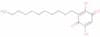
CAS 550-24-3
:Embelina
Descrizione:
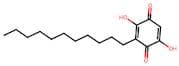
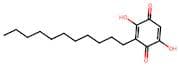
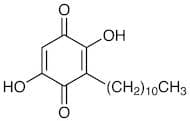
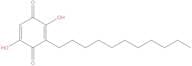
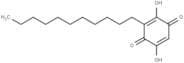
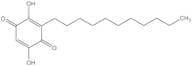
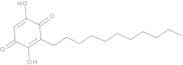
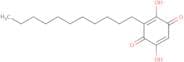
Embelina, con il numero CAS 550-24-3, è un composto che si verifica naturalmente classificato come un derivato della benzochinone. Viene estratto principalmente dai frutti della pianta Embelia ribes, nota per i suoi usi medicinali tradizionali. Embelina mostra una gamma di attività biologiche, comprese proprietà antiossidanti, antinfiammatorie e antimicrobiche, rendendolo di interesse nella ricerca farmacologica. Il composto è caratterizzato dalla sua formula molecolare, che tipicamente include atomi di carbonio, idrogeno e ossigeno, contribuendo alle sue proprietà strutturali. Embelina è spesso studiato per le sue potenziali applicazioni terapeutiche, in particolare nel contesto del trattamento del cancro e dei disturbi metabolici. Inoltre, è stato notato per la sua capacità di modulare vari percorsi biochimici, il che aumenta ulteriormente la sua importanza nella chimica medicinale. La sua solubilità e stabilità possono variare a seconda del solvente e delle condizioni ambientali, che sono fattori importanti da considerare nella sua applicazione e studio. In generale, Embelina rappresenta un composto prezioso sia nella chimica dei prodotti naturali che nello sviluppo farmaceutico.
Formula:C17H26O4
InChI:InChI=1S/C17H26O4/c1-2-3-4-5-6-7-8-9-10-11-13-16(20)14(18)12-15(19)17(13)21/h12,18,21H,2-11H2,1H3
InChI key:InChIKey=IRSFLDGTOHBADP-UHFFFAOYSA-N
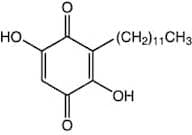
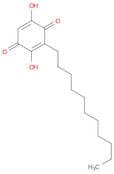
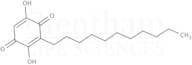
SMILES:C(CCCCCCCCCC)C=1C(=O)C(O)=CC(=O)C1O
Sinonimi:- 2,5-Cyclohexadiene-1,4-dione, 2,5-dihydroxy-3-undecyl-
- 2,5-Dihydroxy-3-Undecylcyclohexa-2,5-Diene-1,4-Dione
- 2,5-Dihydroxy-3-undecyl-1,4-benzoquinone
- 2,5-Dihydroxy-3-undecyl-2,5-cyclohexadiene-1,4-dione
- 2,5-Dihydroxy-3-undecyl-p-benzoquinone
- 2,5-Dihydroxy-3-undecylcyclohexa-2,5-dien-1,4-dione
- Embelic acid
- Embelin
- Emberine
- NSC 91874
- p-Benzoquinone, 2,5-dihydroxy-3-undecyl-
Ordinare per
Purezza (%)
0
100
|
0
|
50
|
90
|
95
|
100
12 prodotti.
Embelin
CAS:An inhibitor of XIAP (X-linked inhibitor-of-apoptosis protein) that contains antitumor and anti-inflammatory activity This Thermo Scientific Chemicals brand product was originally part of the Alfa Aesar product portfolio. Some documentation and label information may refer to the legacy brand. The orFormula:C17H26O4Peso molecolare:294.4Ref: IN-DA003FYN
1gPrezzo su richiesta5mg71,00€10mg91,00€25mg158,00€50mg171,00€100mg234,00€250mg356,00€Embelin
CAS:Formula:C17H26O4Purezza:>95.0%(T)(HPLC)Colore e forma:Light yellow to Yellow to Orange powder to crystalPeso molecolare:294.39Embelin
CAS:Embelin (Embelic acid), isolated from the Japanese Ardisia herb, is an inhibitor of the X-linked inhibitor of apoptosis (IC50: 4.1 uM).Formula:C17H26O4Purezza:97.07% - 99.88%Colore e forma:SolidPeso molecolare:294.39Embelin
CAS:QuinoneFormula:C17H26O4Purezza:≥ 90.0 % (HPLC)Colore e forma:PowderPeso molecolare:294.39Embelin
CAS:Prodotto controllatoApplications Embelin is a natural benzoquinone found in plants of the Myrsinaceae family. Embelin has a wide range of biological activity as it inhibits the growth of bacteria, fungi, protozoa and parasites. Embelin also displays contraceptive and pro-apoptotic properties.
References Stasiuk, M. et al.: Glob. J. Biochem., 2, 262 (2011); Brahmeshwari, G. et al.: Adv. Plant Sci., 24, 467 (2011); Hu, R. et al.: Med. Oncol., 28, 1598 (2011);Formula:C17H26O4Colore e forma:OrangePeso molecolare:294.39Embelin
CAS:Embelin is a phytochemical compound that functions as an active ingredient derived from the plant Embelia ribes. This compound, known for its quinone structure, operates primarily through the inhibition of X-linked inhibitor of apoptosis protein (XIAP), which plays a crucial role in the regulation of apoptotic pathways. By targeting XIAP, Embelin promotes apoptosis in cancer cells, making it a potential candidate for anticancer therapies. Additionally, Embelin exhibits anti-inflammatory, analgesic, and antioxidant properties through various pathways, including modulation of inflammatory cytokine production and reactive oxygen species scavenging.Formula:C17H26O4Purezza:Min. 95%Colore e forma:PowderPeso molecolare:294.39 g/mol










![2,5-Dihydroxy-3-undecyl-[1,4]benzoquinone](/_next/image/?url=https%3A%2Fstatic.cymitquimica.com%2Fproducts%2F10%2Fthumb%2FF032344.jpg&w=3840&q=75)
