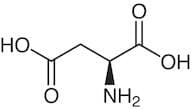
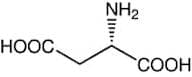
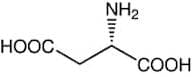
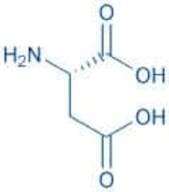
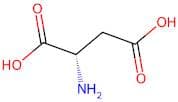
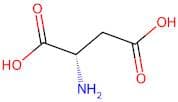
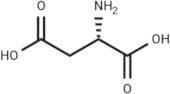
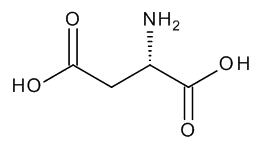
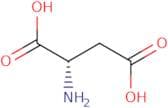
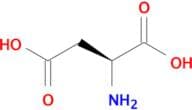
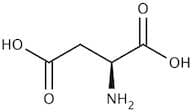
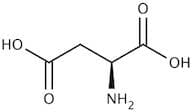
CAS 56-84-8
:Acido L-aspartico
Descrizione:
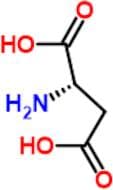
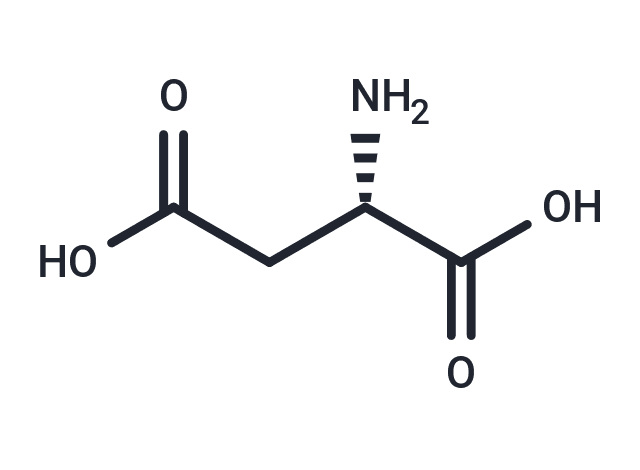
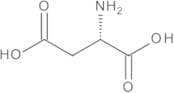
Acido L-aspartico, con il numero CAS 56-84-8, è un amminoacido non essenziale che svolge un ruolo cruciale nella biosintesi delle proteine. È classificato come un amminoacido polare e idrofilo a causa dei suoi gruppi funzionali di acido carbossilico, che possono donare protoni, rendendolo carico negativamente a pH fisiologico. Acido L-aspartico è coinvolto in vari processi metabolici, incluso il ciclo dell'urea e la sintesi di altri amminoacidi e neurotrasmettitori. Si trova in molte proteine ed è particolarmente abbondante nei tessuti vegetali e animali. La sostanza è solubile in acqua, il che facilita il suo ruolo nei sistemi biologici. Acido L-aspartico può esistere in forme D e L, con la forma L che è l'isomero biologicamente attivo. Inoltre, è utilizzato nell'industria alimentare come esaltatore di sapidità e negli integratori alimentari per il suo potenziale ruolo nella produzione di energia e nella funzione cognitiva. In generale, Acido L-aspartico è essenziale per numerose funzioni fisiologiche ed è un componente chiave nella struttura delle proteine.
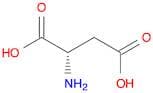
Formula:C4H7NO4
InChI:InChI=1S/C4H7NO4/c5-2(4(8)9)1-3(6)7/h2H,1,5H2,(H,6,7)(H,8,9)/t2-/m0/s1
InChI key:InChIKey=CKLJMWTZIZZHCS-REOHCLBHSA-N
SMILES:[C@H](CC(O)=O)(C(O)=O)N
Sinonimi:- (+)-<span class="text-smallcaps">L</span>-Aspartic acid
- (+)-Aspartic acid
- (S)-2-Aminobutanedioic acid
- (S)-Aminobutanedioic acid
- (S)-Aspartic acid
- 2-Aminobutanedioic acid
- 75: PN: WO2005016244 PAGE: 71 claimed protein
- 7: PN: US20050014160 SEQID: 7 claimed protein
- <span class="text-smallcaps">L</span>-Aminosuccinic acid
- <span class="text-smallcaps">L</span>-Asparagic acid
- <span class="text-smallcaps">L</span>-Asparaginic acid
- Acide aspartique
- Acido Aspartico
- Asparagic acid
- Asparaginic acid
- Asparaginsaure
- Aspartic acid, <span class="text-smallcaps">L</span>-
- Aspartic acid, L-
- Butanedioic acid, amino-, (S)-
- H-Asp-OH
- L-2-Aminobutanedioic acid
- L-Aminosuccinic acid
- L-Aspantic acid
- L-Asparagic acid
- L-Asparaginic acid
- Nsc 3973
- Nsc 79553
- L-(+)-Aspartic acid
- L-Aspartic acid
- L-Aspartic acid
- Vedi altri sinonimi
Ordinare per
Purezza (%)
0
100
|
0
|
50
|
90
|
95
|
100
27 prodotti.
L-Aspartic Acid
CAS:Formula:C4H7NO4Purezza:>99.0%(T)Colore e forma:White powder to crystalPeso molecolare:133.10L-Aspartic acid, 98+%
CAS:<p>L-Aspartic acid is used in enzyme active centers, as well as in maintaining the solubility and ionic character of proteins. This Thermo Scientific Chemicals brand product was originally part of the Alfa Aesar product portfolio. Some documentation and label information may refer to the legacy brand.</p>Formula:C4H7NO4Purezza:98+%Colore e forma:Crystals or powder or crystalline powder, WhitePeso molecolare:133.10L-Aspartic acid, 99%, low metals content
CAS:<p>L-Aspartic acid is used as a component of parenteral and enteral nutrition and as a pharmaceutical ingredient. it is used for cell culture and in manufacturing processes. It is widely utilized for mineral supplementation in the salt form. This Thermo Scientific Chemicals brand product was originally</p>Formula:C4H7NO4Purezza:99%Colore e forma:Powder, WhitePeso molecolare:133.10H-Asp-OH
CAS:<p>Bachem ID: 4030334.</p>Formula:C4H7NO4Purezza:> 99%Colore e forma:White PowderPeso molecolare:133.1Aspartic Acid
CAS:Amino-acids (excluding aromatic) and their esters other than those containing more than one kind of oxygen function, nesoiFormula:C4H7NO4Colore e forma:White Off-White Crystalline PowderPeso molecolare:133.1L-Aspartic acid, GlenCell™, suitable for cell culture
CAS:Formula:C4H7NO4Purezza:≤ 0.3%Colore e forma:White to almost white crystalline powderPeso molecolare:133.10L-Aspartic acid, Ph. Eur. grade
CAS:Formula:C4H7NO4Purezza:98.5 - 101.5 %Colore e forma:White to off-white crystalline powderPeso molecolare:133.10L-Aspartic acid
CAS:<p>L-Aspartic acid</p>Formula:C4H7NO4Purezza:98.5%Colore e forma: white crystalline powderPeso molecolare:133.10268g/molL-Aspartic acid, 99%
CAS:Formula:C4H7NO4Purezza:≥ 99.0%Colore e forma:White to almost white powder or crystalsPeso molecolare:133.10L-Aspartic acid (Standard)
CAS:L-Aspartic acid (Standard) is a standard material used in the analysis of L-Aspartic acid, commonly referenced in its research and analysis.Formula:C4H7NO4Purezza:99.79%Colore e forma:White SolidPeso molecolare:133.1Ref: 4Z-A-147012
5mgPrezzo su richiesta10mgPrezzo su richiesta25mgPrezzo su richiesta50mgPrezzo su richiesta100mgPrezzo su richiestaL-Aspartic acid
CAS:L-Aspartic acid: non-essential, negative charge, critical for synthesizing amino acids, involved in citric acid/urea cycles, neurotransmitter.Formula:C4H7NO4Purezza:99.80%Colore e forma:White SolidPeso molecolare:133.1L-aspartic acid
CAS:Amino acidFormula:C4H7NO4Purezza:≥ 98.0 % (HPLC)Colore e forma:PowderPeso molecolare:133.1L-Aspartic Acid
CAS:<p>Applications L-Aspartic Acid is a non-essential amino acid found in food sources. L-Aspartic Acid is one of the 20 proteinogenic amino acids; the building blocks of proteins. Its conjugate base L-aspartate is an excitatory neurotransmitter in the central nervous system.<br>References Ager, D.J. et al.: J. Mol. Catal. Enzym., 11, 199 (2001); Velisek, J. et al.: Cze. J. Food. Sci., 24, 1 (2006); Nagahama, M. et al.: Cell Tiss. Res., 318, 483 (2004);<br></p>Formula:C4H7NO4Colore e forma:WhitePeso molecolare:133.10L-Aspartic acid
CAS:<p>L-Aspartic acid is an amino acid that plays a role in the biochemical reactions of energy metabolism. This amino acid is also important for the synthesis of proteins, such as enzymes and structural proteins. L-Aspartic acid is synthesized from oxaloacetate by transamination. It can also be synthesized from glutamate by the action of aspartate aminotransferase using pyridoxal phosphate as a cofactor. L-Aspartic acid has been shown to play a role in neuronal death, particularly in primary sclerosing cholangitis, and may have potential therapeutic use for this condition. L-Aspartic acid has been used as a model system to study polymerase chain reaction (PCR) methods and analytical methods in biochemistry research.</p>Formula:C4H7NO4Purezza:Min. 95%Colore e forma:White Off-White PowderPeso molecolare:133.1 g/molH-Asp-OH
CAS:<p>M03000 - H-Asp-OH</p>Formula:C4H7NO4Purezza:97%Colore e forma:SolidPeso molecolare:133.103L-Aspartic Acid ExiPlus, Multi-Compendial, 99%
CAS:Formula:C4H7NO4Purezza:min. 99%Colore e forma:White, Crystalline powder, Clear, ColourlessPeso molecolare:133.10L-Aspartic Acid PrimeDx, 99%
CAS:Formula:C4H7NO4Purezza:min. 99.0%Colore e forma:White to off-white, Crystalline powder, Clear, Colourless to plae yellowPeso molecolare:133.10L-Aspartic Acid extrapure CHR, 99%
CAS:Formula:C4H7NO4Purezza:min. 99%Colore e forma:White, Crystalline powder, Clear, ColourlessPeso molecolare:133.10L-Aspartic acid
CAS:<p>L-Aspartic acid is an amino acid that plays a crucial role in protein synthesis and DNA repair. It has been shown to activate the TRPV1 receptor, which is involved in pain sensation and thermoregulation. L-Aspartic acid has also been studied for its potential therapeutic effects on Alzheimer's disease, as it may inhibit the formation of amyloid beta plaques in the brain. Additionally, L-Aspartic acid has been used as a substrate for DNA ligase, an enzyme that joins together two strands of DNA. This amino acid is also found in plants such as broccoli and Brussels sprouts, where it contributes to the formation of glucosinolates. Studies have shown that L-Aspartic acid can enhance neuronal imaging and improve cognitive function when combined with compounds such as capsaicin or cycloastragenol. Furthermore, polygodial, a compound found in certain plants, has been shown to interact with L-Aspartic acid</p>Formula:C4H7NO4Peso molecolare:133.11 g/mol