CAS 577-85-5
:Flavonolo
Descrizione:
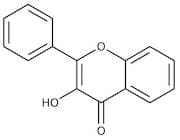
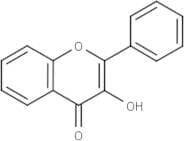
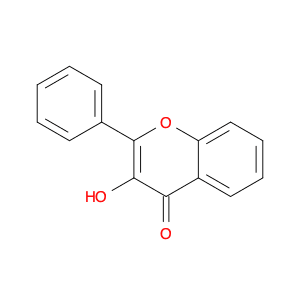
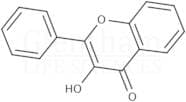
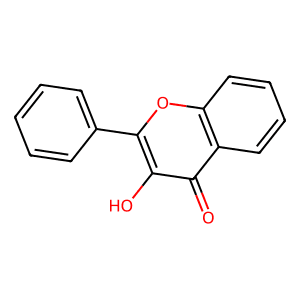
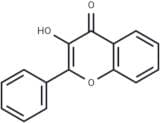
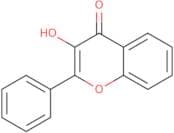
Flavonolo, con il numero CAS 577-85-5, è un tipo di flavonoide, che è una classe di composti polifenolici ampiamente presenti nelle piante. Caratteristicamente, i Flavonolos sono noti per le loro proprietà antiossidanti, che contribuiscono ai loro potenziali benefici per la salute, inclusi effetti antinfiammatori e anticancerogeni. Di solito presentano un colore giallo e sono solubili in solventi organici, ma meno in acqua. La struttura dei Flavonolos presenta uno scheletro di 15 carboni, composto da due anelli aromatici collegati da un ponte di tre carboni, con un gruppo chetonico e gruppi idrossilici che possono variare in numero e posizione, influenzando la loro attività biologica e solubilità. Esempi comuni di Flavonolos includono quercetina e kaempferolo, che sono abbondanti in frutta, verdura e bevande come il tè. Questi composti svolgono un ruolo significativo nella pigmentazione delle piante e nella protezione UV, e sono anche studiati per i loro potenziali effetti terapeutici sulla salute umana, in particolare in relazione a malattie cardiovascolari e disturbi metabolici.
Formula:C15H10O3
InChI:InChI=1S/C15H10O3/c16-13-11-8-4-5-9-12(11)18-15(14(13)17)10-6-2-1-3-7-10/h1-9,17H
InChI key:InChIKey=HVQAJTFOCKOKIN-UHFFFAOYSA-N
SMILES:OC1=C(OC=2C(C1=O)=CC=CC2)C3=CC=CC=C3
Sinonimi:- 3-Hf
- 3-Hidroxiflavona
- 3-Hydroxy-2-phenyl-4H-1-benzopyran-4-one
- 3-Hydroxy-2-phenylchromen-4-one
- 3-Hydroxy-2-phenylchromone
- 3-Hydroxyflavon
- 3-hydroxy-2-phenyl-4H-chromen-4-one
- 3HF
- 4H-1-Benzopyran-4-one, 3-hydroxy-2-phenyl-
- Flavon-3-ol
- Flavone, 3-hydroxy-
- Flavonol
- Hsdb 7572
- Nsc 57653
- Nsc 58585
- Nsc 58586
- Nsc 58587
- Vedi altri sinonimi
Ordinare per
Purezza (%)
0
100
|
0
|
50
|
90
|
95
|
100
11 prodotti.
3-Hydroxy-2-phenyl-4H-chromen-4-one
CAS:Formula:C15H10O3Purezza:98%Colore e forma:SolidPeso molecolare:238.2423-Hydroxyflavone, 98+%
CAS:3-Hydroxyflavone is a reactant involved in studies of photochemically-induced dioxygenase-type CO-release reactivity; phase-transfer protection and deprotection of hydroxychromones; and O-methylation with di-Me carbonate. As a reactant it is involved in the synthesis of biologically active moleculesFormula:C15H10O3Purezza:98+%Colore e forma:White to yellow or pale cream, PowderPeso molecolare:238.253-Hydroxyflavone
CAS:3-Hydroxyflavone analytical standard provided with chromatographic purity, to be used as reference material for qualitative determination.Formula:C15H10O3Purezza:(HPLC) ≥95%Colore e forma:PowderPeso molecolare:238.253-Hydroxyflavone
CAS:Formula:C15H10O3Purezza:>98.0%(T)(HPLC)Colore e forma:White to Yellow powder to crystalPeso molecolare:238.24Flavonol
CAS:Flavonol (3-Hydroxyflavone) is a member of the class of compounds known as flavonols. Flavonol can be found in a number of food items.Formula:C15H10O3Purezza:98.1% - 99.94%Colore e forma:Yellow Needles Yellow Fluffy PowderPeso molecolare:238.243-Hydroxyflavone
CAS:3-Hydroxyflavone is a naturally derived flavonoid compound found in various plants. As a member of the flavonoid family, it is synthesized through the phenylpropanoid pathway, starting from phenylalanine or tyrosine in plants. Its unique structure allows it to interact with a range of biological targets through its antioxidant, anti-inflammatory, and enzyme modulation properties. The mode of action primarily involves the scavenging of free radicals and reactive oxygen species, as well as the inhibition of specific enzymes such as cyclooxygenases and lipoxygenases. These actions contribute to its protective effects against oxidative stress and inflammation.Formula:C15H10O3Purezza:Min. 95%Colore e forma:PowderPeso molecolare:238.24 g/mol