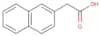
CAS 581-96-4
:Acido 2-naftaleneacetico
Descrizione:
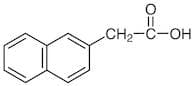
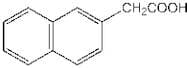
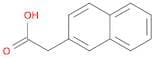
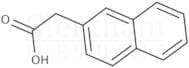
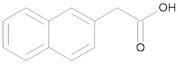
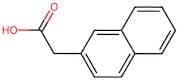
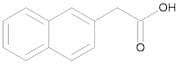
Acido 2-naftaleneacetico (2-NAA) è un acido carbossilico aromatico e un regolatore sintetico della crescita delle piante che appartiene alla classe dei derivati del naftalene. È caratterizzato dalla sua struttura, che presenta un anello di naftalene sostituito con un gruppo acido acetico nella seconda posizione. Questo composto è tipicamente un solido cristallino bianco a bianco sporco che è poco solubile in acqua ma più solubile in solventi organici come etanolo e acetone. Il 2-NAA è noto per il suo ruolo nella promozione della formazione delle radici e nel miglioramento dello sviluppo dei frutti in varie specie vegetali, rendendolo prezioso nelle pratiche agricole. Inoltre, mostra attività simile all'auxina, influenzando i processi di crescita e sviluppo delle piante. Il composto è stabile in condizioni normali, ma deve essere conservato lontano da agenti ossidanti forti e dalla luce per mantenere la sua integrità. Devono essere adottate precauzioni di sicurezza quando si maneggia il 2-NAA, poiché può causare irritazione alla pelle e agli occhi. In generale, Acido 2-naftaleneacetico è uno strumento importante nell'orticoltura e nella ricerca in biologia vegetale.
Formula:C12H10O2
InChI:InChI=1S/C12H10O2/c13-12(14)8-9-5-6-10-3-1-2-4-11(10)7-9/h1-7H,8H2,(H,13,14)
InChI key:InChIKey=VIBOGIYPPWLDTI-UHFFFAOYSA-N
SMILES:C(C(O)=O)C1=CC2=C(C=C1)C=CC=C2
Sinonimi:- 2-(2-Naphthyl)acetic acid
- 2-Naa
- 2-Naphthalen-2-ylacetic acid
- 2-Naphthalene acetic acid
- 2-Naphthaleneacetic Acid
- Aurora 9167
- Beta-Naa
- Betoxan
- NSC 301
- Naphthalen-2-Ylacetate
- Naphthalen-2-Ylacetic Acid
- beta-Naphthaleneacetic Acid
- β-Naphthaleneacetate
- β-Naphthaleneacetic acid
- β-Naphthylacetic acid
- Vedi altri sinonimi
Ordinare per
Purezza (%)
0
100
|
0
|
50
|
90
|
95
|
100
10 prodotti.
2-Naphthaleneacetic Acid
CAS:Formula:C12H10O2Purezza:>98.0%(GC)(T)Colore e forma:White to Almost white powder to crystalPeso molecolare:186.212-Naphthylacetic acid, 99%
CAS:2-Naphthylacetic acid is a synthetic plant hormone in the auxin family and is an ingredient in many commercial plant rooting horticultural products, it is a rooting agent and used for the vegetative propagation of plants from stem and leaf cutting. It is also used for plant tissue culture. This TherFormula:C12H10O2Purezza:99%Colore e forma:White to cream, Crystals or powder or crystalline powderPeso molecolare:186.212-(Naphthalen-2-yl)acetic acid
CAS:Formula:C12H10O2Purezza:98%Colore e forma:SolidPeso molecolare:186.2066Naphthalene-2-acetic acid
CAS:Formula:C12H10O2Purezza:≥ 99.0%Colore e forma:White to pale yellow crystalline powder or crystalsPeso molecolare:186.212-Naphthyl acetic acid
CAS:Prodotto controllatoFormula:C12H10O2Colore e forma:NeatPeso molecolare:186.21Ref: 4Z-N-3320
5mgPrezzo su richiesta10mgPrezzo su richiesta25mgPrezzo su richiesta50mgPrezzo su richiesta100mgPrezzo su richiesta(Naphth-2-yl)acetic acid
CAS:(Naphth-2-yl)acetic acidPurezza:98%Colore e forma:Pale Yellow PowderPeso molecolare:186.21g/mol2-Naphthylacetic Acid
CAS:Prodotto controllatoApplications 2-Naphthylacetic acid can be used to synthesize hydrolase inhibitors. It can also be utilized for developing γ-dipeptide derivatives that can bind human somatostatin receptors.
References Tarzia, G., et al.: J. Med. Chem. 46, 2352 (2003); Seebach, D., et al.: Angew. Chem. Int. Ed. 42, 776 (2003)Formula:C12H10O2Colore e forma:NeatPeso molecolare:186.212-Naphthylacetic acid
CAS:2-Naphthylacetic acid is a molecule that has been shown to inhibit serine proteases in humans and other mammals. It has been tested as a growth regulator for plants and has shown promising results in the prevention of root formation. 2-Naphthylacetic acid can be used to inhibit the activity of hydrogen bonding, which is required for chromatographic methods. The compound's chemical structure includes a naphthalene ring with two acetic acid groups on either side of it.Formula:C12H10O2Purezza:Min. 95%Colore e forma:PowderPeso molecolare:186.21 g/mol2-(Naphthalen-2-yl)acetic acid
CAS:Formula:C12H10O2Purezza:98%Colore e forma:SolidPeso molecolare:186.21