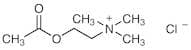
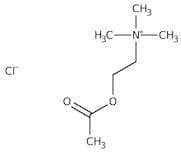
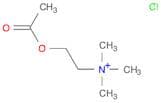
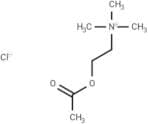
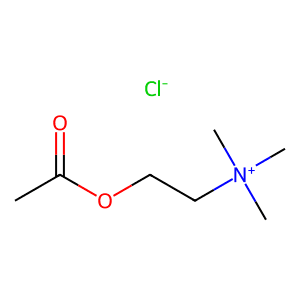
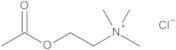
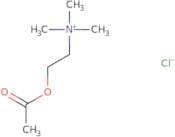
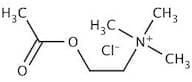
CAS 60-31-1
:Cloruro di acetilcolina
- (2-Hydroxyethyl)trimethylammonium chloride acetate
- 2-(Acetyloxy)-N,N,N-trimethylethanium chloride
- 2-Acetoxyethyltrimethylammonium chloride
- ACh chloride
- Acecholin
- Acecoline
- Acetylcholinchlorid
- Acetylcholinium chloride
- Arterocoline
- Chlorure d'acetylcholine
- Choline acetate (ester), chloride
- Cloruro De Acetilcolina
- Ethanaminium, 2-(acetyloxy)-N,N,N-trimethyl-, chloride
- Ethanaminium, 2-(acetyloxy)-N,N,N-trimethyl-, chloride (1:1)
- Miochol
- O-Acetylcholine chloride
- Ovisot
- Trimethyl(2-acetoxyethyl)ammonium chloride
- 2-(ACETYLOXY)-N,N,N-TRIMETHYLETHANAMINIUM CHLORIDE
- acetylcholinehydrochloride
- acetylcholiniumchloride
- (2-Hydroxyethyl)trimethylammoniumchlorideacetate
- ARTEROCHOLINE
- achchloride
- ammonium,(2-hydroxyethyl)trimethyl-,chloride,acetate
- ACETYLCHOLINI CHLORIDUM
- N-(2-HYDROXYETHYL)TRIMETHYLAMMONIUM CHLORIDE ACETATE
- choline,chlorideacetate
- ACH
- cholineacetate(ester),chloride
- ACETYLCHOLINE CHLORIDE
- Vedi altri sinonimi
Acetylcholine Chloride
CAS:Formula:C7H16ClNO2Purezza:>98.0%(T)Colore e forma:White powder to crystalPeso molecolare:181.66Acetylcholine chloride, 98+%
CAS:Acetylcholine chloride acts as an endogenous neurotransmitter at cholinergic synapses. The compound has been shown to have ophthalmological uses and can be broken down quickly by choliesterases. Acetylcholine influences many basic cells functions, such as mitosis, cells differentiation, cytoskeletalFormula:C7H16ClNO2Purezza:98+%Colore e forma:White, Crystals or powder or crystalline powder or fused/lumpy solidPeso molecolare:181.66ACETYLCHOLINE CHLORIDE CRS
CAS:ACETYLCHOLINE CHLORIDE CRSFormula:C7H16ClNO2Colore e forma:Crystalline Powder. Powder.Peso molecolare:181.6604Acetylcholine Chloride
CAS:Quaternary ammonium salts and hydroxides, whether or not chemically defined, otherFormula:C7H16ClNO2Colore e forma:White Crystalline PowderPeso molecolare:181.08696Acetylcholine chloride
CAS:Acetylcholine Chloride is the chloride salt form of acetylcholine, a synthetic, quaternary amino alcohol with cholinergic properties.Formula:C7H16ClNO2Purezza:98.02% - ≥95%Colore e forma:White Crystalline PowderPeso molecolare:181.66Acetylcholine chloride
CAS:Formula:C7H16ClNO2Purezza:≥ 98.0%Colore e forma:White to almost white crystalline powderPeso molecolare:181.66Ref: 4Z-C-5923
5mgPrezzo su richiesta10mgPrezzo su richiesta25mgPrezzo su richiesta50mgPrezzo su richiesta100mgPrezzo su richiestaAcetylcholine Chloride
CAS:Prodotto controllatoApplications Acetylcholine Chloride is a cholinergic.
References Molitor, H., et al.: J. Pharmacol. Exp. Ther., 58, 337 (1936),Formula:C7H16NO2·ClColore e forma:NeatPeso molecolare:181.66Acetylcholine chloride
CAS:Acetylcholine chloride (AChCl) is a chemical compound that is used as a neurotransmitter in the brain. It is involved in many important functions, such as memory and learning. Acetylcholine chloride can be detected by a chemiluminescent method using Sephadex G-100. Acetylcholine chloride has been shown to have significant effects on bowel disease and also has been shown to stimulate the contraction of smooth muscle tissue in the digestive tract. Acetylcholine chloride also binds to nicotinic acetylcholine receptors and causes the release of calcium ions from intracellular stores, which leads to an increase in intracellular calcium levels. This can lead to activation of other enzymes or proteins that are sensitive to changes in calcium levels. AChCl was first synthesized in 1878 by German chemists Otto Loewi and Henry Dale, who were studying the effects of electricity on frog nerves. The researchers found that when
Formula:C7H16NO2ClPurezza:Min. 95%Colore e forma:PowderPeso molecolare:181.66 g/molAcetylcholine Chloride extrapure, 99%
CAS:Formula:C7H16ClNO2Purezza:min. 99%Colore e forma:White, Crystalline hygroscopic compound, Clear, ColourlessPeso molecolare:181.67Acetylcholine chloride
CAS:Formula:C7H16ClNO2Purezza:95%Colore e forma:Crystalline Powder,LumpsPeso molecolare:181.66