CAS 60-32-2
:Acido 6-aminoesanoico
Descrizione:
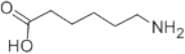
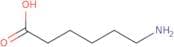
Acido 6-aminoesanoico, noto anche come acido ε-aminocaproico, è un amminoacido a sei atomi di carbonio con la formula molecolare C6H13NO2. Presenta un gruppo amminico (-NH2) e un gruppo acido carbossilico (-COOH) nella sua catena carboniosa, rendendolo un composto versatile nelle applicazioni biochimiche. Questo solido cristallino incolore è solubile in acqua e presenta una natura leggermente acida a causa del suo gruppo acido carbossilico. Acido 6-aminoesanoico è utilizzato principalmente nella sintesi di poliammidi, in particolare nylon-6, e funge da mattone in varie reazioni chimiche. Inoltre, ha applicazioni in medicina, in particolare come agente antifibrinolitico per ridurre il sanguinamento durante la chirurgia. Il composto è generalmente considerato sicuro se usato correttamente, ma può causare effetti collaterali in alcuni individui. Le sue proprietà strutturali gli consentono di partecipare a vari percorsi biochimici, rendendolo significativo sia in contesti industriali che farmaceutici.
Formula:C6H13NO2
InChI:InChI=1S/C6H13NO2/c7-5-3-1-2-4-6(8)9/h1-5,7H2,(H,8,9)
InChI key:InChIKey=SLXKOJJOQWFEFD-UHFFFAOYSA-N
SMILES:C(CC(O)=O)CCCN
Sinonimi:- 177 J.D.
- 6-Amino-n-hexanoic acid
- 6-Aminohexanoate
- 6-Aminohexanoic acid
- A 14719
- ACS
- Acepramin
- Acepramine
- Acide aminocaproique
- Acido Aminocaproico
- Acikaprin
- Afibrin
- Amicar
- Amikar
- Aminocaproic acid
- Aminocapronsaure
- Aminokapron
- An 0064-1
- Caplamin
- Capramol
- Caprocid
- Caproic acid, ε-amino-
- Caprolisin
- Cl 10304
- Cy 116
- E-Aminocaproic Acid
- Eaca
- Eacs
- Epsamon
- Epsicapron
- Epsikapron
- Epsilcapramin
- Epsilon S
- Epsilon-Aminocapronsaeure
- H-6-Aca-OH
- H-6-Ahx-OH
- H-EAhx-OH
- Hemocaprol
- Hemopar
- Hepin
- Hexanoic acid, 6-amino-
- Ipsilon
- Nsc 212532
- Nsc 26154
- Nsc 400230
- Respramin
- epsilon-Aminocaproic acid
- ε-Amino-n-caproic acid
- ε-Amino-n-hexanoic acid
- ε-Aminohexanoic acid
- ε-Leucine
- ε-Norleucine
- ω-Aminocaproic acid
- Vedi altri sinonimi
Ordinare per
Purezza (%)
0
100
|
0
|
50
|
90
|
95
|
100
21 prodotti.
6-Aminohexanoic Acid [for Biochemical Research]
CAS:Formula:C6H13NO2Purezza:>98.0%(T)Colore e forma:White to Almost white powder to crystalPeso molecolare:131.186-Aminohexanoic Acid
CAS:Formula:C6H13NO2Purezza:>98.0%(T)Colore e forma:White to Almost white powder to crystalPeso molecolare:131.186-Aminohexanoic acid, 99%
CAS:<p>6-aminohexanoic acid, 60-32-2, also known as aminocaproic acid, is commonly used to solubilize membrane proteins for electrophoresis. Learn more at Thermo Fisher Scientific.</p>Formula:C6H13NO2Purezza:99%Colore e forma:White, Crystalline powderPeso molecolare:131.18AMINOCAPROIC ACID CRS
CAS:<p>AMINOCAPROIC ACID CRS</p>Formula:C6H13NO2Colore e forma:PowderPeso molecolare:131.1729Aminocaproic Acid
CAS:Amino-acids and their esters other than those containing more than one kind of oxygen function, excluding aromatic amino-acids, nesoiFormula:C6H13NO2Colore e forma:White PowderPeso molecolare:131.176-Aminocaproic acid
CAS:<p>6-Aminocaproic acid (EACA) is an antifibrinolytic agent that acts by inhibiting plasminogen activators which have fibrinolytic properties.</p>Formula:C6H13NO2Purezza:99.55%Colore e forma:Fine White Crystalline Powder SolidPeso molecolare:131.176-Aminohexanoic acid
CAS:Formula:C6H13NO2Purezza:(Titration) 98.0 - 102.0 % (anhydrous basis)Colore e forma:White or almost white crystalline powder, or colourless crystalsPeso molecolare:131.186-Aminohexanoic acid
CAS:6-Aminohexanoic acidFormula:C6H13NO2Purezza:99%Colore e forma: white crystalline solidPeso molecolare:131.17g/mol6-Aminohexanoic acid, USP grade
CAS:Formula:C6H13NO2Purezza:98.5 - 101.5 % (anhydrous basis)Colore e forma:White crystalline powder or colourless crystalsPeso molecolare:131.186-Aminohexanoic Acid
CAS:Prodotto controllato<p>Applications 6-Aminohexanoic Acid is a reagent commonly used for the extraction of aldehydes from reaction mixtures. 6-Aminohexanoic Acid has also been shown to improve solubilization of membrane proteins in electrophoresis. Studies suggest that 6-Aminohexanoic Acid inhibits the activation of the first component of the complement system.<br>References Ohta ,S. et al.: Chem. Pharm. Bull., 28, 1917 (1980); Shagger, H. et al.: Anal. Biochem., 199, 223 (1991); Soter, N.A. et al.: J. Immunol., 114, 928 (1975);<br></p>Formula:C6H13NO2Colore e forma:WhitePeso molecolare:131.176-Aminocaproic acid
CAS:Formula:C6H13NO2Purezza:97%Colore e forma:Solid, Crystalline PowderPeso molecolare:131.175Aminocaproic Acid BP, 98.5-101%
CAS:Formula:C6H13NO2Purezza:98.5 - 101.0%Colore e forma:Whiteor almost white , Colourless, Crystalline powder, Crystals, Clear on standing standing 24hrs., Colourless, Solution S is colourless and remains clear on standing 24 hrs.Peso molecolare:131.17Aminocaproic Acid USP, 98.5-101%
CAS:Formula:C6H13NO2Purezza:98.5 -101.5% (On anhydrous bassis)Colore e forma:White or almost white , colourless, Crystalline powder or crystalsPeso molecolare:131.176-Aminocaproic Acid extrapure, 99%
CAS:Formula:C6H13NO2Purezza:min. 99%Colore e forma:White, Crystalline powder, Clear, ColourlessPeso molecolare:131.17Aminocaproic Acid IP
CAS:Formula:C6H13NO2Purezza:98.5 - 101.0%Colore e forma:Colourless or white, Crystals, crystalline powder, 20% aq. solution clear and colourless for 24 hrs.Peso molecolare:131.17Aminocaproic acid
CAS:<p>Aminocaproic acid is a non-specific lysing agent that is used in the treatment of acute blood clots. Aminocaproic acid has minimal toxicity and low-dose effects, and can be used for the treatment of thrombotic disorders. It also has biological properties that are different from those of aminocaproate, which can lead to a more rapid dissolution of the clot. Aminocaproic acid is an organic compound that belongs to the class of dicarboxylic acids. It is synthesized from two molecules of aminoacetic acid by the enzyme aminocaproic acid synthetase. The synthesis occurs in a two-step process: first, caprylic acid reacts with ATP to form aminopropyl-adenylate (APA), followed by hydrolysis by APA lyase to form aminocaproic acid.</p>Formula:C6H13NO2Colore e forma:PowderPeso molecolare:131.17 g/mol
![6-Aminohexanoic Acid [for Biochemical Research]](/_next/image/?url=https%3A%2Fstatic.cymitquimica.com%2Fproducts%2F3B%2Fthumb%2FA2255.jpg&w=3840&q=75)