CAS 6027-13-0
:L-Omocisteina
Descrizione:
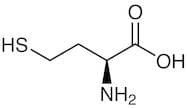
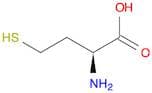
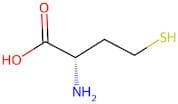
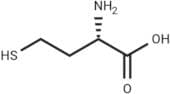
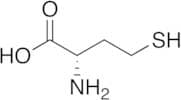
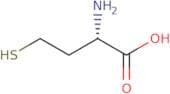
L-Omocisteina è un amminoacido non proteico che svolge un ruolo cruciale nel metabolismo degli amminoacidi contenenti zolfo, in particolare metionina e cisteina. È classificato come un amminoacido contenente tiolo a causa della presenza di un gruppo sulfidrilico (-SH). L-Omocisteina si trova tipicamente nel corpo come un intermedio nella via della transulfurazione ed è coinvolto nella sintesi della cisteina a partire dalla metionina. Livelli elevati di omocisteina nel sangue sono stati associati a vari problemi di salute, comprese le malattie cardiovascolari e i disturbi neurologici, rendendolo un importante biomarcatore in contesti clinici. Il composto è solubile in acqua ed exhibit una natura polare a causa dei suoi gruppi funzionali amminici e carbossilici. L-Omocisteina può esistere in diverse forme, comprese le sue forme ossidate, che possono partecipare ulteriormente a reazioni biochimiche. Il suo metabolismo è strettamente legato alle vitamine B6, B12 e acido folico, che sono essenziali per la sua conversione in altri metaboliti. In generale, L-Omocisteina è significativo sia nei percorsi metabolici che nelle valutazioni della salute.
Formula:C4H9NO2S
InChI:InChI=1/C4H9NO2S/c5-3(1-2-8)4(6)7/h3,8H,1-2,5H2,(H,6,7)/t3-/m0/s1
InChI key:InChIKey=FFFHZYDWPBMWHY-VKHMYHEASA-N
SMILES:[C@H](CCS)(C(O)=O)N
Sinonimi:- (S)-2-Amino-4-mercaptobutanoic acid
- (S)-Homocysteine
- 2-Amino-4-mercapto-<span class="text-smallcaps">L</span>-butyric acid
- 2-Amino-4-mercapto-L-butyric acid
- 2-Amino-4-mercaptobutyric acid
- <span class="text-smallcaps">L</span>-Homocysteine
- Butanoic acid, 2-amino-4-mercapto-, (S)-
- Butyric acid, 2-amino-4-mercapto-, <span class="text-smallcaps">L</span>-
- Butyric acid, 2-amino-4-mercapto-, L-
- Homocysteine
- L-Homocystein
- L-homocisteina
- Nsc 43117
- 2-Amino-4-mercaptobutyric acid (VAN)
- L-Homocysteine
- NSC 118376
- Butyric acid, 2-amino-4-mercapto-
- Butyric acid, 2-amino-4-mercapto-, L- (8CI)
- Butanoic acid, 2-amino-4-mercapto- (VAN)
- Butyric acid, 2-amino-4-mercapto- (8CI)
- Homocysteine (VAN)
- (S)-2-Amino-4-mercaptobutyric acid
- H-Hcys-OH
- (S)-Homocysteine, (S)-2-Amino-4-mercaptobutanoic acid
- Butyric acid, 2-amino-4-(methylthio)-, L-
- S-Methyl-L-homocysteine
- Vedi altri sinonimi
Ordinare per
Purezza (%)
0
100
|
0
|
50
|
90
|
95
|
100
9 prodotti.
L-Homocysteine
CAS:Formula:C4H9NO2SPurezza:>98.0%(T)Colore e forma:White to Light yellow powder to crystalPeso molecolare:135.18Ref: IN-DA0037FN
1g107,00€5g246,00€10g597,00€25gPrezzo su richiesta100gPrezzo su richiesta100mg32,00€250mg57,00€L-Homocysteine
CAS:Formula:C4H9NO2SPurezza:≥ 97.0%Colore e forma:White to off-white powderPeso molecolare:135.18L-Homocysteine
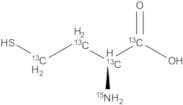
CAS:L-HomocysteinePurezza:100.0% (perchloric acid titration) (Typical Value in Batch COA)Colore e forma: white powderPeso molecolare:135.18g/molHomocysteine-13C4,15N
CAS:Prodotto controllatoFormula:C4H9NO2SColore e forma:NeatPeso molecolare:140.14L-Homocysteine
CAS:L-Homocysteine is a biological thiol associated with various diseases and conditions. It serves as a marker for atherosclerosis.Formula:C4H9NO2SPurezza:99.91%Colore e forma:SolidPeso molecolare:135.19L-Homocysteine
CAS:Prodotto controllatoStability Air Sensitive
Applications L-Homocysteine is the hydrolysis product of adenosine (A280400), a purine nucleoside. Metabolic fate of L-Homocysteine is converted back to L-Methionine( M260440) via tetrahydrofolate.
References Liu, X.D., et al.: Org. BIomolec. Chem., 11, 4258 (2013); Chen, C.S., et al.: Nueroendocrinol., 97, 232 (2013);Formula:C4H9NO2SColore e forma:NeatPeso molecolare:135.1848L-Homocysteine
CAS:L-Homocysteine is a versatile building block that can be used in synthesis as a reagent, and is also useful for research. CAS No. 6027-13-0. L-Homocysteine has the ability to react with many different compounds to form novel structures. It is used in the synthesis of drugs, agricultural chemicals, and other fine chemicals. L-Homocysteine is also a useful scaffold for the chemical reactions involved in organic synthesis. This chemical is an intermediate that can be converted into other compounds such as L-cysteine, which are used as a reaction component or as a precursor for pharmaceuticals and other products.Formula:C4H9NO2SPeso molecolare:135.19 g/mol