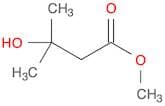
CAS 6149-45-7
:Acido butanoico, 3-idrossi-3-metil-, estere metilico
Descrizione:
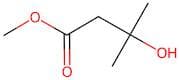
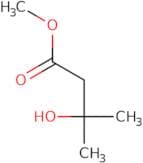
Acido butanoico, 3-idrossi-3-metil-, estere metilico, noto anche come metile 3-idrossi-3-metilbutanoato, è un composto organico caratterizzato dal suo gruppo funzionale estere derivato dall'acido butanoico. Presenta una struttura ramificata con un gruppo idrossile e un gruppo metile attaccati al terzo carbonio della catena dell'acido butanoico. Questo composto appare tipicamente come un liquido incolore o giallo pallido con un odore fruttato, rendendolo rilevante nelle applicazioni di sapore e fragranza. È solubile in solventi organici ed exhibit una solubilità moderata in acqua grazie alla presenza del gruppo idrossile. Il composto è noto per il suo potenziale utilizzo nella sintesi di vari prodotti chimici e come intermedio in reazioni organiche. Inoltre, potrebbe avere applicazioni nella produzione di polimeri biodegradabili e come agente aromatizzante nell'industria alimentare. I dati di sicurezza indicano che, come molti esteri, deve essere maneggiato con cura, poiché può causare irritazione al contatto con la pelle o gli occhi.
Formula:C6H12O3
Sinonimi:- 4-Bromo-2,18-diaminopyridine
- Methyl 3-hydroxy-3-methylbutanoate
- 3-Hydroxy-3-methylbutanoic acid methyl ester
- Butanoic acid, 3-hydroxy-3-methyl-, methyl ester
- methyl β-hydroxy-β-methylbutyrate
Ordinare per
Purezza (%)
0
100
|
0
|
50
|
90
|
95
|
100
4 prodotti.
3-Hydroxy-3-methylbutanoic acid methyl ester
CAS:Formula:C6H12O3Purezza:95%Colore e forma:LiquidPeso molecolare:132.1577Methyl 3-Hydroxy-3-Methylbutanoate
CAS:Methyl 3-Hydroxy-3-MethylbutanoatePurezza:98%Peso molecolare:132.15g/molMethyl 3-hydroxy-3-methylbutanoate
CAS:Methyl 3-hydroxy-3-methylbutanoate is a reactive compound that can be used as a building block in organic synthesis. It is used to synthesize a variety of compounds, including pharmaceuticals and agrochemicals. Methyl 3-hydroxy-3-methylbutanoate has been shown to react with methoxy groups to form methyl hydroxy groups. This reaction is catalyzed by the protonation of the oxygen atom on the reactant's oxygen atom, which leads to a cyclic transition state. Kinetic studies have been performed and show that the rate of this reaction increases with an increase in temperature. The kinetic parameters for this reaction are not currently known, but it has been shown that the nucleophilic attack on the carbon atom adjacent to the leaving group occurs from primary alcohols and alkyl halides.Formula:C6H12O3Purezza:Min. 95%Peso molecolare:132.16 g/mol