CAS 616-13-7
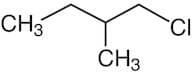
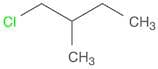
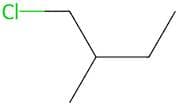
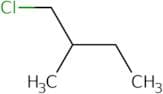
:1-cloro-2-metilbutano
Descrizione:
1-cloro-2-metilbutano è un composto organico classificato come alogenuro alchilico, specificamente un cloroalcano. Presenta una struttura a catena di butano di quattro atomi di carbonio con un atomo di cloro e un gruppo metile attaccati al secondo carbonio. Questa struttura gli conferisce la formula molecolare C5H11Cl. Il composto è tipicamente un liquido incolore con un odore caratteristico ed è noto per la sua volatilità moderata. È solubile in solventi organici, ma ha una solubilità limitata in acqua a causa della sua catena idrocarburica idrofobica. 1-cloro-2-metilbutano è utilizzato nella sintesi organica e come intermediario nella produzione di vari prodotti chimici. Può subire reazioni di sostituzione nucleofila, rendendolo un reagente utile nella chimica organica sintetica. Sono necessarie precauzioni di sicurezza quando si maneggia questo composto, poiché può essere irritante per la pelle e gli occhi e può comportare rischi per la salute se inalato o ingerito. È essenziale un corretto stoccaggio in un'area fresca e ben ventilata, lontano da sostanze incompatibili, per garantire la sicurezza.
Formula:C5H11Cl
InChI:InChI=1S/C5H11Cl/c1-3-5(2)4-6/h5H,3-4H2,1-2H3
InChI key:InChIKey=IWAKWOFEHSYKSI-UHFFFAOYSA-N
SMILES:C(CC)(CCl)C
Sinonimi:- 2-Methylbutyl chloride
- Butane, 1-chloro-2-methyl-
- Chloromethylbutane
- (±)-1-Chloro-2-methylbutane
- 1-Chloro-2-methylbutane
Ordinare per
Purezza (%)
0
100
|
0
|
50
|
90
|
95
|
100
4 prodotti.
1-Chloro-2-methylbutane
CAS:Formula:C5H11ClPurezza:>95.0%(GC)Colore e forma:Colorless to Light yellow to Light orange clear liquidPeso molecolare:106.591-Chloro-2-methylbutane
CAS:1-Chloro-2-methylbutane is a reactive, chiral molecule that has been used as a reagent to introduce the methyl group into organic compounds. 1-Chloro-2-methylbutane reacts with iodides in an acid solution to form the methyliodide salt and hydrogen gas. The reaction occurs at temperatures between 50°C and 150°C, but not at higher temperatures. The yield of this reaction depends on the concentration of iodide ions present, with lower concentrations producing a higher yield of product. A variety of frequencies can be used to irradiate the compound with light energy, each producing different results. At low frequencies (less than 10 Hz), the compound absorbs energy and heats up to produce vibrational modes. At high frequencies (greater than 100 Hz), the compound breaks down into two molecules, one containing chlorine and one containing iodine. Irradiation at wavelengths between 250 nm and 400 nm causes bond cleavage in the molecule, yieldingFormula:C5H11ClPurezza:Min. 95%Colore e forma:Clear LiquidPeso molecolare:106.59 g/mol