CAS 631-22-1
:1,3-Dietil 2,2-dibromopropanodioato
Descrizione:
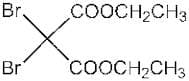
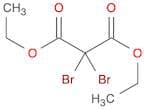
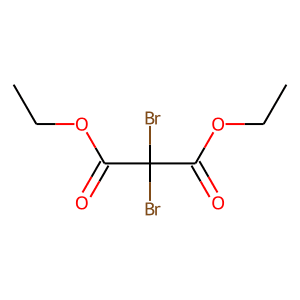
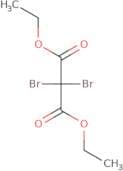
1,3-Dietil 2,2-dibromopropanodioato, con il numero CAS 631-22-1, è un composto organico appartenente alla classe dei diesteri. Presenta una struttura di propanodioato con due gruppi etilici attaccati al primo carbonio e due atomi di bromo sul secondo carbonio. Questo composto è tipicamente caratterizzato dalla sua bassa solubilità in acqua, a causa dei suoi gruppi etilici idrofobici, ma è solubile in solventi organici come etanolo e diclorometano. La presenza di atomi di bromo contribuisce alla sua reattività, rendendolo utile in varie applicazioni sintetiche, inclusa come intermedio nella sintesi organica. Inoltre, i gruppi funzionali di diestere conferiscono certe proprietà chimiche, come la capacità di subire reazioni di idrolisi e transesterificazione. Il composto può anche presentare tossicità moderata, richiedendo una manipolazione attenta in ambienti di laboratorio. In generale, 1,3-Dietil 2,2-dibromopropanodioato è un chimico versatile con applicazioni in chimica organica e scienza dei materiali.
Formula:C7H10Br2O4
InChI:InChI=1S/C7H10Br2O4/c1-3-12-5(10)7(8,9)6(11)13-4-2/h3-4H2,1-2H3
InChI key:InChIKey=PFZYFZRUPFUEOB-UHFFFAOYSA-N
SMILES:C(C(OCC)=O)(C(OCC)=O)(Br)Br
Sinonimi:- 1,3-Diethyl 2,2-dibromopropanedioate
- 2,2-Dibromomalonic acid diethyl ester
- Bis(ethoxycarbonyl)dibromomethane
- Dibromomalonic acid diethyl ester
- Diethyl 2,2-dibromopropanedioate
- Diethyl Dibromopropanedioate
- Ethyl dibromomalonate
- Malonic acid, dibromo-, diethyl ester
- NSC 6759
- Propanedioic acid, 2,2-dibromo-, 1,3-diethyl ester
- Propanedioic acid, dibromo-, diethyl ester
- Vedi altri sinonimi
Ordinare per
Purezza (%)
0
100
|
0
|
50
|
90
|
95
|
100
5 prodotti.
Diethyl dibromomalonate, 96%
CAS:This Thermo Scientific Chemicals brand product was originally part of the Alfa Aesar product portfolio. Some documentation and label information may refer to the legacy brand. The original Alfa Aesar product / item code or SKU reference has not changed as a part of the brand transition to Thermo SciFormula:C7H10Br2O4Purezza:96%Colore e forma:Clear colorless to pale yellow, LiquidPeso molecolare:317.96Diethyl 2,2-dibromomalonate
CAS:Diethyl 2,2-dibromomalonateFormula:C7H10Br2O4Purezza:≥95%Colore e forma: clear. light yellow liquidPeso molecolare:317.96g/mol1,3-diethyl 2,2-dibromopropanedioate
CAS:1,3-diethyl 2,2-dibromopropanedioate is a hydrogen bond donor that is used as an anti-inflammatory compound. It has been shown to inhibit the proliferation of growth factors in vitro and to have antioxidant activity. The synthesis of 1,3-diethyl 2,2-dibromopropanedioate is initiated by the condensation of malonic acid with dimethyl fumarate in the presence of a solid catalyst. This reaction produces a mixture of 1,3-diethyl 2,2-dibromopropanedioate and its corresponding diethyl ester. The diethyl ester can be converted into 1,3-diethyl 2,2-dibromopropanedioate by heating it under vacuum for 24 hours at 250°C. This process also removes any water or other impurities that may be present. The asymmetric synthesis of 1,3-dFormula:C7H10Br2O4Purezza:Min. 95%Peso molecolare:317.96 g/mol