CymitQuimica logo

CAS 6482-34-4

:

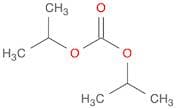
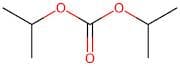
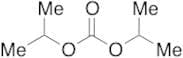
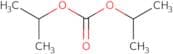
Carbonato di diisopropile

Descrizione:
Carbonato di diisopropile (DIPC) è un composto organico con la formula chimica C7H14O3. È classificato come un estere carbonico ed è caratterizzato dalla sua forma liquida chiara e incolore con un odore lieve e gradevole. Il DIPC è noto per la sua bassa tossicità ed è spesso utilizzato come solvente e reagente nella sintesi organica. Ha un punto di ebollizione relativamente basso ed è solubile in vari solventi organici, rendendolo versatile nelle applicazioni chimiche. Il composto è stabile in condizioni normali, ma deve essere conservato lontano da agenti ossidanti forti. Carbonato di diisopropile è anche utilizzato nella produzione di prodotti farmaceutici, agrochimici e come plastificante. Le sue proprietà, come la bassa volatilità e la buona solvibilità, lo rendono un'alternativa interessante a solventi più pericolosi in vari processi industriali. Inoltre, il DIPC può essere utilizzato nella formulazione di rivestimenti e adesivi, contribuendo alla sua importanza sia nella ricerca che nelle applicazioni commerciali.
Formula:C20H26O3
InChI:InChI=1/C20H26O3/c1-15-6-11-19(18(14-15)20(2,3)4)23-13-12-22-17-9-7-16(21-5)8-10-17/h6-11,14H,12-13H2,1-5H3
SMILES:Cc1ccc(c(c1)C(C)(C)C)OCCOc1ccc(cc1)OC
Sinonimi:
  • Bis-2-propyl carbonate
  • Carbonic acid bis(1-methylethyl) ester
  • Dipropan-2-Yl Carbonate
  • 2-Tert-Butyl-1-[2-(4-Methoxyphenoxy)Ethoxy]-4-Methylbenzene
Ordinare per

Purezza (%)
0
100
|
0
|
50
|
90
|
95
|
100
7 prodotti.
  • Diisopropyl carbonate

    CAS:
    Formula:C7H14O3
    Purezza:98%
    Colore e forma:Liquid
    Peso molecolare:146.1843

    Ref: IN-DA0036VP

    1g
    26,00€
    5g
    67,00€
    10g
    105,00€
    25g
    200,00€
    100g
    354,00€
    250mg
    25,00€
  • Diisopropyl carbonate

    CAS:
    Diisopropyl carbonate
    Purezza:98%
    Peso molecolare:146.19g/mol

    Ref: 54-OR75003

    1g
    30,00€
    5g
    58,00€
    25g
    215,00€
    100g
    447,00€
    500g
    1.913,00€
  • Tenofovir Impurity 84

    CAS:
    Formula:C7H14O3
    Peso molecolare:146.19

    Ref: 4Z-T-02129

    5mg
    Prezzo su richiesta
    10mg
    Prezzo su richiesta
    25mg
    Prezzo su richiesta
    50mg
    Prezzo su richiesta
    100mg
    Prezzo su richiesta
  • Diisopropyl carbonate

    CAS:
    Formula:C7H14O3
    Purezza:97%
    Colore e forma:Liquid
    Peso molecolare:146.186

    Ref: 10-F424157

    1g
    20,00€
    5g
    57,00€
    10g
    98,00€
    25g
    196,00€
    100g
    366,00€
  • Diisopropyl Carbonate (Stabilized with Calcium Carbonate)

    Prodotto controllato
    CAS:
    <p>Applications Diisopropyl Carbonate is used in the synthesis of Huperizine A (H826000) a reversible alkaloid inhibitor of AChE which crosses the blood-brain barrier. A potential therapeutic agent for Alzheimer’s disease. It reduces cell death induced by glutamate in primary cultures derived from forebrain, hippocampus, cortex and cerebellum of embryonic rat brain.<br>References Ding, X. et al.: Tetrahedron 68, 6240 (2012); Wang, Y.-E., et al.: Acta Pharmacol. Sin., 7, 110 (1986), Ved, H.S., et al.: Neuroreport, 8, 963 (1997)<br></p>
    Formula:C7H14O3
    Colore e forma:Neat
    Peso molecolare:146.18

    Ref: TR-D455500

    10g
    586,00€
    25g
    896,00€
    2500mg
    209,00€
  • Diisopropyl carbonate

    CAS:
    Formula:C7H14O3
    Peso molecolare:146.18

    Ref: ST-EA-CP-T5044

    10mg
    Prezzo su richiesta
    25mg
    Prezzo su richiesta
    50mg
    Prezzo su richiesta
    100mg
    Prezzo su richiesta
  • Diisopropylcarbonate

    CAS:
    <p>Diisopropylcarbonate is a chemical compound that is used as a polymerization initiator. It is also used in the production of polycarbonates, as a corrosion inhibitor, and to inhibit the formation of fatty acids in animal feed. Diisopropylcarbonate has been shown to react with chlorine gas to yield dichlorocarbonic acid and hydrogen chloride. This reaction is an example of oxidative carbonylation. The average particle diameter of diisopropylcarbonate ranges from 0.1-0.2 microns, which can be varied by changing its boiling point or pressure during synthesis. Diisopropylcarbonate can also be prepared by reacting ethylene with carbon monoxide and hydrogen chloride at high temperature and pressure.</p>
    Formula:C7H14O3
    Purezza:Min. 95%
    Peso molecolare:146.18 g/mol

    Ref: 3D-FD150101

    50g
    863,00€
    100g
    1.036,00€