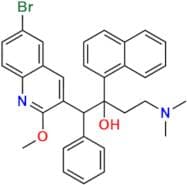
CAS 654655-80-8
:Bedaquiline (Mixture of Diastereomers)
CAS:Applications Bedaquiline is a diarylquinoline derivative that acts as a mycobacterial inhibitor. Bedaquiline shows promise as potential drug in the treatment of tuberculosis.
References de Jonge M.R. et al.: Proteins, 67, 971 (2007); Diacon A.H. et al.: N. Eng. J. Med., 360, 2397 (2009);Formula:C32H31BrN2O2Colore e forma:NeatPeso molecolare:555.5Bedaquiline-d6 (Mixture of Diastereomers)
CAS:Prodotto controllatoApplications Bedaquiline-d6 is the labelled analog of Bedaquiline, a diarylquinoline derivative that acts as a mycobacterial inhibitor. Bedaquiline shows promise as potential drug in the treatment of tuberculosis.
References de Jonge M.R. et al.: Proteins, 67, 971 (2007); Diacon A.H. et al.: N. Eng. J. Med., 360, 2397 (2009);Formula:C322H6H25BrN2O2Colore e forma:White To Off-WhitePeso molecolare:561.54Ref: ST-EA-CP-B50007
10mgPrezzo su richiesta25mgPrezzo su richiesta50mgPrezzo su richiesta100mgPrezzo su richiestaBedaquiline
CAS:Bedaquiline is a medicinal compound that acts as an inhibitor of protein kinases. It has been used as an anticancer agent due to its ability to inhibit the growth and proliferation of cancer cells. Bedaquiline works by binding to the ATP-binding site of kinases, thereby inhibiting their activity and leading to apoptosis in cancer cells. This compound has shown promise in treating Chinese hamster ovary (CHO) cells, which are commonly used in research for cancer therapies. Additionally, Bedaquiline has been found to be effective against urinary tract infections caused by certain bacteria by targeting the bacterial ATP synthase enzyme. This analog is a potent inhibitor of tumor growth and may have potential for the treatment of various types of cancers.
Formula:C32H31BrN2O2Purezza:Min. 95%Peso molecolare:555.5 g/mol