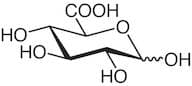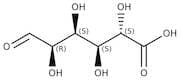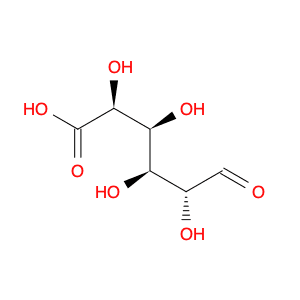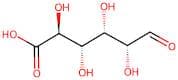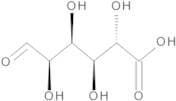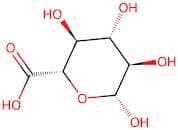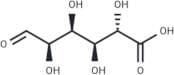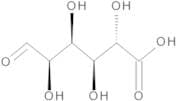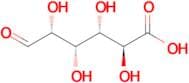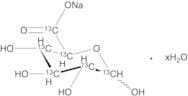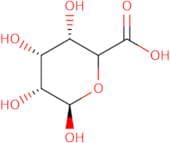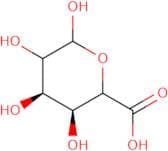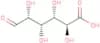
CAS 6556-12-3
:Acido D-glucuronico
- 7-deoxy-β-D-gluco-heptopyranos-6-ulose
- <span class="text-smallcaps">D</span>-(+)-Glucuronic acid
- Acide glucuronique
- Acido Glucuronico
- Glucosiduronic acid
- Glucuronic acid
- Glucuronic acid, <span class="text-smallcaps">D</span>-
- Glucuronic acid, D-
- Glucuronsaure
- Unii-8A5D83Q4Rw
- alpha-D-glucopyranuronic acid
- D-GlcA
- D-(+)-Glucuronic acid
- Vedi altri sinonimi
D-Glucuronic Acid
CAS:Formula:C6H10O7Purezza:>96.0%(T)(HPLC)Colore e forma:White to Almost white powder to crystalPeso molecolare:194.14D-Glucuronic acid, 98+%
CAS:D-Glucuronic acid is used as pharmaceutical intermediate and in chemical research. This Thermo Scientific Chemicals brand product was originally part of the Alfa Aesar product portfolio. Some documentation and label information may refer to the legacy brand. The original Alfa Aesar product / item coFormula:C6H10O7Purezza:98+%Colore e forma:Powder, WhitePeso molecolare:194.14D-Glucuronic Acid
CAS:Heterocyclic compounds with oxygen hetero-atom(s) only, nesoiFormula:C6H10O7Colore e forma:White Off-White Crystalline PowderPeso molecolare:194.04265D-Glucuronic acid
CAS:Formula:C6H10O7Purezza:98.0 - 102.0 %Colore e forma:White to almost white powder or crystalsPeso molecolare:194.14D-Glucuronic acid
CAS:D-Glucuronic acidFormula:C6H10O7Colore e forma: white crystalline powderPeso molecolare:194.14g/molRef: 4Z-G-067071
5mgPrezzo su richiesta10mgPrezzo su richiesta25mgPrezzo su richiesta50mgPrezzo su richiesta100mgPrezzo su richiestaD-Glucuronic acid
CAS:D-Glucuronic acid aids detox, forming water-soluble glucuronides via glucuronidation, key in metabolizing drugs and toxins.Formula:C6H10O7Purezza:99.91% - 99.95%Colore e forma:White SolidPeso molecolare:194.14D-Glucuronic Acid
CAS:Prodotto controllatoApplications D-Glucuronic acid is widely distributed in the plant and animal kingdoms. D-Glucuronic acid usually occurs in ‘’paired’’ form as a glycosidic combination with phenols, alcohols. Such glucuronides form in the liver to detoxify poisonous hydroxyl-containing substances. The glucuronides present in normal urine are those of phenol, cresol, and indoxyl. After the ingestion of poisons such as morphine, chloral hydrate, camphor, or turpentine, glucuronides formed with the poison or its hydroxylated derivatives appear in the urine.
References Levene, M., et al.: J. Biol. Chem., 92, 257 (1931); Miyamoto, I., et al.: Anal. Biochem., 115, 308 (1981);Formula:C6H10O7Colore e forma:WhitePeso molecolare:194.14(2S,3S,4S,5R)-2,3,4,5-Tetrahydroxy-6-oxohexanoic acid
CAS:Purezza:95.0%Colore e forma:Liquid, No data available.Peso molecolare:194.13900756835938Ref: 10-F242854
1gPrezzo su richiesta5g29,00€10g31,00€25g61,00€50g107,00€100g206,00€250g437,00€500g836,00€D-Glucuronic Acid-13C6 Sodium Salt Hydrate
CAS:Prodotto controllatoFormula:C6H9NaO7·xH2OColore e forma:WhitePeso molecolare:240.09D-Glucuronic acid, free acid
CAS:D-Glucuronic acid (GlcA) is D-glucose with position six oxidised to a carboxyl group (Collins, 2006). It is a common component of a number of gums and mucilages structurally related to pectins, where it is can be present as a terminal non reducing end residue (Renard, 1999). Glucuronic acid is also found in bacterial polysaccharides, such as, xanthan gum produced by Xanthomonas campestris (Faria, 2011), and in glycosaminoglycans, such as, heparan sulfate (Casale, 2020).
Formula:C6H10O7Peso molecolare:194.14 g/molD-Glucuronic acid
CAS:D-Glucuronic acid (GlcA) is D-glucose with position six oxidised to a carboxyl group (Collins, 2006). It is a common component of a number of gums and mucilages structurally related to pectins, where it is can be present as a terminal non reducing end residue (Renard, 1999). Glucuronic acid is also found in bacterial polysaccharides, such as, xanthan gum produced by Xanthomonas campestris (Faria, 2011), and in glycosaminoglycans, such as, heparan sulfate (Casale, 2020).Formula:C6H10O7Purezza:Min. 98%Colore e forma:White Off-White PowderPeso molecolare:194.14 g/molD-Glucuronic Acid extrapure, 98%
CAS:Formula:C6H10O7Purezza:min. 98%Colore e forma:White to off-white, Crystalline powderPeso molecolare:194.14