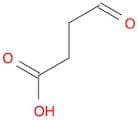
CAS 692-29-5
:Acido 4-ossobutanoico
- 3-Formylpropanoic acid
- 3-Formylpropionic acid
- 4-Oxobutyric Acid
- Butanoic Acid, 4-Oxo-
- Butyraldehydic acid
- Propanoic acid, 3-formyl-
- Succinaldehydic acid
- Succinic acid semialdehyde
- Succinic semialdehyde
- β-Formylpropionic acid
- γ-Oxybutyric acid
- Vedi altri sinonimi
Ref: 4Z-S-067008
5mgPrezzo su richiesta10mgPrezzo su richiesta25mgPrezzo su richiesta50mgPrezzo su richiesta100mg3.848,00€beta-Formylpropionic Acid
CAS:Prodotto controllatoApplications β-Formylpropionic Acid is used in the synthesis of potent and orally available nonpeptide antagonist of human gonadotropin-releasing hormone receptor. It is also a reagent in the synthesis of human melanocortin-4 receptor antagonists with a pyrrolidinone moiety.
References Chen, C. et al.: J. Med. Chem., 51, 7478 (2008); Jiang, W. et al.: Bioorg. Med. Med. Chem. Lett., 17, 5610 (2007);Formula:C4H6O3Colore e forma:NeatPeso molecolare:102.09Succinicsemialdehyde
CAS:Succinicsemialdehyde is a semialdehyde that is formed by the oxidative degradation of succinic acid. Succinicsemialdehyde has been shown to have high affinity for 5-HT3 receptors, which are found in the gastrointestinal tract and are involved in intestinal motility and bowel disease. The 5-HT3 receptor has been shown to be an important target for the treatment of irritable bowel syndrome. This semialdehyde also inhibits polymerase chain reaction (PCR) activity, which may be due to its ability to inhibit DNA synthesis. Succinicsemialdehyde has been shown to inhibit enzymes involved in energy metabolism, such as glutamate dehydrogenase and pyruvate formate lyase. The structural analysis of this molecule shows a keto group at C2, which indicates that it is a keto acid.
Formula:C4H6O3Purezza:Min. 95%Colore e forma:PowderPeso molecolare:102.09 g/mol