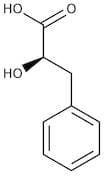
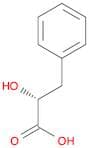
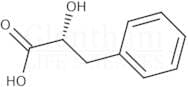
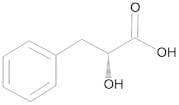
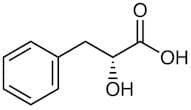
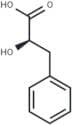
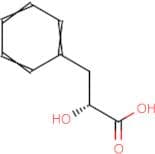
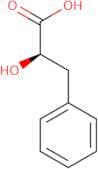
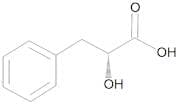
CAS 7326-19-4
:Acido (+)-3-fenillattico
- (+)-2-Hydroxy-3-phenylpropanoic acid
- (+)-2-Hydroxy-3-phenylpropionic acid
- (+)-3-Phenyllactic acid
- (+)-β-Phenyllactic acid
- (2R)-2-Hydroxy-3-phenylpropanoic acid
- (2R)-2-Hydroxy-3-phenylpropionic acid
- (2R)-2-hydroxy-3-phenylpropanoate
- (2R)-3-Phenyl-2-hydroxypropanoic acid
- (R)-2-Hydroxy-3-phenylpropanoic acid
- (R)-2-Hydroxy-3-phenylpropionic acid
- (R)-3-Phenyl-2-hydroxypropanoic acid
- (R)-3-Phenyl-2-hydroxypropionic acid
- (R)-3-phenyl-Lactic acid
- (R)-Phenyllactic acid
- (R)-a-Hydroxy-3-phenylpropionic acid
- (R)-a-hydroxy-Benzenepropanoic acid
- (R)-alpha-Hydroxy-3-phenylpropionic acid
- (R)-alpha-hydroxy-Benzenepropanoic acid
- (R)-b-Phenyllactic acid
- (R)-beta-Phenyllactic acid
- (αR)-α-Hydroxybenzenepropanoic acid
- 230-803-3
- 3-(R)-Phenyl lactic acid
- <span class="text-smallcaps">D</span>-(+)-3-Phenyllactic acid
- <span class="text-smallcaps">D</span>-2-Hydroxy-3-phenylpropionic acid
- <span class="text-smallcaps">D</span>-Phenyllactic acid
- <span class="text-smallcaps">D</span>-β-Phenyllactic acid
- Benzenepropanoic acid, α-hydroxy-, (R)-
- Benzenepropanoic acid, α-hydroxy-, (αR)-
- D-(+)-Phenyllactic Acid
- Lactic acid, 3-phenyl-, (R)-
- β-Phenyl-<span class="text-smallcaps">D</span>-lactic acid
- D-β-Phenyllactic acid
- (R)-3-phenyllactic acid
- D-BETA-PHENYLLACTIC ACID
- (+)-3-Phenyl-D-lactic acid
- D(+)-3-PHENYLLACTIC ACID
- D-2-Hydroxy-3-phenylpropionic acid
- a-Hydroxybenzenepropanoic acid, (R)-
- 3-Phenyl-D-lactic acid
- b-Phenyl-D-lactic acid
- (R)-2-Hydroxy-3-phenylpropionic acid, (R)-3-Phenyllactic acid
- Vedi altri sinonimi
D-(+)-3-Phenyllactic acid, 98%
CAS:D-(+)-3-Phenyllactic acid is a chiral building block that is used in preparation of statine. Starting material in preparation of the hypoglycemic agent enlitazone and of (15)N-labeled phenylalanine. This Thermo Scientific Chemicals brand product was originally part of the Alfa Aesar product portfoliFormula:C9H10O3Purezza:98%Colore e forma:White to pale cream, Crystals or powder or crystalline powderPeso molecolare:166.18(R)-2-Hydroxy-3-phenylpropanoic acid
CAS:Formula:C9H10O3Purezza:98%Colore e forma:SolidPeso molecolare:166.1739D-(+)-3-Phenyllactic acid
CAS:Formula:C9H10O3Purezza:(Titration) 97.5 - 102.5 %Colore e forma:White to yellow powder to crystalsPeso molecolare:166.18D-(+)-3-Phenyllactic Acid
CAS:Formula:C9H10O3Purezza:>98.0%(T)(HPLC)Colore e forma:White to Almost white powder to crystalPeso molecolare:166.18D-(+)-Phenyllactic acid
CAS:D-(+)-Phenyllactic acid (D-3-Phenyllactic acid) is an anti-bacterial agent, excreted by Geotrichum candidum, inhibits Gram-positive and Gram-negative bacteria.Formula:C9H10O3Purezza:98.99%Colore e forma:SolidPeso molecolare:166.17(R)-2-Hydroxy-3-phenylpropionic acid
CAS:(R)-2-Hydroxy-3-phenylpropionic acidPurezza:98%Peso molecolare:166.17g/molD-(+)-Phenyllactic acid
CAS:D-(+)-phenyllactic acid is a pharmaceutical drug that is used to catalyze the asymmetric synthesis of chiral compounds. It is an enantiomer of L-phenyllactic acid, and it has been shown to be effective in the treatment of patients with breast cancer. D-(+)-phenyllactic acid can also be used to catalyze the formation of taxol, a clinical drug which has been shown to inhibit tumor growth. D-(+)-phenyllactic acid binds to the active site of catalase, an enzyme that breaks down hydrogen peroxide in cells. The reaction mechanism for catalysis by D-(+)-phenyllactic acid is not well understood, but it may involve monocarboxylic acids such as formic or acetic acids.
Formula:C9H10O3Purezza:Min. 95%Colore e forma:White PowderPeso molecolare:166.17 g/mol(R)-2-Hydroxy-3-phenylpropionic acid
CAS:Formula:C9H10O3Purezza:98%Colore e forma:CrystallinePeso molecolare:166.176D-(+)-3-Phenyllactic Acid
CAS:Prodotto controllatoApplications: D-(+)-3-Phenyllactic Acid is an 3-aryl analogue of D-Lactic acid with antimicrobial activity. D-(+)-3-Phenyllactic Acid is partiularly effective in inhibiting the growth of Listeria monocytogenes.
References Dieuleveux, V. et al.: Int. J. Food Microbiol., 40, 177 (1998); Dieuleveux, V. et al.: J. Food Prot., 61, 1281 (1998);Formula:C9H10O3Colore e forma:NeatPeso molecolare:166.174