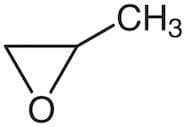
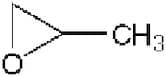
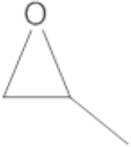
CAS 75-56-9
:(±)-Ossido di propilene
Descrizione:
(±)-Ossido di propilene, con il numero CAS 75-56-9, è un liquido incolore e infiammabile con un odore caratteristico. È un epossido, un etere ciclico a tre membri, che lo rende altamente reattivo, in particolare con nucleofili. Questo composto è utilizzato principalmente come intermedio nella produzione di polioli di polietere per schiume di poliuretano, così come nella sintesi di vari prodotti chimici. La sua formula molecolare è C3H6O e ha un punto di ebollizione relativamente basso, il che contribuisce alla sua volatilità. Il composto presenta caratteristiche sia polari che non polari grazie alla presenza dell'ossigeno dell'etere, permettendo di dissolversi in una varietà di solventi. Inoltre, (±)-Ossido di propilene è noto per i suoi potenziali rischi per la salute, inclusa l'irritazione della pelle, degli occhi e del sistema respiratorio, ed è classificato come un possibile cancerogeno umano. La corretta manipolazione e le precauzioni di sicurezza sono essenziali quando si lavora con questa sostanza in ambienti industriali e di laboratorio.
Formula:C3H6O
InChI:InChI=1/C3H6O/c1-3-2-4-3/h3H,2H2,1H3
InChI key:InChIKey=GOOHAUXETOMSMM-UHFFFAOYSA-N
SMILES:CC1CO1
Sinonimi:- (.+-.)-2-Methyloxirane
- (R,S)-2-Methyl-oxirane
- 1,2-Epossipropano
- 1,2-Epoxipropano
- 1,2-Epoxy-Propan
- 1,2-Epoxypropan
- 1,2-Epoxypropane
- 1,2-Propylene oxide
- 1,2-エポキシプロパン
- 2,3-Epoxypropane
- 2-Methyloxiran
- <span class="text-smallcaps">DL</span>-1,2-Epoxypropane
- AD 6 (suspending agent)
- Ad 6
- Chemogas NV
- DL-1,2-Epoxypropane
- Epihydrin
- Epossipropano, 1,2-
- Epoxipropano, 1,2-
- Epoxypropan, 1,2-
- Epoxypropane
- Époxypropane, 1,2-
- Methyl ethylene oxide
- Methyl oxirane
- Methyloxacyclopropane
- Methyloxiran
- Methyloxirane
- Methyloxiranne
- Metiloxirano
- Ossido di Propilene
- Oxirane, 2-methyl-
- Oxirane, methyl-
- Oxypropylene
- Óxido de propileno
- Propane, 1,2-Epoxy-
- Propene oxide
- Propozone
- Propylene epoxide
- Propyleneoxide
- Propylenoxid
- Propylène, oxyde de
- dl-Propylene oxide
- rac-Propylene oxide
- プロピレンオキシド
- Propylene oxide
- DL-methyloxirane
- caswellno713a
- epoxy-propan
- epapesticidechemicalcode042501
- PO
- ai3-07541
- 3-Methyl-1,2-epoxypropane
- Vedi altri sinonimi
Ordinare per
Purezza (%)
0
100
|
0
|
50
|
90
|
95
|
100
7 prodotti.
Propylene Oxide
CAS:Formula:C3H6OPurezza:>99.0%(GC)Colore e forma:Colorless to Almost colorless clear liquidPeso molecolare:58.08(±)-Propylene oxide, >99%
CAS:Propylene oxide is used as a precursor in the production of polyether polyols, which is utilized for making polyurethane plastics, polypropylene glycols, propylene glycol ethers and propylene carbonate. It is involved in the preparation of biological samples for electron microscopy. It plays a vitaFormula:C3H6OPurezza:99%Colore e forma:Liquid, ColorlessPeso molecolare:58.08Propylene Oxide
CAS:Methyloxirane (propylene oxide)Formula:C3H6OColore e forma:Colorless LiquidPeso molecolare:58.04186Ref: 4Z-D-6264
5mgPrezzo su richiesta10mgPrezzo su richiesta25mgPrezzo su richiesta50mgPrezzo su richiesta100mgPrezzo su richiesta(±)-Propylene Oxide
CAS:Prodotto controllatoStability Volatile
Applications (±)-Propylene Oxide is a carcinogenic substance to rats and potentially humans (1). (±)-Propylene oxide also has the ability to self-polymerize at room temperature in the presence of powdered potassium hydroxide (2). (±)-Propylene oxide is used in industry for fumigation in the food industry, inducing the formation of persistent toxic chlorohydrins. Drinking water contaminant candidate list 3 (CCL 3) compound as per United States Environmental Protection Agency (EPA), environmental, and food contaminants.
E3
References 1. Dunkelberg, H. et al.: Brit. J. Cancer. 1982 Dec;46(6):924-33.2. St. Pierre, L. et al.: J. Am. Chem. Soc. 1956 78 (14), pp 3432–3436Formula:C3H6OColore e forma:ColourlessPeso molecolare:58.08