CAS 75968-40-0
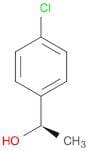
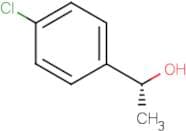
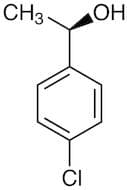
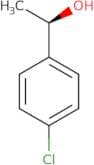
:(R)-1-(4-Clorofenil)etanolo
Descrizione:
(R)-1-(4-Clorofenil)etanolo, con il numero CAS 75968-40-0, è un composto organico caratterizzato dalla sua struttura chirale, che include un gruppo idrossile (-OH) attaccato a un atomo di carbonio secondario. Questo composto presenta un gruppo 4-clorofenile, che indica la presenza di un atomo di cloro sostituito sull'anello fenilico, il che può influenzare la sua reattività chimica e le proprietà fisiche. La chiralità della molecola significa che esiste in due forme enantiomeriche, con la configurazione (R) che è una di esse, che può avere attività biologiche e interazioni distinte. Tipicamente, composti come questo possono mostrare una solubilità moderata in solventi polari a causa del gruppo idrossile, mentre l'anello aromatico contribuisce a caratteristiche idrofobiche. La presenza dell'atomo di cloro può aumentare la lipofilia del composto e può anche influenzare le sue proprietà farmacologiche. Tali composti sono spesso di interesse nella chimica medicinale e possono servire come intermedi nella sintesi di farmaci o agrochimici.
Formula:C8H9ClO
Sinonimi:- (1R)-1-(4-chlorophenyl)ethanol
- (R)-1-(4-Chloro-phenyl)-ethanol
- R-1-(4-Chloro)phenethyl Alcohol
- (R)-(+)-1-(4-chlorophenyl)ethan-1-ol
- (R)-(+)-1-(4-chlorophenyl)-1-ethanol
Ordinare per
Purezza (%)
0
100
|
0
|
50
|
90
|
95
|
100
5 prodotti.
(R)-1-(4-CHLOROPHENYL)ETHANOL
CAS:Formula:C8H9ClOPurezza:95%Colore e forma:LiquidPeso molecolare:156.6095(R)-1-(4-Chlorophenyl)ethanol
CAS:(R)-1-(4-Chlorophenyl)ethanolPurezza:97%Peso molecolare:156.61g/mol(R)-1-(4-Chlorophenyl)ethan-1-ol
CAS:Formula:C8H9ClOPurezza:>98.0%(GC)Colore e forma:Colorless to Light yellow clear liquidPeso molecolare:156.61(R)-1-(4-Chlorophenyl)ethanol
CAS:Formula:C8H9ClOPurezza:95%Colore e forma:LiquidPeso molecolare:156.61(R)-1-(4-Chlorophenyl)ethanol
CAS:(R)-1-(4-Chlorophenyl)ethanol is a chiral alcohol that can be used in the synthesis of enantiopure compounds. The racemic mixture of this alcohol is not suitable for use as a substrate in asymmetric synthesis because it has no optical activity. This alcohol is oxidized by dehydrogenase enzymes to form (S)-1-(4-chlorophenyl)ethanol and an H radical, which then reacts with O2 to form HO2 and (R)-1-(4-chlorophenyl)ethyl radical. The reactivity of these two radicals will depend on the concentration of the substrate and the presence of other substrates that compete with it for binding sites on the enzyme. In general, short-chain alcohols are more easily hydrated than longer chain alcohols. The reaction rate also increases with temperature, although at high temperatures, substrate binding and product release may become limiting factors.Formula:C8H9ClOPurezza:Min. 95%Peso molecolare:156.61 g/mol