CAS 76-22-2
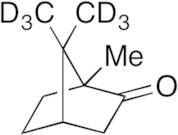
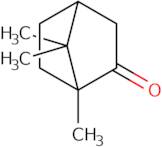
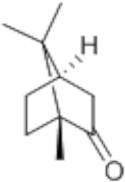
:(±)-Canfora
Descrizione:
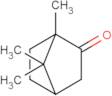
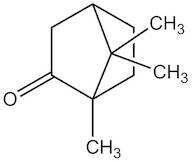
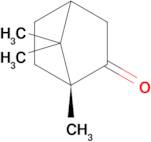
(±)-Canfora, con il numero CAS 76-22-2, è una chetone monoterpenica biciclica derivata dal legno dell'albero di canfora (Cinnamomum camphora) e può anche essere sintetizzata da altre fonti. Si presenta come un solido cristallino bianco con un odore aromatico caratteristico. La canfora è nota per la sua distintiva sensazione di freschezza ed è utilizzata in varie applicazioni, tra cui prodotti medicinali, culinari e cosmetici. Presenta un punto di fusione intorno alla temperatura ambiente ed è solubile in solventi organici, ma ha una solubilità limitata in acqua. Il composto possiede proprietà analgesiche e anti-infiammatorie, rendendolo un ingrediente comune in unguenti e sfregamenti topici. Inoltre, (±)-Canfora è stato utilizzato nella medicina tradizionale ed è riconosciuto per il suo potenziale come repellente naturale per insetti. La sua natura chirale significa che esiste in due forme enantiomeriche, ma la miscela racemica è spesso utilizzata in applicazioni commerciali. Le considerazioni di sicurezza includono la possibile irritazione della pelle e tossicità a dosi elevate, richiedendo un'attenta manipolazione.
Formula:C10H16O
InChI:InChI=1S/C10H16O/c1-9(2)7-4-5-10(9,3)8(11)6-7/h7H,4-6H2,1-3H3
InChI key:InChIKey=DSSYKIVIOFKYAU-UHFFFAOYSA-N
SMILES:CC12C(C)(C)C(CC1=O)CC2
Sinonimi:- 1,7,7-Trimethyl-bicyclo [2,2,1] heptanone-2
- 1,7,7-Trimethylbicyclo(2.2.1)heptan-2-one
- 1,7,7-Trimethylbicyclo[2.2.1]-2-heptanone
- 1,7,7-Trimethylnorcamphor
- 2-Bornanone
- 2-Camphanone
- <span class="text-smallcaps">DL</span>-Camphor
- Alphanon
- Bicyclo[2.2.1]heptan-2-one, 1,7,7-trimethyl-
- Bornan-2-Ona
- Bornan-2-One
- Bornan-2-One, Dl-
- Bornan-2-on
- Bornane-2-One
- Borneo camphor
- Campher
- DL-Camphor
- Hcxl 8899
- Racemic camphor
- Root bark oil
- Spirit of camphor
- Camphor
- Synthetic camphor
- Vedi altri sinonimi
Filtra per
Percentuale di purezza
0
100
|
0
|
50
|
90
|
95
|
100
- Prezzo più basso
- Prezzo più alto
- Purezza più bassa
- Purezza più alta
- Consegna più veloce
Camphor
CAS:Camphor (2-Camphanone) is a bicyclic monoterpene ketone found widely in plants, especially CINNAMOMUM CAMPHORA.Formula:C10H16OPurezza:95.65% - 99.53%Colore e forma:Clear White Crystals Characteristic Odor Solid PowderPeso molecolare:152.2334Ref: 4Z-C-211002
5mgPrezzo su richiesta10mgPrezzo su richiesta25mgPrezzo su richiesta50mgPrezzo su richiesta100mgPrezzo su richiestaDL-Camphor
CAS:Alicyclic ketoneFormula:C10H16OPurezza:≥ 90.0 % (GC)Colore e forma:PowderPeso molecolare:152.24Camphor
CAS:Camphor is a natural compound that has been shown to be an effective antimicrobial agent. Camphor has been shown to inhibit the growth of bacteria by binding to the bacterial membrane, inhibiting electron transport and leading to a decrease in mitochondrial membrane potential. Camphor also inhibits the growth of cancer cells in experimental models. Camphor can be used as an antimicrobial in wastewater treatment and as an insect repellent for skin protection. Camphor is also used in x-ray crystallography to determine structures of proteins and other organic molecules with high electron density such as benzalkonium chloride.Formula:C10H16OPurezza:Min. 95%Colore e forma:Colorless Clear LiquidPeso molecolare:152.23 g/molCamphor pure, 95%
CAS:Formula:C10H16OPurezza:min. 95.0%Colore e forma:White, Crystalline compound with characteristic odour, Clear, ColourlessPeso molecolare:152.2