CAS 76115-06-5
:Fenolo, 4-(trifeniletenil)-
Descrizione:
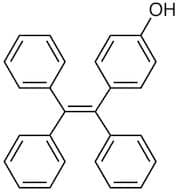
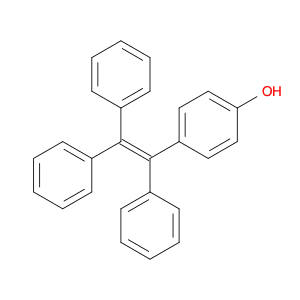
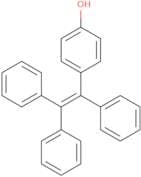
Fenolo, 4-(trifeniletenil)-, noto anche con il suo numero CAS 76115-06-5, è un composto organico caratterizzato dalla presenza di un gruppo idrossilico fenolico (-OH) attaccato a un atomo di carbonio che è anche legato a un gruppo triphenylethenyl. Questa struttura conferisce proprietà uniche, inclusa la sua potenziale applicazione nella sintesi organica e nella scienza dei materiali. Il composto tipicamente presenta uno stato solido a temperatura ambiente ed è noto per le sue caratteristiche aromatiche grazie alla presenza di più anelli fenilici, che contribuiscono alla sua stabilità e reattività. Può mostrare interessanti proprietà ottiche, rendendolo un candidato per applicazioni in fotonica o come colorante. Inoltre, la presenza del gruppo idrossilico suggerisce un potenziale per legami idrogeno, influenzando la sua solubilità e interazione con altre sostanze. Devono essere considerate le questioni di sicurezza, poiché i composti fenolici possono essere tossici e richiedono una manipolazione attenta in ambienti di laboratorio. In generale, Fenolo, 4-(trifeniletenil)- è un composto versatile con applicazioni in vari campi della chimica.
Formula:C26H20O
Ordinare per
Purezza (%)
0
100
|
0
|
50
|
90
|
95
|
100
5 prodotti.
4-(1,2,2-Triphenylvinyl)phenol
CAS:Formula:C26H20OPurezza:>95.0%(GC)Colore e forma:White to Almost white powder to crystalPeso molecolare:348.454-(1,2,2-Triphenylethenyl)phenol
CAS:Formula:C26H20OPurezza:96%Colore e forma:SolidPeso molecolare:348.43644-(1,2,2-Triphenylvinyl)phenol
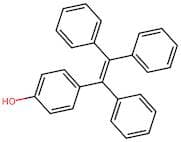
CAS:4-(1,2,2-Triphenylvinyl)phenolPurezza:98%Peso molecolare:348.45g/mol4-(1,2,2-triphenylvinyl)phenol
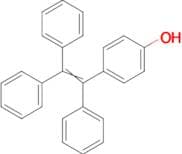
CAS:4-(1,2,2-triphenylvinyl)phenol is a fluorescent molecule that can be used as a biomarker for Listeria monocytogenes. The fluorescence of 4-(1,2,2-triphenylvinyl)phenol is quenched when it binds to the bacteria and then restored when it is removed from the bacteria. This molecule has been shown to bind to bacterial DNA and proteins. It has also been shown to have hydrophobic properties and can be used for fingerprint analysis. 4-(1,2,2-triphenylvinyl)phenol has been synthesized through a Suzuki coupling reaction with chloroacetophenone and 1,4-dibromobutane. It has two isomers: one with two phenyl groups on either side of the vinyl group and one with only one phenyl group on either side of the vinyl group.Formula:C26H20OPurezza:Min. 95%Colore e forma:SolidPeso molecolare:348.44 g/mol