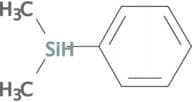
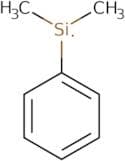
CAS 766-77-8
:Dimetilfenilsilano
- (Dimethylsilyl)benzene
- Benzene, (dimethylsilyl)-
- Dimethyl(Phenyl)Silyl
- Dimethylphenylhydrosilane
- Dimethylphenylsilan
- Dimethylphenylsilane
- Fenildimetilsilano
- Ls 2010
- Silane, dimethylphenyl-
- Sip 6729
- Phenyldimethylsilane
- BUFFER SOLUTION, PH 4.63
- ACETATE BUFFER, PH 3.5
- ACETATE BUFFER, PH 4.5
- ACETATE BUFFER, PH 4.0
- BUFFER SOLUTION (ACETATE), PH 4.00
- BUFFER ACETATE
- BUFFER SOLUTION (ACETATE), PH 4.0-4.5
- ACETATE BUFFER SOLUTION R-455
- BUFFER, PH 4.63
- BUFFER PH 4.65
- ACETATE BUFFER
- BUFFER SOLUTION, PH 4.0, ACETATE
- ACETATE BUFFER, PH 6.0
- BUFFER SOLUTION
- BUFFER PH7.20
- ACETATE BUFFER REAGENT
- ACETATE BUFFER TS
- BUFFER ACETATE, PH 4.00
- ACETIC ACID-SODIUM ACETATE
- Vedi altri sinonimi
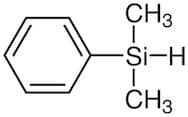
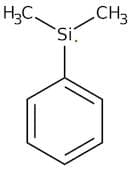
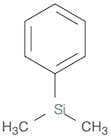
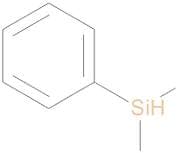
Dimethylphenylsilane
CAS:Formula:C8H12SiPurezza:>97.0%(GC)Colore e forma:Colorless to Almost colorless clear liquidPeso molecolare:136.27Dimethylphenylsilane, 97%
CAS:Dimethylphenylsilane is a reagent for enol ether synthesis. It acts as a catalyst. Also used as a precursor in Optical Emission Spectroscopy of Plasma Deposition Processes. It can react with vinylbenzene to produce (b-Phenyl-ethyl)-dimethylphenyl-silan. This Thermo Scientific Chemicals brand productFormula:C8H11SiPurezza:97%Colore e forma:Liquid, Clear colorlessPeso molecolare:135.26Phenyldimethylsilane
CAS:S13425 - Phenyldimethylsilane
Formula:C8H12SiPurezza:98%Colore e forma:Liquid, ClearPeso molecolare:136.269Dimethylphenylsilane
CAS:Dimethylphenylsilane is a chemical compound that belongs to the group of trifluoroacetic acid derivatives. It is used as an antimicrobial agent and has been shown to be effective against Gram-positive bacteria, Gram-negative bacteria, and yeast. Dimethylphenylsilane has been shown to inhibit the proliferation of microorganisms by binding to the hydroxyl group in methacrylates and irreversible oxidation of unsaturated alkyl compounds. The reaction mechanism for this process is still unclear but it is thought that it may involve a transfer reaction or a reaction intermediate. Dimethylphenylsilane can be used as a solid catalyst in reactions involving unsaturated alkyl compounds.
Formula:C8H12SiPurezza:Min. 95%Colore e forma:Clear LiquidPeso molecolare:136.27 g/molPHENYLDIMETHYLSILANE
CAS:Phenyl-Containing Blocking Agent
Used as a protecting group for reactive hydrogens in alcohols, amines, thiols, and carboxylic acids. Organosilanes are hydrogen-like, can be introduced in high yield, and can be removed under selective conditions. They are stable over a wide range of reaction conditions and can be removed in the presence of other functional groups, including other protecting groups. The tolerance of silylated alcohols to chemical transformations summary is presented in Table 1 of the Silicon-Based Blocking Agents brochure.
Tri-substituted Silane Reducing Agent
Organosilanes are hydrocarbon-like and possess the ability to serve as both ionic and free-radical reducing agents. These reagents and their reaction by-products are safer and more easily handled and disposed than many other reducing agents. The metallic nature of silicon and its low electronegativity relative to hydrogen lead to polarization of the Si-H bond yielding a hydridic hydrogen and a milder reducing agent compared to aluminum-, boron-, and other metal-based hydrides. A summary of some key silane reductions are presented in Table 1 of the Silicon-Based Reducing Agents brochure.
Phenyldimethylsilane; Dimethylphenylsilane;
Vapor pressure, 25 °C: 4 mmReacts with alcohols in presence of Wilkinson’s catalystUsed to prepare α-phenyldimethylsilyl esters with high enantioselectivityYields optically active reduction products with chiral Rh or Pd catalystsUndergoes 1,4-addition to pyridines forming N-silylated dihydropyridinesUsed in the fluoride ion-catalyzed reduction of aldehydes and ketones, and α-substituted alkanones to threo productsHydrosilylation of 1,4-bis(trimethylsilyl)butadiyne can go to the trisilyl allene or the trisilyl enyneErythro reduction of α-substituted alkanones to diols and aminoethanolsUsed to reduce α-amino ketones to aminoethanols with high stereoselectivityTogether with CuCl reduces aryl ketones, but not dialkyl ketonesUsed in the silylformylation of acetylenesExcellent reducing agent for the reduction of enones to saturated ketonesShows better selectivity than LAH in the reduction of oximes to alkoxyamines.Extensive review of silicon based reducing agents: Larson, G.; Fry, J. L. "Ionic and Organometallic-Catalyzed Organosilane Reductions", Wipf, P., Ed.; Wiley, 2007Summary of selective deprotection conditions is provided in Table 7 through Table 20 of the Silicon-Based Blocking Agents brochureFormula:C8H12SiPurezza:97%Colore e forma:LiquidPeso molecolare:136.27Ref: 3H-SIP6729.0
Prodotto fuori produzione