CAS 7776-48-9
:L-Fruttosio
Descrizione:
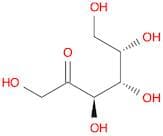
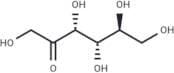
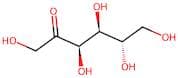
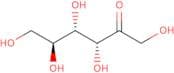
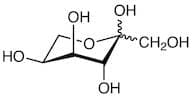
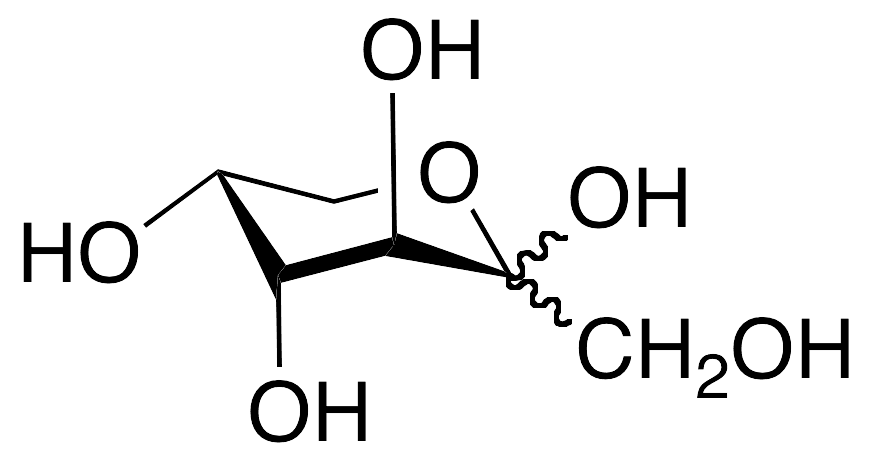
L-Fruttosio, con il numero CAS 7776-48-9, è uno zucchero semplice che si verifica naturalmente, o monosaccaride, che è classificato come un cetoesoso a causa dei suoi sei atomi di carbonio e di un gruppo funzionale chetonico. Si trova comunemente in frutta, miele e ortaggi a radice, contribuendo alla loro dolcezza. L-Fruttosio è noto per la sua alta solubilità in acqua ed è più dolce del glucosio e del saccarosio, rendendolo un dolcificante popolare nei prodotti alimentari. Ha una formula molecolare di C6H12O6 ed esiste sia in forma lineare che in diverse forme cicliche, prevalentemente come un anello a cinque membri in soluzione. L-Fruttosio viene metabolizzato in modo diverso rispetto al glucosio, principalmente nel fegato, e può influenzare i livelli di insulina e zucchero nel sangue in modo più sottile. Inoltre, è igroscopico, il che significa che può assorbire umidità dall'ambiente, il che può influenzare la sua stabilità e conservazione. Sebbene sia generalmente riconosciuto come sicuro, il consumo eccessivo di fruttosio è stato collegato a vari problemi di salute, tra cui obesità e sindrome metabolica.
Formula:C6H12O6
InChI:InChI=1S/C6H12O6/c7-1-3(9)5(11)6(12)4(10)2-8/h3,5-9,11-12H,1-2H2/t3-,5-,6-/m0/s1
InChI key:InChIKey=BJHIKXHVCXFQLS-FUTKDDECSA-N
SMILES:[C@@H]([C@H](C(CO)=O)O)([C@H](CO)O)O
Sinonimi:- <span class="text-smallcaps">L</span>-Fructose
- <span class="text-smallcaps">L</span>-arabino-2-Hexulose
- D-fructopyranose
- Fructose, <span class="text-smallcaps">L</span>-
- L-Arabino-hexulose
- L-arabino-2-Hexulose
- L-Fructose
- Fructose, L-
Ordinare per
Purezza (%)
0
100
|
0
|
50
|
90
|
95
|
100
9 prodotti.
L-(+)-Fructose
CAS:L-(+)-Fructose, also known as L-arabino-2-Hexulose, is an L-isomer of D-Fructose. This compound plays a role in both glycolysis and gluconeogenesis, making it useful for researching photosynthesis and carbohydrate storage in plant biology. Additionally, L-(+)-Fructose is utilized in studies of fructokinase and other enzymes involved in fructose metabolism.Formula:C6H12O6Colore e forma:SolidPeso molecolare:180.16L-Fructose
CAS:Formula:C6H12O6Purezza:≥ 96.0%Colore e forma:White to almost white crystalline powderPeso molecolare:180.16Ref: 4Z-F-161021
5mgPrezzo su richiesta10mgPrezzo su richiesta25mgPrezzo su richiesta50mgPrezzo su richiesta100mgPrezzo su richiestaL-Fructose
CAS:L-FructoseFormula:C6H12O6Purezza:By hplc: 92.6% (Typical Value in Batch COA)Colore e forma: white crystalline powderPeso molecolare:180.16g/molL-Fructose
CAS:L-Fructose is a non-reducing sugar that is found in many plants, including honey and fruits. It plays an important role in energy metabolism, as it can be converted to L-glyceraldehyde 3-phosphate by the enzyme aldolase. L-Fructose has also been used in the synthesis of oligosaccharides and other carbohydrates. The analytical method for determining L-fructose involves hydrolysis with acid followed by measurement of the released hydrogen peroxide. The cell culture technique can be used to measure the growth of bacteria that contain fructose as their sole carbon source.Formula:C6H12O6Purezza:90%Colore e forma:White PowderPeso molecolare:180.16 g/molL-(+)-Fructose
CAS:Formula:C6H12O6Purezza:>95.0%(HPLC)Colore e forma:White to Almost white powder to crystalPeso molecolare:180.16L-Fructose (~1.1 M aqueous solution)
CAS:Prodotto controllatoApplications L-Fructose is the L-isomer of D-Fructose (F792500), a monosaccharide found in number of fruits and plants.
References Greenberg, W.A., et al.: Practical. Methods. BIocat. Biotransform., 203, (2010); Muniruzzaman, S., et al.: Glycobiol., 6, 795 (1996);Formula:C6H12O6Colore e forma:Single SolutionPeso molecolare:180.16