CAS 84069-44-3
:Chitofilmer
Descrizione:
Chitofilmer, con il numero CAS 84069-44-3, è una sostanza chimica utilizzata principalmente in varie applicazioni industriali, in particolare nel campo dell'agricoltura e della lavorazione degli alimenti. È nota per le sue proprietà di biopolimero, derivato dalla chitina, che è un polimero naturale presente negli esoscheletri di crostacei e insetti. Chitofilmer presenta capacità di formazione di film, rendendola utile come agente di rivestimento che può migliorare la durata dei prodotti alimentari fornendo una barriera contro l'umidità e l'ossigeno. Inoltre, possiede caratteristiche biodegradabili, allineandosi con pratiche ecologiche. La sostanza è anche riconosciuta per le sue potenziali proprietà antimicrobiche, che possono aiutare a conservare gli alimenti e prevenire il deterioramento. Le sue applicazioni si estendono a prodotti farmaceutici e cosmetici, dove può fungere da stabilizzatore o agente addensante. In generale, Chitofilmer è apprezzato per la sua versatilità, sicurezza e sostenibilità in varie formulazioni.
- Chitosan, 2-hydroxypropyl ether
- Hydroxy Propyl Chitosan Powder - Aqueous
- Hydroxypropyl Chitosan Powder
Ordinare per
Purezza (%)
0
100
|
0
|
50
|
90
|
95
|
100
3 prodotti.
Hydroxypropyl Chitosan
CAS:Prodotto controllatoApplications Hydroxypropyl Chitosan is an antibacterial used to make organic rectorite-based nanofibrous mats with bacterial inhibition. Hydroxypropyl Chitosanhas been shown to exhibit inhibitory effects on the levels of Fe, Zn and Ca in liver, heart, lung, spleen, kidney and femur at high dosages in mice.
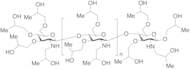
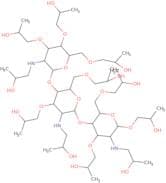
References Deng, H., et. al.: J. Biotma. Sci-Polym. E., 24, 485 (2013); Wang, Z., et. al.: Int. J. Biol. Macromol., 64, 25 (2014);Formula:C36H72N2O17C15H29NO7nColore e forma:Light Yellow To BrownPeso molecolare:1140.353Hydroxypropyl chitosan
CAS:Hydroxypropyl chitosan is a biopolymer that can be used to treat tissue infections. It has been shown to have a low cytotoxicity and good antimicrobial activity against bacteria and fungi in vitro. Hydroxypropyl chitosan is synthesized by the reaction of chitosan with propylene oxide, which results in a covalent attachment of hydroxypropyl groups to the nitrogen atoms on the chitosan backbone. This polymer has been shown to be effective against methicillin-resistant Staphylococcus aureus (MRSA) and Candida albicans, with inhibitory concentrations that are lower than those for other polymers. Hydroxypropyl chitosan is also able to reduce biofilm formation by inhibiting microbial adhesion and spreading.Formula:C36H72N2O17(C15H29NO7)nPurezza:Min. 95%Peso molecolare:804.96 g/mol