CAS 9001-62-1
:Lipasi di triacilglicerolo
- 2212E
- Accelerase
- Ble-F
- Butyrinase
- C-Lipase
- Cacordase
- Capalase
- ChiroCLEC-CAB
- ChiroCLEC-CR
- ChiroCLEC-PC
- DeGreez
- E.C.3.1.1.3.
- Esterzyme
- Fetipase
- Ga-56
- Greasex
- Icr-107
- Icr-113
- Ilozyme
- Immcala-T2-150
- Italase
- Leveking
- Lipase-esterase
- Lipases
- Lipazin
- Lipex
- LipoPrime
- Lipolase
- Lipolex
- Lipomax
- Lipomod
- Lipoorizin
- Lipooryzin
- Liposam
- Lipozyme
- LipozymeTL100L
- Lumafast
- Monomax
- Nzl-102-Lyo
- Nzl-103-Lyo
- Nzl-107-Lyo
- PPL
- Palatase
- Phytolipase
- Rizolipase
- Rizolipasum
- Steapsin
- Talipase
- TheraCLEC-Lipase
- Transzyme
- Triacetinase
- Triacylglycerollipaza
- Tributyrase
- Tributyrinase
- Triglyceridase
- Trioleinase
- Tweenase
- Unii-8Myc33932O
- Unii-Fq3Drg0N5K
- XHlip-F
- Remzyme PL 600
- Lipozyme TL IM
- Triglyceride lipase
- Lipozyme CALB L
- Tween esterase
- Enzylon PF
- GA 56 (Enzyme)
- Amano N-AP
- Animal lipase
- Lipase, triacylglycerol
- Rizolipasa [INN-Spanish]
- Lipase of Rhizopus arrhizus var. Delemar
- Meito MY 30
- Triacylglycerol lipase
- Tributyrin esterase
- Fungal lipase
- Lipase AP
- Triglyceride hydrolase
- Allzyme Lipase
- Triacylglycerol hydrolase
- Chirazyme L
- Lipase, fungal
- Palatase 20000L
- Lipozyme RM IM
- Fluozim G 3Kh
- Glycerol ester hydrolase
- Lipozyme 435
- Triolein hydrolase
- Recombinant lipase A
- Plant lipase
- Lipase
- Triacylglycerol lipase
- Lipase, triacylglycerol
- Glycerol ester hydrolase
- Tween hydrolase
- Vedi altri sinonimi
Lipase CR 03 IA1
CAS:Please enquire for more information about Lipase CR 03 IA1 including the price, delivery time and more detailed product information at the technical inquiry form on this page
CalB 02
CAS:CalB 02 is a lipase enzyme, which is a biocatalyst derived from the yeast Candida antarctica. It functions primarily by catalyzing the hydrolysis of ester bonds. This enzymatic action is due to the unique structure of the active site, which allows for precise substrate specificity and stereoselectivity.Lipase CalB 10 IA1
CAS:Please enquire for more information about Lipase CalB 10 IA1 including the price, delivery time and more detailed product information at the technical inquiry form on this page
Lipase
CAS:Porcine pancreatic lipase is an enzyme that has been shown to have antioxidative properties. It is used as an additive in biodiesel production, where it prevents the formation of trans fatty acids and reduces the amount of free radicals. This enzyme has been shown to have lipase, protease, and amylase activities by using surface methodology. Porcine pancreatic lipase can be used for the treatment of autoimmune diseases such as multiple sclerosis and rheumatoid arthritis. This enzyme interacts with other enzymes such as lipases, proteases, and amylases to catalyze reactions on surfaces. It can be used for asymmetric synthesis by hydrogen bonding or by forming an intermediate complex with metal ions.Purezza:Min. 95%Colore e forma:SolidLipase from Candida antarctica
CAS:Lipase from *Candida antarctica* is an enzyme-based biocatalyst, which is derived from the yeast *Candida antarctica*. This enzyme operates via a catalytic mechanism that involves the hydrolysis of ester bonds in lipid substrates, thereby facilitating the breakdown of fats into glycerol and free fatty acids. Its catalytic efficiency and stability in various conditions make it highly versatile for industrial applications.
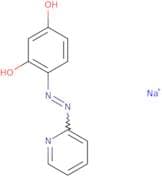
Formula:C11H9N3O2•NaColore e forma:PowderPeso molecolare:233.10 g/mol