CAS 9002-18-0
:Agar
Descrizione:
Agar, con il numero CAS 9002-18-0, è una sostanza gelatinosa derivata da alghe rosse, principalmente dei generi Gelidium e Gracilaria. È composta principalmente da Agarosio e Agaropectina, polisaccaridi che formano un gel quando disciolti in acqua bollente e successivamente raffreddati. Agar è ampiamente utilizzato in microbiologia come agente solidificante per terreni di coltura, consentendo la crescita di vari microrganismi. Le sue proprietà gelificanti sono utilizzate anche nei prodotti alimentari, dove funge da addensante, stabilizzante ed emulsionante. Agar è inodore, insapore e ha un alto punto di fusione, rendendolo adatto per applicazioni che richiedono stabilità al calore. Inoltre, è non tossico e vegano, rendendolo un'alternativa popolare alla gelatina. La capacità di Agar di formare gel a basse concentrazioni e la sua texture unica lo rendono prezioso sia nei campi culinari che scientifici. La sua versatilità si estende all'industria farmaceutica, dove viene utilizzato nella formulazione di farmaci e come mezzo per il rilascio controllato di principi attivi.
Formula:Unspecified
Sinonimi:- Agar-Agar
- Agargel
- Azazoon
- Bacto-agar
- Cs-16A
- Gelose
- Kantenmatsu
- Karikorikan
- Max
- Phytagar
- SDA
- Ultra-Agar
- Bengal isinglass
- Agar
- Bengal gelatin
- Vedi altri sinonimi
Ordinare per
Purezza (%)
0
100
|
0
|
50
|
90
|
95
|
100
18 prodotti.
Agar powder
CAS:Agar is the most suited solidifying agent for scientific applications that require incubation temperatures closer to human body temperature. Agar is used as a medium in bacteriology and plant biology, impression material in dentistry, biofertilizer in organic farming, and salt bridges in electrochemFormula:C14H24O9Colore e forma:White to cream or pale yellow to pale brown, PowderPeso molecolare:336.34Agar, low gel strength
CAS:Formula:(C12H18O9)nColore e forma:Off-white to cream or light-brown powderPeso molecolare:-Agar, low gel strength, suitable for microbiology
CAS:Formula:(C12H18O9)nColore e forma:Off-white to cream or light-brown powderPeso molecolare:-Agar, high gel strength
CAS:Formula:(C12H18O9)nColore e forma:Off-white to cream, yellowish or light-brown powderPeso molecolare:-Agar, high gel strength, suitable for microbiology
CAS:Formula:(C12H18O9)nColore e forma:Off-white to cream or light-brown powderAgar
CAS:Agar has a wide range of applications in life science related research.Formula:C14H24O9Colore e forma:SolidPeso molecolare:336.337Agar Powder
CAS:Formula:C14H24O9Purezza:BRColore e forma:Solid, No data available.Peso molecolare:336.337Agar powder Bacto grade
CAS:Colore e forma:White to off-white, Powder, Clear, Colourless to pale yellowAgar powder for tissue culture
CAS:Formula:(C12H28O9)nColore e forma:White to pale yellow, Powder, Almost clear, Pale yellowAgar powder regular grade for bacteriology
CAS:Colore e forma:Off - white to pale yellow, Powder, Almost clear to slight hazyAgar powder BactoBio for microbiology
CAS:Colore e forma:Off white to light beige, Granular, free flowing powder, Clear to very slightly turbid, Colourless to pale yellowAgar
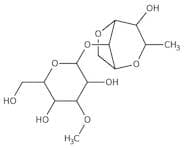
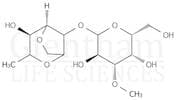
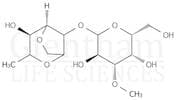
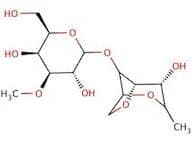
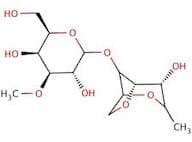
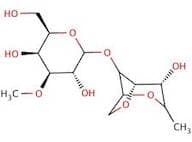
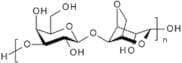
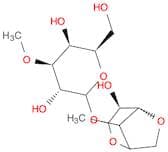
CAS:The major gel forming component in agar, agarose, consists of a linear chain of sequences of 1,3 linked β-D-galactopyranosyl units and 1,4 linkages to 3,6-anhydro-α-L-galactopyranosyl units. Gelation is done via the formation of double helices (Arnott, 1974). Agar's properties are similar to gelatin as it is primarily used as a plating gel for microbial cultures (Lahaye, 1991). However, agar is a good substitute for animal-based gelatin in vegetarian foods and is easy to use in food gels in a similar way to the carrageenans. Common food applications of agar include: puddings, custards, and soft candies. Agar improves the texture of processed cheese and frozen desserts, and is also added to baked goods to inhibit staling. A creative food application uses agar-based gel cubes that are infused with fruit extract or wine to make a vegetable-based aspic (Armisén, 2009). Agar contains two polysaccharides Agarobiose and Agaropectin. Both Gelidium latifolium and Gelidium amansii are sources of both Agar and Agarose. The images were kindly provided by Prof Mike Guiry from Cork who runs ‘The Seaweed Site’. Agaropectin Agaropectin is a sulphated non-gelling galactan comprising about 30% of Agar. Half ester sulphate is present in varying amounts plus D-glucuronic acid and small amounts of pyruvic acid. As with Agarose the main chain has alternating residues of D-galactose and L-galactose heavily modified with acidic side-groups which are usually sulfate, glucuronate, and pyruvate. Pyruvic acid is possibly attached in an acetal form to the D-galactose residues of the agarobiose skeleton. No formal structure of Agaropectin appears to have been published. Agarose Agarose is a linear gelling polysaccharide of (1-3) linked β-D-galactopyranose residues linked to 3,6-anhydro-α-L-galactopyranose via 1-4 bonds. Agar contains about 60% Agarose.Purezza:Min. 95%Colore e forma:PowderRef: IN-DA00IFZ2
Prodotto fuori produzione