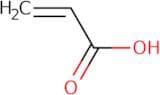
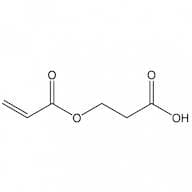
CAS 9003-01-4
:Poli(acido acrilico)
Descrizione:
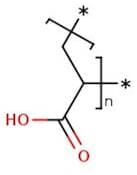
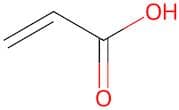
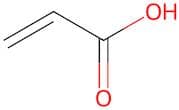
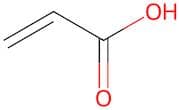
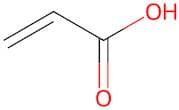
Poli(acido acrilico) (PAA) è un polimero sintetico caratterizzato dalle sue unità ripetitive di acido acrilico. È un polimero anionico solubile in acqua che presenta proprietà uniche, tra cui alta viscosità e capacità di addensamento, rendendolo utile in varie applicazioni come adesivi, rivestimenti e prodotti per la cura personale. Il PAA è noto per la sua capacità di formare gel e il suo comportamento sensibile al pH, che gli consente di gonfiarsi in condizioni alcaline mentre si contrae in ambienti acidi. Questa proprietà lo rende prezioso nei sistemi di somministrazione di farmaci e come materiale superassorbente nei prodotti igienici. Inoltre, il PAA può interagire con ioni metallici, aumentando la sua utilità nel trattamento delle acque e come dispersante. La sua biocompatibilità e non tossicità contribuiscono ulteriormente al suo fascino nelle applicazioni biomediche. In generale, Poli(acido acrilico) è un polimero versatile con una significativa rilevanza industriale e farmaceutica grazie alle sue uniche proprietà chimiche e fisiche.
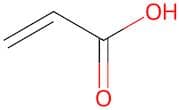
Formula:(C3H4O2)x
InChI:InChI=1S/C3H4O2/c1-2-3(4)5/h2H,1H2,(H,4,5)
InChI key:InChIKey=NIXOWILDQLNWCW-UHFFFAOYSA-N
SMILES:C(C=C)(O)=O
Sinonimi:- Arespol
- Aron
- Carbomer
- Carboxypolymethylene
- Gr-F
- Hydroplus
- K-Sorb
- PAA
- Polyacrylate
- Rh-E
- Sopronyl
- Tg-Sap
- XPA
- Xh-B
- Acrysol A 1
- Polyacrylic Acid
- Carbomer 910
- Propenoic acid, homopolymer
- Fluorosulfuric acid
- Propenoic acid, polymers, homopolymer
- Acrylic acid, polymers
- 2-Propenoic acid, homopolymer
- Carbopol
- Acrysol A 3
- Acrylic acid polymer
- Acrylic Acid glacial
- poly(1-carboxyethylene)
- 2-Propenoic acid, homopolymer
- acrylicacid,poly
- Acrylic polymer resins
- Propenoic acid polymer
- Poly(acrylic acid)
- Vedi altri sinonimi
Ordinare per
Purezza (%)
0
100
|
0
|
50
|
90
|
95
|
100
Trovati 17 prodotti.
Poly(acrylic acid), 25 wt% soln. in water
CAS:Polyacrylic acid is used in disposable diapers and in ion exchange resins. It is also used to study solute diffusion in polyvinyl alcohol/polyacrylic acid copolymer hydrogel. It is also employed as a thickening, suspending, emulsifying and dispersing agent in pharmaceuticals, cosmetics, adhesives anFormula:(C3H4O2)nColore e forma:LiquidPeso molecolare:72.02113Poly(acrylic acid), 25% soln in water
CAS:Formula:C4H8O2Purezza:%Colore e forma:LiquidPeso molecolare:88.1051Ref: 54-OR1014699
2.5kgPrezzo su richiesta25kgPrezzo su richiesta100gPrezzo su richiesta100mlPrezzo su richiesta500gPrezzo su richiestaPoly(acrylic acid); 35% solution in water
CAS:Formula:CH2CH(CO2H)Colore e forma:Viscous, colourless to light-yellow liquidPeso molecolare:72.02113Poly(acrylic acid)
CAS:Poly(acrylic acid) prevents corrosion on aluminium in acid; used as a pharmaceutical coating and inactive ingredient affecting drug ADME.Formula:(C3H4O2)xColore e forma:SolidPeso molecolare:4000000(Average)Carbomer 980
CAS:Carbomer 980 is a broad-spectrum antimicrobial that is used as an absorption enhancer. It has been shown to be effective against many Gram-positive and Gram-negative bacteria, including methicillin-resistant Staphylococcus aureus. It also has shown activity against protozoa, fungi, and yeast. Carbomer 980 is a cationic surfactant that enhances the absorption of other active ingredients into the skin. This agent also has immune reaction effects and may cause adverse reactions in humans. Carbomer 980 is poorly bioavailable because it binds to fatty acids in the bloodstream and amines in skin tissue.Formula:(C3H4O2)xColore e forma:White PowderPoly(acrylic acid) solution
CAS:Poly(acrylic acid) solution is a polymer that is used in water treatment. It has been shown to be effective in removing sulfate and carbonates from water. Poly(acrylic acid) solution has a molecular weight of about 10,000 Daltons and a number average molecular weight of about 4,000 Daltons. This solution is supersaturated with poly(acrylic acid) but it does not form crystals because it crystallizes at high temperature and pressure. The polymers are adsorbed onto the surface of the particles in the water and then can form crystals when the polymers are forced to nucleate by lowering the temperature or increasing the force applied to them.Formula:(C3H4O2)xColore e forma:Colorless Clear LiquidCarbopol 940 (Carboxy Vinyl Polymer 940) extrapure
CAS:Formula:(C5H12O4)nColore e forma:White - off white, PowderCarbopol 934 (Carboxy Vinyl Polymer 934) extrapure
CAS:Purezza:56.0 - 68.0% (For carboxylic acid content)Colore e forma:White, Hygroscopic powder