CAS 9057-02-7
:Pullulan
Descrizione:
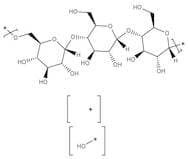
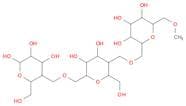
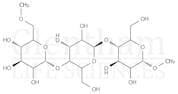
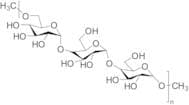
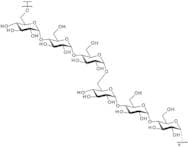
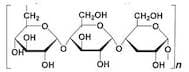
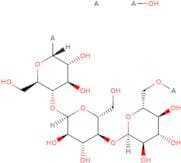
Pullulan è un polimero di polisaccaridi composto da unità di maltotrioso collegate da legami glicosidici α-1,6. Viene prodotto mediante la fermentazione dell'amido da parte del fungo Aureobasidium Pullulans. Pullulan è caratterizzato dalla sua solubilità in acqua, capacità di formare film e biodegradabilità, rendendolo una sostanza versatile in varie applicazioni. Si presenta come una polvere bianca o giallastra ed è noto per la sua bassa viscosità in soluzione, che consente un facile trattamento. Pullulan mostra eccellenti proprietà di formazione di film, portando al suo utilizzo in imballaggi alimentari, prodotti farmaceutici e cosmetici, dove può fungere da agente di rivestimento o incapsulamento. Inoltre, è stato studiato per i suoi potenziali benefici per la salute, incluso il suo ruolo come prebiotico e la sua capacità di formare film commestibili che possono migliorare la conservazione degli alimenti. La sua natura non tossica e la compatibilità con altre sostanze contribuiscono ulteriormente al suo fascino in prodotti industriali e di consumo. In generale, Pullulan è apprezzato per le sue proprietà funzionali e sostenibilità in varie applicazioni.
Formula:Unspecified
Sinonimi:- Inagel V 140
- NPcaps
- P 10
- P 10 (carbohydrate)
- P 100
- P 100 (carbohydrate)
- P 20
- P 20 (carbohydrate)
- P 200
- P 200 (carbohydrate)
- P 400
- P 400 (carbohydrate)
- P 50
- P 50 (carbohydrate)
- P 800
- P 800 (carbohydrate)
- PF 10 (carbohydrate)
- PF 20 (carbohydrate)
- PF 30 (carbohydrate)
- PF 7 (carbohydrate)
- Pf 10
- Pf 20
- Pf 30
- Pf 7
- Pi 10
- Pi 20
- Plantcaps
- Plantcaps 2
- Pluran T 1600
- Pu 101
- Pullulan PF 10
- Pullulan PF 20
- Pullulane
- Pululano
- Px 1
- Pullulan standard 1600000
- Pullulan standard 5800
- Pullulan standard 186000
- Pullulan standard 24000
- Pullulan
- Pullulan standard 12000
- Pullulan
- Pullulan standard 48000
- Pululan
- Pullulan standard 100000
- Vedi altri sinonimi
Ordinare per
Purezza (%)
0
100
|
0
|
50
|
90
|
95
|
100
13 prodotti.
Pullulan
CAS:This Thermo Scientific Chemicals brand product was originally part of the Alfa Aesar product portfolio. Some documentation and label information may refer to the legacy brand. The original Alfa Aesar product / item code or SKU reference has not changed as a part of the brand transition to Thermo SciFormula:(C18H30O15)AHOColore e forma:White to off white crystalline powderPeso molecolare:NaNPullulan for Molar Mass Determination (100 kDa)
CAS:Natural polymers & modified natural polymers, in primary forms, nesoiFormula:H(C36H60O30)nOHColore e forma:White PowderPullulan for Molar Mass Determination (800 kda)
CAS:Natural polymers & modified natural polymers, in primary forms, nesoiFormula:H(C36H60O30)nOHColore e forma:White PowderPullulan for Molar Mass Determination (400 kDa)
CAS:Natural polymers & modified natural polymers, in primary forms, nesoiFormula:H(C36H60O30)nOHColore e forma:White PowderPullulan
CAS:Pullulan is a glucan elaborated by the fungus Aureobasidium pullulans. The chemical structure is essentially repeating units of maltotriose joined by α-1,6 linkages. Pullulan dissolves readily in water to form stable, viscous solutions that do not gel. The polysaccharide can be moulded, made into fibres and forms clear soluble films. Applications are in foods as a low calorie ingredient and the polysaccharide forms water soluble films that have been used as seed coatings and to coat fruit. Pullulan can also be used in industrial applications as a binder, film former and in pharmaceutical applications. Average MW is typically 100-200kDa. Viscosity is ca 120 mm2/s. The image was kindly provided by Dr. Chris Lawson.Colore e forma:White PowderPullulan
CAS:Pullulan is a polysaccharide that is made up of D-glucose units linked in a beta-1,6 configuration. Pullulan has been used as a model system to study the molecular mechanisms of intramolecular hydrogen transfer reactions. The process optimization of pullulan production was studied using skin cells and structural analysis. This polymer is also used in food hydrocolloids, where it can be used to control the phase transition temperature. Pullulan has also been shown to have anti-angiogenic effects on liver cells and water vapor absorption properties.
Formula:(C6H12O5)n