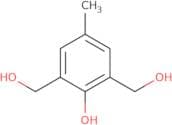
CAS 91-04-3
:2,6-Bis(idrossimetil)-p-cresolo
Descrizione:
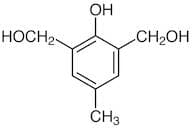
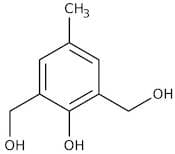
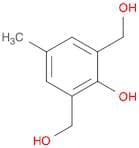
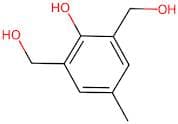
2,6-Bis(idrossimetil)-p-cresolo, comunemente noto come composto fenolico, è caratterizzato dalla sua struttura, che include due gruppi idrossimetilici attaccati all'anello aromatico del p-cresolo. Questo composto è tipicamente un solido cristallino bianco a bianco sporco a temperatura ambiente ed è solubile in acqua e solventi organici, rendendolo versatile per varie applicazioni. Mostra proprietà antiossidanti, il che lo rende utile per stabilizzare plastiche e altri materiali contro la degradazione ossidativa. Inoltre, ha applicazioni nelle industrie farmaceutiche e cosmetiche grazie alle sue proprietà antimicrobiche. Il composto è anche noto per la sua capacità di agire come conservante, aiutando a prolungare la durata dei prodotti. I dati di sicurezza indicano che deve essere maneggiato con cura, poiché può causare irritazione al contatto con la pelle o gli occhi. In generale, 2,6-Bis(idrossimetil)-p-cresolo è un prodotto chimico prezioso con applicazioni diverse, in particolare nel migliorare la stabilità e la longevità di varie formulazioni.
Formula:C9H12O3
InChI:InChI=1S/C9H12O3/c1-6-2-7(4-10)9(12)8(3-6)5-11/h2-3,10-12H,4-5H2,1H3
InChI key:InChIKey=KUMMBDBTERQYCG-UHFFFAOYSA-N
SMILES:C(O)C1=C(O)C(CO)=CC(C)=C1
Sinonimi:- (2-Hydroxy-5-methyl-1,3-phenylene)dimethanol
- 1,3-Benzenedimethanol, 2-hydroxy-5-methyl-
- 2,3-Bis(Hydroxymethyl)-4-Methylphenol
- 2,6-Bis(Hydroxymethyl)-4-Methylphenol
- 2,6-Bis(hydroxymethyl)-p-cresol
- 2,6-Di(Hydroxymethyl)-4-Methylphenol
- 2,6-Di(hydroxymethyl)-p-cresol
- 2,6-Dimethylol-4-methylphenol
- 2,6-Dimethylol-p-cresol
- 26Dmpc
- 4-Methyl-2,6-bis(hydroxymethyl)phenol
- AV Lite 26DMPC
- Dml-Pc
- NSC 15838
- α<sup>1</sup>,α<sup>3</sup>,2-Trihydroxymesitylene
- α<sup>1</sup>,α<sup>3</sup>-Mesitylenediol, 2-hydroxy-
- α1,α3-Mesitylenediol, 2-hydroxy-
- Vedi altri sinonimi
Ordinare per
Purezza (%)
0
100
|
0
|
50
|
90
|
95
|
100
6 prodotti.
2,6-Bis(hydroxymethyl)-p-cresol
CAS:Formula:C9H12O3Purezza:>98.0%(GC)Colore e forma:White to Yellow to Orange powder to crystalPeso molecolare:168.192,6-Bis(hydroxymethyl)-p-cresol, tech. 90%
CAS:This Thermo Scientific Chemicals brand product was originally part of the Alfa Aesar product portfolio. Some documentation and label information may refer to the legacy brand. The original Alfa Aesar product / item code or SKU reference has not changed as a part of the brand transition to Thermo SciFormula:C9H12O3Purezza:90%Colore e forma:Cream or orange to pale brown, powderPeso molecolare:168.192,6-Bis(hydroxymethyl)-p-cresol
CAS:Formula:C9H12O3Purezza:97%Colore e forma:SolidPeso molecolare:168.18982,6-Bis(hydroxymethyl)-4-methylphenol
CAS:2,6-Bis(hydroxymethyl)-4-methylphenolFormula:C9H12O3Purezza:95%Colore e forma: pale brown crystals/ powderPeso molecolare:168.19g/mol(2-Hydroxy-5-methyl-1,3-phenylene)dimethanol
CAS:Formula:C9H12O3Purezza:95%Colore e forma:Solid, No data available.Peso molecolare:168.1922,6-Bis(hydroxymethyl)-p-cresol
CAS:2,6-Bis(hydroxymethyl)-p-cresol (BHMC) is a cross-linking agent that reacts with the hydroxyl groups of polymers to form covalent bonds. This reaction is irreversible and has been shown to be effective in thermal expansion applications. BHMC is insoluble in water and so can be used as a proton donor for the synthesis of polymer hydrogels. BHMC has also been used as a molecular modeling probe for studying protein structure and function. This compound reacts with nucleophiles by nucleophilic attack on the carbonyl carbon atom, producing an intermediate that tautomerizes to the corresponding enone. The reaction mechanism involves formation of a tetranuclear transition state followed by acid catalysis. Functional groups such as -OH, -NH2, or -COOH are required for this reaction to occur. NMR spectra have shown that there are three different chemical structuresFormula:C9H12O3Purezza:Min. 95%Colore e forma:PowderPeso molecolare:168.19 g/mol