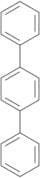
CAS 92-94-4
:p-Terfenile
Descrizione:
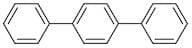
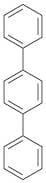
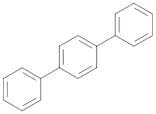
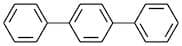
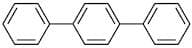
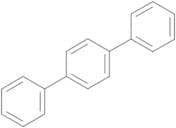
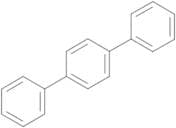
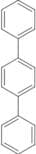
p-Terfenile, con il numero CAS 92-94-4, è un composto organico caratterizzato dalla sua struttura, che consiste in tre anelli di fenile connessi (C6H5) disposti in modo lineare. Questo idrocarburo aromatico è un solido cristallino incolore a temperatura ambiente ed è noto per il suo alto punto di fusione e stabilità in varie condizioni. p-Terfenile è insolubile in acqua ma solubile in solventi organici come benzene e toluene. Mostra una notevole stabilità termica ed è spesso utilizzato come mezzo di trasferimento di calore in applicazioni ad alta temperatura. Inoltre, p-Terfenile ha applicazioni nel campo dell'elettronica organica, in particolare nello sviluppo di materiali fosforescenti e come componente nei rivelatori di scintillazione grazie alla sua capacità di emettere luce quando eccitato. Le sue proprietà chimiche includono la capacità di subire reazioni di sostituzione elettrofila tipiche dei composti aromatici, rendendolo un composto versatile nella chimica organica sintetica. In generale, p-Terfenile è significativo sia nelle applicazioni industriali che negli ambienti di ricerca.
Formula:C18H14
InChI:InChI=1/C18H14/c1-3-7-15(8-4-1)17-11-13-18(14-12-17)16-9-5-2-6-10-16/h1-14H
InChI key:InChIKey=XJKSTNDFUHDPQJ-UHFFFAOYSA-N
SMILES:C1(=CC=C(C=C1)C2=CC=CC=C2)C3=CC=CC=C3
Sinonimi:- 1,1'-Biphenyl, 4-phenyl-
- 1,1′:4′,1′′-Terphenyl
- 1,4-Diphenylbenzene
- 1,4-Diphenylbenzol
- 4-Phenyl-1,1'-biphenyl
- 4-Phenylbiphenyl
- Nsc 6810
- P-Terfenilo
- P-Terphenyl
- PT
- PTP
- Santowax P
- T 3203
- TP
- TP (scintillator)
- p-Diphenylbenzene
- p-Phenylene trimer
- p-Terphenyle
- p-Triphenyl
- 1,1':4',1''-Terphenyl
- [1,1'
- biphenyl,4-phenyl
- diphenyl-1,4benzene
- 4-phenyl-1’-biphenyl
- Biphenyl, 4-phenyl-
- benzene,1,4-diphenyl-
- 4',1'']-Terphenyl
- para-terphenyl
- TERPHENYL, P-
- 4-Phenyldiphenyl
- 4-phenyl-bipheny
- Vedi altri sinonimi
Ordinare per
Purezza (%)
0
100
|
0
|
50
|
90
|
95
|
100
12 prodotti.
p-Terphenyl
CAS:Formula:C18H14Purezza:>99.0%(GC)Colore e forma:White to Almost white powder to crystalPeso molecolare:230.31p-Terphenyl, 99+%
CAS:p-Terphenyl is a specialty material, and may be used in ionized radiation detectors, nonpolar laser dye, and single molecule optical probe of scanning near-field microscopy. This Thermo Scientific Chemicals brand product was originally part of the Alfa Aesar product portfolio. Some documentation anFormula:C18H14Purezza:99+%Colore e forma:White, Crystals or powder or crystalline powderPeso molecolare:230.31p-Terphenyl
CAS:p-Terphenyl is a triphenyl derivative used in industry as a heat transfer medium and dye carrier, and can be used for related research in the life sciences.Formula:C18H14Colore e forma:SolidPeso molecolare:230.3p-Terphenyl
CAS:Formula:C18H14Purezza:≥ 98.5%Colore e forma:White to off-white crystalline powderPeso molecolare:230.31Ref: 54-OR46216
5g37,00€25g37,00€100g53,00€500g156,00€2.5kg615,00€10kg2.194,00€25kg5.027,00€50kg9.356,00€100kg17.322,00€950kg139.836,00€p-Terphenyl (purified by sublimation)
CAS:Formula:C18H14Purezza:>99.5%(GC)Colore e forma:White powder to crystalPeso molecolare:230.31p-Terphenyl
CAS:Prodotto controllatoApplications p-Terphenyl is used in analytical studies, it can be used as a neutron detector.
Not a dangerous good if item is equal to or less than 1g/ml and there is less than 100g/ml in the package
References Matei, C. et al.: Nucl. Instrum. Meth. A., 676, 135 (2012);Formula:C18H14Colore e forma:WhitePeso molecolare:230.31,4-Diphenylbenzene
CAS:1,4-Diphenylbenzene is an aromatic hydrocarbon that has a phenyl group and four benzene rings. It has been shown to have x-ray crystal structures with hydroxyl groups that can be deprotonated to form anion radicals. 1,4-Diphenylbenzene has also been shown to have antioxidant properties in prostate cancer cells by scavenging anion radicals and preventing the oxidation of DNA bases. It also inhibits the growth of rat liver microsomes due to its chemical stability and ability to form conjugates with benzalkonium chloride. The synthesis methods for 1,4-diphenylbenzene include the acetate extract method, which uses acetone as a solvent and sodium or potassium acetate as a catalyst. Another method includes the etoac extract method, which uses ethanol as a solvent and sodium or potassium acetate as a catalyst.Formula:C18H14Purezza:Min. 95%Colore e forma:White Off-White PowderPeso molecolare:230.3 g/mol