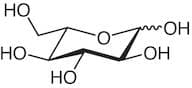
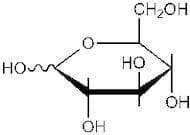
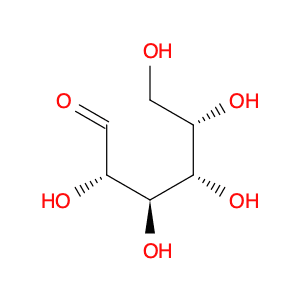
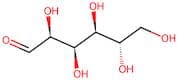
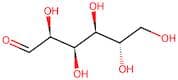
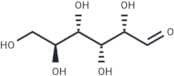
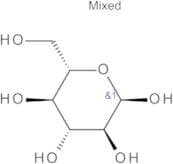
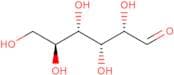
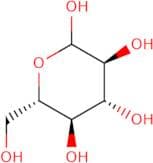
CAS 921-60-8
:L-Glucosio
Descrizione:
L-Glucosio, con il numero CAS 921-60-8, è un isomero del glucosio, specificamente l'enantiomero L, che è un tipo di zucchero. È un monosaccaride e un carboidrato semplice, caratterizzato dalla sua struttura a sei carboni (C6H12O6) e dalla presenza di gruppi idrossile (-OH). L-Glucosio si trova meno comunemente in natura rispetto alla sua controparte D-glucosio, che è la forma utilizzata dagli organismi viventi per energia. Questo composto è tipicamente un solido cristallino bianco che è solubile in acqua, mostrando proprietà di sapore dolce, anche se è meno dolce del D-glucosio. L-Glucosio non partecipa alle stesse vie metaboliche del D-glucosio, rendendolo di interesse nella ricerca relativa al diabete e ai disturbi metabolici. La sua attività ottica è notevole, poiché ruota la luce polarizzata a sinistra (levorotatoria). A causa delle sue proprietà uniche, L-Glucosio è studiato per potenziali applicazioni in farmacologia e come dolcificante non calorico.
Formula:C6H12O6
InChI:InChI=1/C6H12O6/c7-1-2-3(8)4(9)5(10)6(11)12-2/h2-11H,1H2/t2-,3-,4+,5-,6-/m0/s1
InChI key:InChIKey=GZCGUPFRVQAUEE-VANKVMQKSA-N
SMILES:[C@@H]([C@H]([C@@H](C=O)O)O)([C@H](CO)O)O
Sinonimi:- <span class="text-smallcaps">L</span>(-)-Glucose
- Brn 1724626
- Fm 602
- Glucose, (L)-isomer
- Levoglucose
- alpha-L-glucopyranose
- beta-L-glucopyranose
- L-Glucose
- L(-)-Glucose
- 4-01-00-04327 (Beilstein Handbook Reference)
- L(-)-Glucose
- L-(-)-Glucoseanhydrous,98%
- L-Glucose anhydrous, 98%
- L-GLUCOSE, 98%, MIXTURE OF ANOMERS
- Hexopyranose
- L-GLUCOPYRANOSE
- GLUCOSE, L-
- L-Glucosemonohydrate
- L-Glucose (6CI, 7CI, 8CI, 9CI)
- Vedi altri sinonimi
Ordinare per
Purezza (%)
0
100
|
0
|
50
|
90
|
95
|
100
12 prodotti.
L-(-)-Glucose
CAS:Formula:C6H12O6Purezza:>98.0%(GC)Colore e forma:White to Almost white powder to crystalPeso molecolare:180.16L-(-)-Glucose, anhydrous, 98%
CAS:L-(-)-Glucose is an enantiomer of the more common D-glucose a naturally occurring carbohydrate used in an abundance of cellular processes. L-Glucose is a synthetic sugar used in the formation of L-Glucose Pen taacetate, a potential therapeutic agent regarding type II diabetes. In addition, L-glucoseFormula:C6H12O6Purezza:98%Colore e forma:Crystals or powder or crystalline powder, WhitePeso molecolare:180.16Ref: IN-DA0036X6
50gPrezzo su richiesta250gPrezzo su richiesta500gPrezzo su richiesta100mg30,00€250mg31,00€1g60,00€5g183,00€10g261,00€25g538,00€L-Glucose
CAS:L-GlucoseFormula:C6H12O6Purezza:98%Colore e forma: white crystalline powderPeso molecolare:180.16g/molL-Glucose
CAS:Formula:C6H12O6Purezza:≥ 99.0%Colore e forma:White to almost white crystalline powderPeso molecolare:180.16L-GLUCOSE
CAS:L-Glucose (L-(-)-Glucose) is not bioavailable to cells as an energy source because it cannot be phosphorylated by hexokinase.Formula:C6H12O6Purezza:99.78%Colore e forma:SolidPeso molecolare:180.16Ref: 4Z-D-62171
5mgPrezzo su richiesta10mgPrezzo su richiesta25mgPrezzo su richiesta50mgPrezzo su richiesta100mgPrezzo su richiestaL-Glucose
CAS:Prodotto controllatoApplications L-Glucose is the enantiomer of D-Glucose (G595000), a naturally occurring carbohydrate used in an abundance of cellular processes. L-Glucose is a synthetic sugar used in the formation of L-Glucose Pentaacetate (G596510), a potential therapeutic agent regarding type II diabetes. In addition, L-glucose can be used as a colon cleansing agent for before a colonoscopy procedure.
References Malaisse, W. et al.: Int. J. Mol. Med., 2, 383 (1998); Raymer, G. et al.: Gastrointest. Endosc., 58, 30 (2003); Wang, R., et al.: J. Mol. Catal. B. Enz., 56, 131 (2009),Formula:C6H12O6Colore e forma:WhitePeso molecolare:180.156L-Glucose
CAS:L-glucose is a monosaccharide that is an important source of energy for the human body. The glucose molecule consists of 6 carbon atoms, 12 hydrogen atoms and 6 oxygen atoms. Glucose enters cells with the help of insulin and ATP-sensitive potassium channels. It has been shown that L-glucose can inhibit viral replication in vitro, such as HIV and herpes simplex virus type 1 (HSV-1). L-Glucose may be used to treat squamous carcinoma by reducing the redox potential in cancer cells. L-Glucose inhibits the growth of c. glabrata by inhibiting transcription activators and enzymes involved in glycolysis. L-Glucose also has hypoglycemic effects on humans by reducing cortisol concentrations in human serum.Formula:C6H12O6Purezza:Min. 98 Area-%Colore e forma:White Clear LiquidPeso molecolare:180.16 g/molL-Glucose
CAS:L-Glucose is a monosaccharide that belongs to the group of carbohydrates. L-Glucose is an important energy source for living organisms and plays a role in many metabolic pathways, including glycolysis and gluconeogenesis, as well as cell signaling. It is also an essential component of DNA and RNA. L-Glucose has been shown to have effects on brain functions such as memory and learning ability, which may be due to its ability to signal neurons. L-Glucose can be used in model systems to study the effects of diabetes on cells and has been shown to have pluripotent effects on cells. In addition, this molecule has been shown to inhibit the growth of bacteria by binding to the enzyme polysaccharide kinase and reducing its activity. This inhibition leads to decreased synthesis of polysaccharides (e.g., glycogen) that are necessary for cell division.Formula:C6H12O6Purezza:Min. 99.5 Area-%Peso molecolare:180.16 g/molL-(-)-Glucose
CAS:Formula:C6H12O6Purezza:97%Colore e forma:Solid, White powderPeso molecolare:180.156