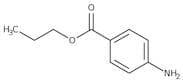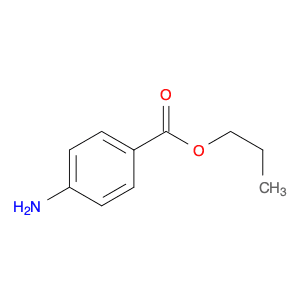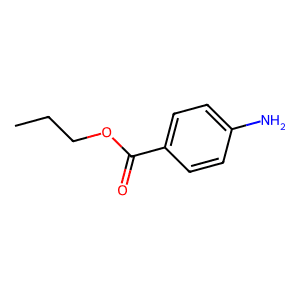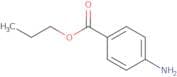
CAS 94-12-2
:Risocaina
Descrizione:
Risocaina, con il numero CAS 94-12-2, è un composto chimico conosciuto principalmente per la sua applicazione come anestetico locale. Appartiene alla classe di composti noti come amidi ed è strutturalmente correlato ad altri anestetici locali. Risocaina è caratterizzato dalla sua capacità di bloccare la conduzione nervosa, fornendo una perdita temporanea di sensibilità in aree specifiche del corpo. Il composto è tipicamente utilizzato in contesti medici per procedure che richiedono un sollievo dal dolore localizzato. Il suo meccanismo d'azione implica l'inibizione dell'ingresso di ioni sodio attraverso canali sodio voltaggio-dipendenti nelle membrane cellulari neuronali, il che impedisce la propagazione degli impulsi nervosi. Risocaina è generalmente somministrato per iniezione ed è preferito per il suo inizio d'azione relativamente rapido e la durata moderata dell'effetto. I profili di sicurezza indicano che, come altri anestetici, può avere effetti collaterali, comprese reazioni allergiche o tossicità sistemica se somministrato in modo improprio. La corretta dosaggio e somministrazione sono cruciali per minimizzare i rischi e garantire una gestione efficace del dolore.
Formula:C10H13NO2
InChI:InChI=1S/C10H13NO2/c1-2-7-13-10(12)8-3-5-9(11)6-4-8/h3-6H,2,7,11H2,1H3
InChI key:InChIKey=NBFQYHKHPBMJJV-UHFFFAOYSA-N
SMILES:C(OCCC)(=O)C1=CC=C(N)C=C1
Sinonimi:- 4-(Propoxycarbonyl)aniline
- 4-Aminobenzoic acid propyl ester
- 94-12-2
- Benzoic acid, 4-amino-, propyl ester
- Benzoic acid, p-amino-, propyl ester
- Keloform P
- NSC 23516
- Propaesin
- Propazyl
- Propesin
- Propesine
- Propyl 4-Aminobenzoate
- Propyl p-aminobenzoate
- Propylcain
- Raythesin
- n-Propyl p-aminobenzoate
- Vedi altri sinonimi
Ordinare per
Purezza (%)
0
100
|
0
|
50
|
90
|
95
|
100
8 prodotti.
Propyl 4-Aminobenzoate
CAS:Formula:C10H13NO2Purezza:>98.0%(T)Colore e forma:White to Light yellow to Light orange powder to crystalPeso molecolare:179.22n-Propyl 4-aminobenzoate, 98%
CAS:This Thermo Scientific Chemicals brand product was originally part of the Alfa Aesar product portfolio. Some documentation and label information may refer to the legacy brand. The original Alfa Aesar product / item code or SKU reference has not changed as a part of the brand transition to Thermo SciFormula:C10H13NO2Purezza:98%Colore e forma:Crystals or powder or crystalline powder, White to creamPeso molecolare:179.22n-Propyl 4-aminobenzoate
CAS:Formula:C10H13NO2Purezza:98%Colore e forma:SolidPeso molecolare:179.2157Risocaine
CAS:Risocaine is an agent of local anesthetic.Formula:C10H13NO2Purezza:98%Colore e forma:SolidPeso molecolare:179.22Propyl 4-aminobenzoate
CAS:Propyl 4-aminobenzoateFormula:C10H13NO2Purezza:98%Colore e forma:White PowderPeso molecolare:179.22g/molPropyl 4-Aminobenzoate
CAS:Prodotto controllatoApplications Propyl 4-aminobenzoate (cas# 94-12-2) is a useful research chemical.
Formula:C10H13NO2Colore e forma:NeatPeso molecolare:179.21Propyl 4-aminobenzoate
CAS:Propyl 4-aminobenzoate is an anti-angiogenic agent that inhibits the production of angiogenic factors. It has been shown to be effective in vivo with a kinetic data analysis and solubility data. Propyl 4-aminobenzoate reduces the size of angiogenic tumors and prevents new tumor formation. It also suppresses tumor growth by inhibiting the production of vascular endothelial growth factor (VEGF), thereby inducing apoptotic cell death. The induction of apoptotic cell death by propyl 4-aminobenzoate may be due to its ability to bind to and activate apoptosis protein, leading to a decrease in collagen synthesis and an increase in hyaluronic acid production.
Formula:C10H13NO2Purezza:Min. 95%Colore e forma:PowderPeso molecolare:179.22 g/mol