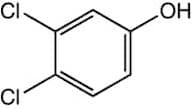
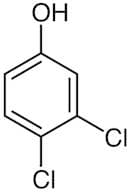
CAS 95-77-2
:3,4-Diclorofenolo
Descrizione:
3,4-Diclorofenolo è un composto organico caratterizzato dalla presenza di due atomi di cloro e di un gruppo idrossile (-OH) attaccato a un anello fenolico. La sua formula molecolare è C6H4Cl2O ed è classificato come un fenolo clorurato. Questo composto appare tipicamente come un solido incolore o giallo pallido con un odore distintivo. È solubile in solventi organici e ha una solubilità limitata in acqua. 3,4-Diclorofenolo è noto per le sue proprietà antimicrobiche ed è utilizzato in varie applicazioni, tra cui come disinfettante e nella sintesi di altri composti chimici. Tuttavia, è anche riconosciuto per la sua potenziale tossicità e impatto ambientale, poiché può essere dannoso per la vita acquatica e può comportare rischi per la salute in caso di esposizione. Una corretta gestione e smaltimento sono essenziali per mitigare i suoi effetti. In termini di reattività chimica, può subire reazioni tipiche di sostituzione elettrofila grazie alla presenza del gruppo idrossile, rendendolo un intermedio versatile nella sintesi organica.
Formula:C6H4Cl2O
InChI:InChI=1S/C6H4Cl2O/c7-5-2-1-4(9)3-6(5)8/h1-3,9H
InChI key:InChIKey=WDNBURPWRNALGP-UHFFFAOYSA-N
SMILES:ClC1=C(Cl)C=CC(O)=C1
Sinonimi:- 3,4-Dichlorphenol
- 3,4-Diclorofenol
- 4,5-Dichlorophenol
- Brn 1907693
- Ccris 5904
- Hsdb 4247
- Nsc 60648
- Phenol, 3,4-dichloro-
- 3,4-Dichlorophenol
Ordinare per
Purezza (%)
0
100
|
0
|
50
|
90
|
95
|
100
Trovati 16 prodotti.
3,4-Dichlorophenol, 97%
CAS:It is also a photo-degradation product of the common antibacterial and antifungal agent triclosan along with the dioxin 2,8-dichlorodibenzo-p-dioxin. This Thermo Scientific Chemicals brand product was originally part of the Alfa Aesar product portfolio. Some documentation and label information may rFormula:C6H4Cl2OPurezza:97%Colore e forma:White to cream to brown, Crystals or powder or crystalline powder or flakes or needles or fibresPeso molecolare:163.003,4-Dichlorophenol 10 µg/mL in Methanol
CAS:Prodotto controllatoFormula:C6H4Cl2OColore e forma:Single SolutionPeso molecolare:163.003,4-Dichlorophenol
CAS:Formula:C6H4Cl2OPurezza:>98.0%(GC)Colore e forma:White to Almost white powder to crystalPeso molecolare:163.003,4-Dichlorophenol 100 µg/mL in Methanol
CAS:Prodotto controllatoFormula:C6H4Cl2OColore e forma:Single SolutionPeso molecolare:163.00SVOC Mixture 231 100 µg/mL in Methanol
CAS:Prodotto controllato- 105-67-9
- 106-44-5
- 106-48-9
- 108-39-4
- 108-43-0
- 108-68-9
- 108-95-2
- 120-83-2
- 123-07-9
- 1570-64-5
- 15950-66-0
- 2416-94-6
- 4901-51-3
- 496-78-6
- 526-75-0
- 527-54-8
- 527-60-6
- 576-24-9
- 576-26-1
- 58-90-2
- 583-78-8
- 59-50-7
- 591-35-5
- 609-19-8
- 620-17-7
- 697-82-5
- 87-65-0
- 87-86-5
- 88-06-2
- 90-00-6
- 933-75-5
- 933-78-8
- 935-95-5
- 95-48-7
- 95-57-8
- 95-65-8
- 95-77-2
- 95-87-4
- 95-95-4
Colore e forma:MixtureSVOC Mixture 231 100 µg/mL in Methanol
CAS:Prodotto controllato- 105-67-9
- 106-44-5
- 106-48-9
- 108-39-4
- 108-43-0
- 108-68-9
- 108-95-2
- 120-83-2
- 123-07-9
- 1570-64-5
- 15950-66-0
- 2416-94-6
- 4901-51-3
- 496-78-6
- 526-75-0
- 527-54-8
- 527-60-6
- 576-24-9
- 576-26-1
- 58-90-2
- 583-78-8
- 59-50-7
- 591-35-5
- 609-19-8
- 620-17-7
- 697-82-5
- 87-65-0
- 87-86-5
- 88-06-2
- 90-00-6
- 933-75-5
- 933-78-8
- 935-95-5
- 95-48-7
- 95-57-8
- 95-65-8
- 95-77-2
- 95-87-4
- 95-95-4
Colore e forma:Mixture3,4-Dichlorophenol
CAS:3,4-DichlorophenolFormula:C6H4Cl2OPurezza:98%Colore e forma: grey low melting solidPeso molecolare:163.00g/mol3,4-Dichlorophenol
CAS:3,4-Dichlorophenol is a chemical compound that is produced by the chlorination of phenols. It is used as an industrial solvent, in the production of plastics and pesticides, and for wastewater treatment. 3,4-Dichlorophenol can also be found in some household cleaners and detergents. The matrix effect has been shown to influence the measurement of 3,4-dichlorophenol in urine samples by reducing the concentration of this chemical by approximately one order of magnitude. Chemical ionization has been shown to be useful for analyzing 3,4-dichlorophenol in urine samples. This method involves a chemical reaction with chlorine atoms at high temperatures to produce hydrogen chloride gas and other products. Hydrogen bond has been shown to have an effect on the kinetics of 3,4-dichlorophenol oxidation catalysts. The kinetic study showed that there are two distinct rates for this reaction: one fast rate with hydrogen bonding and one slowFormula:C6H4Cl2OPurezza:Min. 95%Colore e forma:PowderPeso molecolare:163 g/mol