Substrati fluorogenici
In questa categoria troverai una selezione completa di substrati fluorogenici progettati per la catalisi enzimatica. Questi substrati vengono utilizzati con vari tipi di enzimi e sono in grado di produrre colore e fluorescenza al momento della reazione. I substrati fluorogenici sono strumenti essenziali nella ricerca biochimica e biologia molecolare, permettendo la rilevazione e quantificazione dell'attività enzimatica con alta sensibilità e specificità. Sono ampiamente utilizzati in saggi per lo studio della cinetica enzimatica, lo screening di inibitori enzimatici e il monitoraggio dei processi cellulari. Da CymitQuimica, offriamo substrati fluorogenici di alta qualità per supportare le tue ricerche, garantendo risultati affidabili e precisi nei tuoi saggi enzimatici.
Trovati 297 prodotti di "Substrati fluorogenici"
Ordinare per
Purezza (%)
0
100
|
0
|
50
|
90
|
95
|
100
Resorufin-7-O-phosphate
CAS:<p>Resorufin-7-O-phosphate is a fluorogenic substrate for alkaline phosphatase that exhibits a red color after cleavage that can be measured at ~ 585nm.</p>Formula:C12H6NO6P·2H4NPurezza:Min. 95%Peso molecolare:327.23 g/molRhodamine 110 chloride
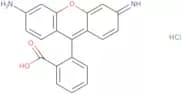
CAS:<p>Fluorescent dye substrate for flow cytometric measurements</p>Formula:C20H15O3N2ClPurezza:Min. 95 Area-%Colore e forma:Red PowderPeso molecolare:366.8 g/mol4-Methylumbelliferyl propionate
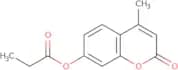
CAS:<p>4-Methylumbelliferyl propionate is a fluorogenic substrate for esterase. After enzymatic cleaveage, free 4-methylumbelliferone (also known as hymecromone) is released, exhibiting blue fluorescence upon excitation with UV light. The strongest fluorescence of 4-methylumbelliferone requires deprotonation of the hydroxyl group (thus requires alkaline pH), with a maximal fluorescence intensity obtained with excitation at 350 to 370 nm and emission at 440 to 470 nm. The use of 4-methylumbelliferyl propionateas a substrate for measuring the esterase activity is used for esterase deficiency screening assays.</p>Formula:C13H12O4Purezza:Min. 95 Area-%Colore e forma:PowderPeso molecolare:232.23 g/molResorufin N-acetyl-b-D-glucosamine
CAS:<p>Resorufin N-acetyl-b-D-glucosamine is fluorogenic substrate for N-acetyl-beta-D-glucosaminidase (NAG).</p>Formula:C20H20N2O8Purezza:Min. 98 Area-%Colore e forma:Orange PowderPeso molecolare:416.38 g/mol4-Methylumbelliferyl 6-thio-palmitate-b-D-glucopyranoside - Moscerdam™ biochemical purity
CAS:<p>4-Methylumbelliferyl 6-thio-palmitate-b-D-glucopyranoside (Mu-6S-Palm-β-Glc) is a fluorogenic substrate of palmitoyl-protein thioesterase 1 (PPT1), used in the diagnosis of infantile neuronal ceroid lipofuscinosis (INCL). INCL, also known as infantile CLN1 disease, is a rapidly progressing lysosomal storage disorder (LSD), caused by a deficiency of PPT1. Mu-6S-Palm-β-Glc is also used as the substrate in the PPT assay to investigate the retention of lysosomal enzyme activity of bi-functional IgG-PPT1 fusion protein in the delivery across blood-brain barrier.</p>Formula:C32H48O8SPurezza:Min. 95%Colore e forma:White PowderPeso molecolare:592.78 g/molL-Leucine 7-amido-4-methylcoumarin hydrochloride salt
CAS:<p>L-Leucine 7-amido-4-methylcoumarin hydrochloride salt is a synthetic peptide substrate used as a fluorogenic substrate for leucine aminopeptidase.</p>Formula:C16H21ClN2O3Purezza:Min. 98 Area-%Colore e forma:White PowderPeso molecolare:324.8 g/mol4-Methylumbelliferyl caprylate
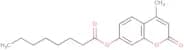
CAS:<p>Used for identification of Salmonella spp. by detection of caprylate esterase</p>Formula:C18H22O4Purezza:Min. 95%Colore e forma:White PowderPeso molecolare:302.36 g/molEthyl umbelliferone-3-carboxylate-α-D-glucopyranoside
<p>Ethyl umbelliferone-3-carboxylate-a-D-glucopyranoside is a fluorogenic substrate used for detecting alpha-glucosidase activity in enzymatic assays. When alpha-glucosidase cleaves , the glycosidic bond, umbelliferone-3-carboxylate is released, which exhibits strong fluorescence. This substrate is commonly utilized in glycobiology research, diagnostic tests, and high-throughput screening of enzyme inhibitors.</p>Formula:C18H20O10Purezza:Min. 95%Colore e forma:Off-white to yellow solid.Peso molecolare:396.35 g/mol4-Methylumbelliferyl 2-deoxy-2-sulfamino-b-D-glucopyranoside sodium salt
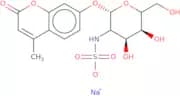
<p>4-Methylumbelliferyl 2-deoxy-2-sulfamino-beta-D-glucopyranoside sodium salt is a fluorogenic substrate for N-sulfoglucosamine sulfohydrolase. After enzymatic cleaveage, free 4-methylumbelliferone (also known as hymecromone) is released, exhibiting blue fluorescence upon excitation with UV light. The strongest fluorescence of 4-methylumbelliferone requires deprotonation of the hydroxyl group (thus requires alkaline pH), with a maximal fluorescence intensity obtained with excitation at 350 to 370 nm and emission at 440 to 470 nm. The use of 4-methylumbelliferyl 2-deoxy-2-sulfamino-beta-D-glucopyranoside sodium saltas a substrate for measuring the N-sulfoglucosamine sulfohydrolase activity is used for screening of Mucopolysaccharidosis IIIA (MPS IIIA) and diagnosis of Sanfilippo A syndrome.</p>Formula:C16H19NO10SNaPurezza:Min. 95%Colore e forma:PowderPeso molecolare:439.37 g/mol4-Methylumbelliferyl elaidate
CAS:<p>4-Methylumbelliferone is a fluorescent probe that can be used to study the metabolism of fatty acids in plants. It is also used as a marker for radiation and significant cytotoxicity. 4-Methylumbelliferone binds to the DNA termini, specifically at the 5' phosphate group, and inhibits phosphatase activity. This process increases levels of p-nitrophenyl phosphate (a substrate), which produces protocatechuic acid (an intermediate). The disulfide bond is then broken by hydrogen peroxide, leading to an increase in fluorescence. The optimum pH for this process is 7.5.</p>Formula:C28H40O4Purezza:Min. 95 Area-%Peso molecolare:440.63 g/molRef: 3D-M-5535
1gPrezzo su richiesta5gPrezzo su richiesta10gPrezzo su richiesta25gPrezzo su richiesta2500mgPrezzo su richiesta-Unit-ggPrezzo su richiesta4-Methylumbelliferyl 2-acetamido-2-deoxy-a-D-glucopyranoside
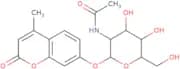
CAS:<p>4-Methylumbelliferyl 2-acetamido-2-deoxy-alpha-D-glucopyranoside is a fluorogenic substrate for alpha-N-acetylglucosaminidase. After enzymatic cleaveage, free 4-methylumbelliferone (also known as hymecromone) is released, exhibiting blue fluorescence upon excitation with UV light. The strongest fluorescence of 4-methylumbelliferone requires deprotonation of the hydroxyl group (thus requires alkaline pH), with a maximal fluorescence intensity obtained with excitation at 350 to 370 nm and emission at 440 to 470 nm. The use of 4-methylumbelliferyl 2-acetamido-2-deoxy-alpha-D-glucopyranosideas a substrate for measuring the alpha-N-acetylglucosaminidase activity is used for Sanfilippo syndrome B screening and mucopolysaccharidosis diagnosis.</p>Formula:C18H21NO8Purezza:Min. 98 Area-%Colore e forma:PowderPeso molecolare:379.36 g/mol4-Methylumbelliferyl-N-acetyl-β-D-glucosaminide-6-sulfate, sodium salt
CAS:<p>4-Methylumbelliferyl 2-acetamido-2-deoxy-beta-D-glucopyranoside-6-sulfate sodium salt is a high-quality fluorogenic substrate specifically designed for the detection and quantification of various enzymes, including beta-glucosidases and sulfatases. Upon hydrolysis by the target enzyme, this substrate releases the highly fluorescent 4-methylumbelliferone, allowing for real-time monitoring and accurate measurement of enzyme activities in biochemical assays, diagnostic tests, and research applications. 4-Methylumbelliferyl 2-acetamido-2-deoxy-beta-D-glucopyranoside-6-sulfate sodium salt has excellent solubility in water, ensuring a consistent and reliable performance in different experimental conditions. This versatile substrate is an essential tool for researchers and industry professionals who require a sensitive and reproducible detection method for enzymes of interest.</p>Formula:C18H20NNaO11SPurezza:Min. 98.0 Area-%Peso molecolare:481.41 g/molRef: 3D-M-5505
5mgPrezzo su richiesta25mgPrezzo su richiesta50mgPrezzo su richiesta100mgPrezzo su richiesta250mgPrezzo su richiesta-Unit-ggPrezzo su richiesta5-Dodecanoylaminofluorescein di-b-D-galactopyranoside
CAS:<p>5-Dodecanoylaminofluorescein di-b-D-galactopyranoside, commonly known as C12FDG, is a fluorogenic substrate for β-galactosidase. Fluorescein is released upon enzymatic cleavage by β-galactosidase. The intensity of its fluorescence is utilised to quantify β-galactosidase activity. C12FDG has been shown to be useful in identifying senescent cells that are associated with aging and cancer. It has also been used as a model system in some studies for studying disease activity, intracellular targets, and biological sample storage. It is also used to identify cancer tissues and radiation damage in the form of senescent cells. The chemical structure of 5DAFG is similar to that of the natural sugar galactose. 5DAFG binds to the plasma membrane of cells due to its lipophilic properties and then enters the cell through transport proteins on the cell surface called ATP binding cassette transporters.</p>Formula:C44H55NO16Purezza:Min. 95 Area-%Colore e forma:White PowderPeso molecolare:853.9 g/molFLsharp™ - Phosphate, disodium salt
<p>FLsharp™ - Phosphate, disodium salt is a fluorogenic water-soluble substrate for phosphatase enzymes. Its chemical name is 6-Chloro-2-[5-chloro-2-(phosphonooxy)phenyl]-4(1H)-quinazolinone disodium salt and was developed by Molecular Probes in the 1990s. After cleavage of the substrate by phosphatase activity, an insoluble product is formed that is highly fluorescent in the solid state. Upon UV irradiation this very stable fluorophore emits green light in the 530 nm range for an extended period of time. FLsharp™ is a unique substrate - optimized for the detection of phosphatase activity in solid matrices such as agar media, tissue sections or microscopic preparations. FLsharp™ - Phosphate, disodium salt is used in microbiology as a substrate for bacterial phosphatases.</p>Purezza:Min. 95%Fluorescein di-beta-D-galactopyranoside
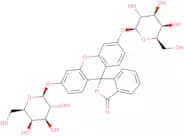
CAS:<p>Fluorogenic substrate for beta-galactosidase</p>Formula:C32H32O15Purezza:Min. 98 Area-%Colore e forma:Slightly Yellow PowderPeso molecolare:656.59 g/molFluorescein mono-b-D-galactopyranoside
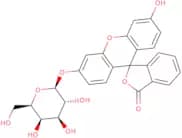
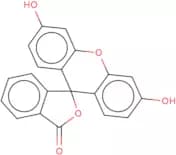
CAS:<p>Fluorescein mono-b-D-galactopyranoside or FMG is a fluorogenic substrate for beta-galactosidase. The fluorophore fluorescein is released after enzymatic cleavage, exhibiting a greenish fluorescent. This substrate is particularly valuable in gene expression studies (e.g., lacZ reporter assays) and as a probe for cell-based assays for real-time monitoring.</p>Purezza:Min. 95%Colore e forma:PowderPeso molecolare:494.45 g/molFluorescein diacetate
CAS:<p>Fluorogenic substrate targeting esterases , hGSTP1-1</p>Formula:C24H16O7Colore e forma:PowderPeso molecolare:416.38 g/mol4-Methylumbelliferyl β-D-glucuronide
CAS:<p>Fluorogenic substrate for b-glucuronidase GUS</p>Formula:C16H16O9Purezza:Min. 95%Peso molecolare:352.29 g/molAcetyl-L-alanine 7-amido-4-methylcoumarin
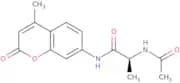
CAS:<p>Acetyl-L-alanine 7-amido-4-methylcoumarin is a fluorogenic substrate for aminopeptidase. The enzyme cleaves the N-terminal amino acids, yielding a blue fluorescent solution.</p>Formula:C15H16N2O4Purezza:Min. 98 Area-%Colore e forma:PowderPeso molecolare:288.3 g/molBis(4-methylumbelliferyl)pyrophosphoric acid, disodium salt
CAS:<p>Bis(4-methylumbelliferyl)pyrophosphoric acid, disodium salt is a fluorogenic substrate that is commonly used in environmental testing, bioluminescence, and culture media. It reacts with an enzyme to produce light. The light produced by the reaction of bis(4-methylumbelliferyl)pyrophosphoric acid, disodium salt with the enzyme can be measured using a luminometer to measure the amount of light. This reaction is also known as chemiluminescence and has been shown to have a high quality and purity. Bis(4-methylumbelliferyl)pyrophosphoric acid, disodium salt is often used in diagnostics for detecting conjugated or ligand compounds. It can be used as a staining agent for proteins or nucleic acids as well.</p>Formula:C20H14Na2O11P2Peso molecolare:538.26 g/molRef: 3D-B-3510
1gPrezzo su richiesta5gPrezzo su richiesta10gPrezzo su richiesta2500mgPrezzo su richiesta-Unit-ggPrezzo su richiesta