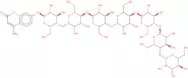
Substrati fluorogenici
In questa categoria troverai una selezione completa di substrati fluorogenici progettati per la catalisi enzimatica. Questi substrati vengono utilizzati con vari tipi di enzimi e sono in grado di produrre colore e fluorescenza al momento della reazione. I substrati fluorogenici sono strumenti essenziali nella ricerca biochimica e biologia molecolare, permettendo la rilevazione e quantificazione dell'attività enzimatica con alta sensibilità e specificità. Sono ampiamente utilizzati in saggi per lo studio della cinetica enzimatica, lo screening di inibitori enzimatici e il monitoraggio dei processi cellulari. Da CymitQuimica, offriamo substrati fluorogenici di alta qualità per supportare le tue ricerche, garantendo risultati affidabili e precisi nei tuoi saggi enzimatici.
Trovati 297 prodotti di "Substrati fluorogenici"
Ordinare per
Purezza (%)
0
100
|
0
|
50
|
90
|
95
|
100
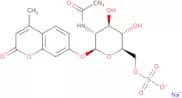
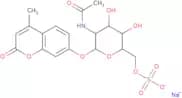
4-Methylumbelliferyl 2-acetamido-2-deoxy-b-D-glucopyranoside-6-sulfate sodium salt
CAS:<p>4-Methylumbelliferyl 2-acetamido-2-deoxy-beta-D-glucopyranoside-6-sulfate sodium salt is a high-quality fluorogenic substrate specifically designed for the detection and quantification of various enzymes, including beta-glucosidases and sulfatases. Upon hydrolysis by the target enzyme, this substrate releases the highly fluorescent 4-methylumbelliferone, allowing for real-time monitoring and accurate measurement of enzyme activities in biochemical assays, diagnostic tests, and research applications. 4-Methylumbelliferyl 2-acetamido-2-deoxy-beta-D-glucopyranoside-6-sulfate sodium salt has excellent solubility in water, ensuring a consistent and reliable performance in different experimental conditions. This versatile substrate is an essential tool for researchers and industry professionals who require a sensitive and reproducible detection method for enzymes of interest.</p>Formula:C18H20NO11SNaPurezza:Min. 98 Area-%Colore e forma:White PowderPeso molecolare:481.41 g/mol4-Methylumbelliferyl a-L-fucopyranoside
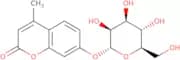
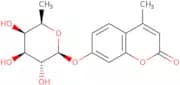
CAS:<p>Fluorogenic substrate for fucosidase</p>Formula:C16H18O7Purezza:Min. 95%Colore e forma:White PowderPeso molecolare:322.31 g/mol4-Methylumbelliferyl a-L-arabinofuranoside
CAS:<p>Fluorogenic substrate for ?-arabinofuranosidase</p>Formula:C15H16O7Purezza:Min. 95%Colore e forma:White PowderPeso molecolare:308.28 g/mol6-Chloro-4-(trifluoromethyl)umbelliferyl β-D-cellotrioside
<p>6-Chloro-4-(trifluoromethyl)umbelliferyl b-D-cellotrioside is a fluorogenic substrate for cellulases and beta-glucosidases. After hydrolisis, the fluorophore TFMU is released generating a blue fluorescence.</p>Formula:C28H34ClF3O18Purezza:Min. 95%Colore e forma:White to off-white powder.Peso molecolare:751.01 g/mol4-Methylumbelliferyl heptanoate
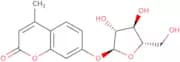
CAS:<p>Lipase targeting MOSCERDAM® substrate</p>Formula:C17H20O4Purezza:Min. 95%Colore e forma:White PowderPeso molecolare:288.34 g/mol4-Methylumbelliferyl b-D-ribofuranoside
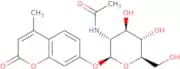
CAS:<p>The 4-Methylumbelliferyl b-D-ribofuranoside is a top-notch fluorogenic substrate for glycosidase activity detection. Upon hydrolysis by enzymes, it generates a strongly fluorescent 4-methylumbelliferone molecule, enabling rapid assay results and real-time monitoring of enzymatic reactions. This product is suitable for many biological research applications, such as in vitro analysis, diagnostic testing, and drug discovery. With its high sensitivity and specificity, it delivers consistent and accurate results, making it an essential tool for scientists and researchers.</p>Formula:C15H16O7Purezza:Min. 95%Colore e forma:White PowderPeso molecolare:308.28 g/mol4-Methylumbelliferyl 2-acetamido-2-deoxy-b-D-glucopyranoside
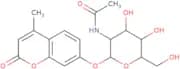
CAS:<p>Fluorogenic substrate for chitinase</p>Formula:C18H21NO8Purezza:Min. 99 Area-%Colore e forma:White Off-White PowderPeso molecolare:379.36 g/mol4-Methylumbelliferyl phosphate, free acid
CAS:<p>A sensitive fluorogenic substrate for fluorometric and UV-spectrophotometric assays of phosphatases. It is used for the detection of C. perfringens because acid phosphatase is a highly specific indicator for C. perfringens.</p>Formula:C10H9O6PPeso molecolare:256.15 g/molRef: 3D-M-5801
10gPrezzo su richiesta25gPrezzo su richiesta50gPrezzo su richiesta100gPrezzo su richiesta250gPrezzo su richiesta-Unit-ggPrezzo su richiesta4-Methylumbelliferyl N,N',N''-triacetyl-b-D-chitotrioside
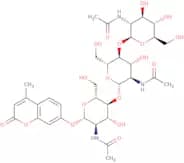
CAS:<p>4-Methylumbelliferyl N,N',N''-triacetyl-beta-D-chitotrioside is a fluorogenic substrate for chitinase. After enzymatic cleaveage, free 4-methylumbelliferone (also known as hymecromone) is released, exhibiting blue fluorescence upon excitation with UV light. The strongest fluorescence of 4-methylumbelliferone requires deprotonation of the hydroxyl group (thus requires alkaline pH), with a maximal fluorescence intensity obtained with excitation at 350 to 370 nm and emission at 440 to 470 nm. The use of 4-methylumbelliferyl N,N',N''-triacetyl-beta-D-chitotriosideas a substrate for measuring the chitinase activity is used for fungal infection assays.</p>Formula:C34H47N3O18Purezza:Min. 95.0 Area-%Colore e forma:White Off-White PowderPeso molecolare:785.75 g/mol4-Trifluoromethylumbelliferyl β-D-galactopyranoside
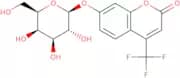
CAS:<p>4-Trifluoromethylumbelliferyl β-D-galactopyranoside is a fluorogenic substrate for beta-galactosidase	. Upon hydrolysis, the fluorogenic moiety (blueish) 4-trifluoromethylumbelliferone (also known as TFMU) is released. 4-Trifluoromethylumbelliferyl β-D-galactopyranoside is commonly used in bacterial detection and in LacZ gene expression assays.</p>Formula:C16H15F3O8Purezza:Min. 95%Colore e forma:PowderPeso molecolare:392.28 g/molGlutaryl-glycyl-L-arginine 7-amido-4-methylcoumarin hydrochloride
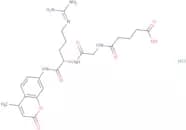
CAS:<p>Glutaryl-glycyl-L-arginine 7-amido-4-methylcoumarin hydrochloride is a synthetic peptide substrate used as a fluorogenic substrate for aminopeptidase.</p>Formula:C23H30N6O7·HClPurezza:Min. 95%Colore e forma:PowderPeso molecolare:538.98 g/mol4-Methylumbelliferyl caprylate
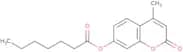
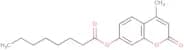
CAS:<p>Fluorogenic substrate for esterase with C8 activity yielding a blue fluorescent solution upon cleavage. Used for the identification of Salmonella spp. based on the detection of caprylate esterase.</p>Formula:C18H22O4Purezza:Min. 98 Area-%Peso molecolare:302.37 g/molRef: 3D-M-5526
1gPrezzo su richiesta5gPrezzo su richiesta10gPrezzo su richiesta25gPrezzo su richiesta2500mgPrezzo su richiesta-Unit-ggPrezzo su richiesta4-Methylumbelliferyl acetate
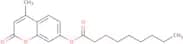
CAS:<p>Fluorogenic substrate for carboxylesterase</p>Formula:C12H10O4Purezza:Min. 95%Colore e forma:White PowderPeso molecolare:218.21 g/mol4-Methylumbelliferyl nonanoate
CAS:<p>4-Methylumbelliferyl nonanoate is a synthetic fluorogenic substrate for lipase. It is used to measure the activity of lipases in vitro. 4-Methylumbelliferyl nonanoate reacts with a lipid substrate, such as sodium taurocholate, to produce 4-methylumbelliferone and dodecanol. The fluorescent product can be detected by fluorimetric or spectrophotometric methods. This compound is activated by an enzyme preparation, such as proteolytic enzymes, and can be used to measure the activity of these enzymes in vitro.</p>Formula:C19H24O4Purezza:Min. 99 Area-%Peso molecolare:316.40 g/molRef: 3D-M-5744
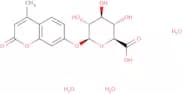
5gPrezzo su richiesta10gPrezzo su richiesta25gPrezzo su richiesta50gPrezzo su richiesta-Unit-ggPrezzo su richiesta4-Methylumbelliferyl b-D-glucuronide trihydrate
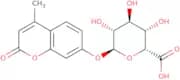
CAS:<p>Fluorogenic substrate for beta-glucuronidase GUS</p>Formula:C16H22O12Purezza:Min. 98 Area-%Colore e forma:White PowderPeso molecolare:406.34 g/mol4-Methylumbelliferyl butyrate
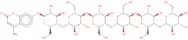
CAS:<p>Methylumbelliferyl butyrate is structurally based on 4-methylumbelliferone and is a MOSCERDAM® substrate. It targets the esterase enzyme.</p>Formula:C14H14O4Purezza:Min. 95%Colore e forma:White PowderPeso molecolare:246.26 g/mol4-Methylumbelliferyl β-D-cellohexaoside
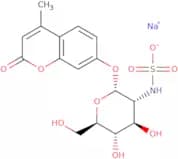
CAS:<p>4-Methylumbelliferyl beta-D-cellohexaoside is a fluorogenic substrate for cellulase. After enzymatic cleaveage, free 4-methylumbelliferone (also known as hymecromone) is released, exhibiting blue fluorescence upon excitation with UV light. The strongest fluorescence of 4-methylumbelliferone requires deprotonation of the hydroxyl group (thus requires alkaline pH), with a maximal fluorescence intensity obtained with excitation at 350 to 370 nm and emission at 440 to 470 nm. The use of 4-methylumbelliferyl beta-D-cellohexaosideas a substrate for measuring the cellulase activity is used for detecting bacterial infection and gut microbiome analysis.</p>Formula:C46H68O33Purezza:Min. 95%Colore e forma:PowderPeso molecolare:1,149.01 g/mol4-Methylumbelliferyl 2-deoxy-2-sulfamino-a-D-glucopyranoside sodium salt - Moscerdam™ biochemical purity
CAS:<p>4-Methylumbelliferyl 2-deoxy-2-sulfamino-a-D-glucopyranoside sodium salt (M3A or MU-GlcNS) is a fluorogenic substrate of heparin sulfamidase, used in the diagnosis of Mucopolysaccharidosis III type A (MPS III A). MPS III A, also known as Sanfilippo syndrome type A, is caused by the deficiency of heparan N-sulfatase. Heparin sulfamidase in the assay desulfates MU-GlcNS to 4-methylumbelliferyl 2-amino-2-deoxy-α-D-glucopyranoside (MU-GlcNH2). To release fluorometrically measurable 4-methylumbelliferone (MU) and by-product glucosamine, MU-GlcNH2 is further hydrolysed by an enzyme such as yeast α-glucosidase during a second incubation.</p>Formula:C16H18NO10SNaPurezza:Min. 95 Area-%Colore e forma:White PowderPeso molecolare:439.37 g/mol4-Methylumbelliferyl 2-acetamido-2-deoxy-a-D-glucopyranoside-6-sulfate sodium salt - Moscerdam™ biochemical purity
CAS:<p>A substrate used for the diagnosis of Sanfilippo disease type D (MPS IIID).</p>Formula:C18H20NNaO11SPurezza:Min. 95%Colore e forma:White PowderPeso molecolare:481.41 g/mol4-Methylumbelliferyl elaidate
CAS:<p>4-Methylumbelliferyl elaidate is a fluorogenic substrate for lipase. After enzymatic cleaveage, free 4-methylumbelliferone (also known as hymecromone) is released, exhibiting blue fluorescence upon excitation with UV light. The strongest fluorescence of 4-methylumbelliferone requires deprotonation of the hydroxyl group (thus requires alkaline pH), with a maximal fluorescence intensity obtained with excitation at 350 to 370 nm and emission at 440 to 470 nm. The use of 4-methylumbelliferyl elaidateas a substrate for measuring the lipase activity is used for assessment of lipase activity to identify pancreatitis.</p>Formula:C28H40O4Purezza:Min. 95%Colore e forma:PowderPeso molecolare:440.61 g/mol4-Methylumbelliferyl a-D-mannopyranoside
CAS:<p>4-Methylumbelliferyl alpha-D-mannopyranoside (4-MU-a-D-Man) is a fluorogenic substrate used in activity assays for alpha-mannosidase. When it is hydrolyzed by alpha-mannosidase, it produces a fluorescent compound, 4-methylumbelliferone (4-MU). 4-MU-a-D-Man is often used in medical research to monitor the activity of alpha-mannosidase, which is important in lysosomal storage diseases. In addition, 4-Methylumbelliferyl alpha-D-mannopyranoside has been used to study the the activity of concanavalin A, a lectin that specifically binds to alpha-D-mannopyranosyl and alpha-D-glucopyranosyl residues on various glycoproteins. The use of this fluorogenic enzyme substrate permits study the degree of alpha-D-mannosidic linkage cleavage by the enzyme.</p>Formula:C16H18O8Purezza:Min. 98 Area-%Colore e forma:White Off-White PowderPeso molecolare:338.31 g/molN-Acetyl-3,7-dihydroxyphenoxazine
CAS:<p>Fluorogenic substrate for peroxidase</p>Formula:C14H11NO4Purezza:(1H-Nmr) Min. 95%Colore e forma:Slightly Brown PowderPeso molecolare:257.24 g/molResorufin b-D-glucopyranoside
CAS:<p>Resorufin b-D-glucopyranoside is a stable red fluorogenic galactosidase substrate.</p>Purezza:Min. 95%Colore e forma:Orange PowderPeso molecolare:375.33 g/mol4-Methylumbelliferyl-α-L-iduronic acid, cyclohexylammonium salt
CAS:<p>4-Methylumbelliferyl-alpha-L-iduronic acid, cyclohexylammonium salt is a fluorogenic substrate for the detection of alpha-L-iduronidase activity. It has been used to measure the activity of this enzyme in cells and tissues and as an indicator of tissue damage. The product is also used in food testing, diagnostics, and environmental testing.</p>Formula:C22H29NO9Peso molecolare:451.48 g/mol4-Methylumbelliferyl-N-acetyl-β-D-galactosaminide
CAS:<p>Fluorogenic substrate for N-acetyl-β-D-galactosaminidase. Detection of Candida albicans.</p>Formula:C18H21NO8Purezza:Min. 98.0 Area-%Peso molecolare:379.37 g/molResorufin-β-D-glucuronic acid, sodium salt
CAS:<p>Resorufin-beta-D-glucuronic acid, sodium salt is a fluorogenic substrate that can be used in diagnostic applications. It is a conjugate of resorufin and beta-D-glucuronic acid. The enzyme substrate reacts with the enzyme luciferase to produce light. The high purity and quality of this product make it ideal for use in the detection of the presence of glucose in urine, which can be used to diagnose diabetes mellitus.</p>Formula:C18H14NNaO9Purezza:Min. 90.0 Area-%Peso molecolare:411.30 g/molRef: 3D-R-2150
2mgPrezzo su richiesta5mgPrezzo su richiesta10mgPrezzo su richiesta25mgPrezzo su richiesta50mgPrezzo su richiesta-Unit-ggPrezzo su richiesta4-Methylumbelliferyl-β-D-ribofuranoside
CAS:<p>4-Methylumbelliferyl-beta-D-ribofuranoside is a chemical compound that belongs to the class of phenols. It has been found in Australian plants and animals. 4-Methylumbelliferyl-beta-D-ribofuranoside is used as a corrosion inhibitor. This chemical has been shown to be effective against corrosion in mammals.br>br><br>4-Methylumbelliferyl-beta-D-ribofuranoside can also be used as a fluorescent probe for studying cell membrane activity.</p>Formula:C15H16O7Purezza:Min. 99 Area-%Peso molecolare:308.29 g/molRef: 3D-M-6190
1gPrezzo su richiesta5gPrezzo su richiesta250mgPrezzo su richiesta500mgPrezzo su richiesta2500mgPrezzo su richiesta-Unit-ggPrezzo su richiesta4-Methylumbelliferyl-β-D-fucopyranoside
CAS:<p>4-Methylumbelliferyl-beta-D-fucopyranoside is a fluorogenic substrate for beta-fucosidase. After enzymatic cleaveage, free 4-methylumbelliferone (also known as hymecromone) is released, exhibiting blue fluorescence upon excitation with UV light. The strongest fluorescence of 4-methylumbelliferone requires deprotonation of the hydroxyl group (thus requires alkaline pH), with a maximal fluorescence intensity obtained with excitation at 350 to 370 nm and emission at 440 to 470 nm. The use of 4-methylumbelliferyl-beta-D-fucopyranosideas a substrate for measuring the beta-fucosidase activity is used for the diagnosis of fucosidosis and the study of glycoprotein metabolism disorder.</p>Formula:C16H18O7Purezza:Min. 99 Area-%Peso molecolare:322.31 g/molRUG ®, Resorufin-β-D-glucuronic acid methyl ester, Biosynth Patent: EP 2718458 and US 9127303
CAS:<p>Living cells of Escherichia coli can be reliably detected with media that contain a chromogenic or fluorogenic substrate for beta-glucuronidase (also termed β-D-glucuronidase), an enzyme that occurs almost exclusively in E. coli. RUG®, Resorufin-beta-D-glucuronic acid methyl ester is a highly sensitive chromogenic and fluorogenic indicator for E. coli. After removal of the methyl ester group by unspecific hydrolysis, orange colored product is cleaved by beta-glucuronidase in liquid media or on agar plates and yields an intense pink color. Red fluorescence is obtained upon excitation at 560-570 nm.Formally ER175455.</p>Formula:C19H17NO9Purezza:Min. 90.0 Area-%Peso molecolare:403.34 g/mol6-Hexadecanoylamino-4-methylumbelliferyl phosphorylcholine - Moscerdam™ biochemical purity
CAS:<p>6-Hexadecanoylamino-4-methylumbelliferyl phosphorylcholine (HMUPC) is a fluorogenic substrate of acid sphingomyelinase (ASM) in the application of the diagnosis of Niemann–Pick type A and B (NPAB). NPAB is one of the lysosomal storage diseases, caused by a deficiency of ASM. This deficiency results in the accumulation of sphingomyelin and other lipids in various tissues. The assay using HMUPC as the substrate shows rapid and robust determination of ASM activity. When combined with the unlabelled natural substrate such as sphingomyelin as a specific inhibitor of ASM activity, the specificity of assay is enhanced up to the level of the classical assay with radiolabelled natural substrate. HMUPC is also used as the substrate in the ASM assay to investigate the retention of lysosomal enzyme activity of bi-functional IgG-ASM fusion protein in the delivery across blood-brain barrier.</p>Formula:C31H51N2O7PPurezza:Min. 97 Area-%Colore e forma:White PowderPeso molecolare:594.72 g/mol4-Methylumbelliferyl-β-D-glucuronic acid methyl ester, Biosynth Patent: EP 2718458 and US 9127303
<p>4-Methylumbelliferyl-beta-D-glucuronic acid methyl ester is a chromogenic substrate for β-glucuronidase. It is used in diagnostic applications and as a substrate in enzyme kinetics experiments. 4-Methylumbelliferyl-beta-D-glucuronic acid methyl ester has fluorescence properties that allow it to be detected by chemiluminescence and bioluminescence.</p>Purezza:Min. 95%4-Methylumbelliferyl decanoate
CAS:<p>Fluorogenic substrate for carboxylesterases</p>Formula:C20H26O4Purezza:Min. 98 Area-%Colore e forma:White PowderPeso molecolare:330.42 g/mol4-Methylumbelliferyl a-L-idopyranosiduronic acid
CAS:<p>4-Methylumbelliferyl a-L-idopyranosiduronic acid is an ester that is used as a marker for the identification of glycolipids. It is a fluorogenic substrate for alpha-L-iduronidase used as a marker for the diagnosis of autoimmune diseases, including diabetic neuropathy. 4-Methylumbelliferyl a-L-idopyranosiduronic acid has been shown to inhibit inflammation and cancer, although it is not currently approved for this use. The mechanism by which 4-methylumbelliferyl a-L-idopyranosiduronic acid inhibits inflammation may be due to its ability to block cation channels on the surface of cells, thereby preventing inflammatory mediators from entering cells.</p>Formula:C16H16O9Purezza:Min. 97 Area-%Colore e forma:White Off-White PowderPeso molecolare:352.29 g/molResorufin-7-O-phosphate
CAS:<p>Resorufin-7-O-phosphate is a fluorogenic substrate for alkaline phosphatase that exhibits a red color after cleavage that can be measured at ~ 585nm.</p>Formula:C12H6NO6P·2H4NPurezza:Min. 95%Peso molecolare:327.23 g/molRhodamine 110 chloride
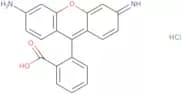
CAS:<p>Fluorescent dye substrate for flow cytometric measurements</p>Formula:C20H15O3N2ClPurezza:Min. 95 Area-%Colore e forma:Red PowderPeso molecolare:366.8 g/mol4-Methylumbelliferyl propionate
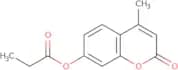
CAS:<p>4-Methylumbelliferyl propionate is a fluorogenic substrate for esterase. After enzymatic cleaveage, free 4-methylumbelliferone (also known as hymecromone) is released, exhibiting blue fluorescence upon excitation with UV light. The strongest fluorescence of 4-methylumbelliferone requires deprotonation of the hydroxyl group (thus requires alkaline pH), with a maximal fluorescence intensity obtained with excitation at 350 to 370 nm and emission at 440 to 470 nm. The use of 4-methylumbelliferyl propionateas a substrate for measuring the esterase activity is used for esterase deficiency screening assays.</p>Formula:C13H12O4Purezza:Min. 95 Area-%Colore e forma:PowderPeso molecolare:232.23 g/molResorufin N-acetyl-b-D-glucosamine
CAS:<p>Resorufin N-acetyl-b-D-glucosamine is fluorogenic substrate for N-acetyl-beta-D-glucosaminidase (NAG).</p>Formula:C20H20N2O8Purezza:Min. 98 Area-%Colore e forma:Orange PowderPeso molecolare:416.38 g/mol4-Methylumbelliferyl 6-thio-palmitate-b-D-glucopyranoside - Moscerdam™ biochemical purity
CAS:<p>4-Methylumbelliferyl 6-thio-palmitate-b-D-glucopyranoside (Mu-6S-Palm-β-Glc) is a fluorogenic substrate of palmitoyl-protein thioesterase 1 (PPT1), used in the diagnosis of infantile neuronal ceroid lipofuscinosis (INCL). INCL, also known as infantile CLN1 disease, is a rapidly progressing lysosomal storage disorder (LSD), caused by a deficiency of PPT1. Mu-6S-Palm-β-Glc is also used as the substrate in the PPT assay to investigate the retention of lysosomal enzyme activity of bi-functional IgG-PPT1 fusion protein in the delivery across blood-brain barrier.</p>Formula:C32H48O8SPurezza:Min. 95%Colore e forma:White PowderPeso molecolare:592.78 g/molL-Leucine 7-amido-4-methylcoumarin hydrochloride salt
CAS:<p>L-Leucine 7-amido-4-methylcoumarin hydrochloride salt is a synthetic peptide substrate used as a fluorogenic substrate for leucine aminopeptidase.</p>Formula:C16H21ClN2O3Purezza:Min. 98 Area-%Colore e forma:White PowderPeso molecolare:324.8 g/mol4-Methylumbelliferyl caprylate
CAS:<p>Used for identification of Salmonella spp. by detection of caprylate esterase</p>Formula:C18H22O4Purezza:Min. 95%Colore e forma:White PowderPeso molecolare:302.36 g/molEthyl umbelliferone-3-carboxylate-α-D-glucopyranoside
<p>Ethyl umbelliferone-3-carboxylate-a-D-glucopyranoside is a fluorogenic substrate used for detecting alpha-glucosidase activity in enzymatic assays. When alpha-glucosidase cleaves , the glycosidic bond, umbelliferone-3-carboxylate is released, which exhibits strong fluorescence. This substrate is commonly utilized in glycobiology research, diagnostic tests, and high-throughput screening of enzyme inhibitors.</p>Formula:C18H20O10Purezza:Min. 95%Colore e forma:Off-white to yellow solid.Peso molecolare:396.35 g/mol4-Methylumbelliferyl elaidate
CAS:<p>4-Methylumbelliferone is a fluorescent probe that can be used to study the metabolism of fatty acids in plants. It is also used as a marker for radiation and significant cytotoxicity. 4-Methylumbelliferone binds to the DNA termini, specifically at the 5' phosphate group, and inhibits phosphatase activity. This process increases levels of p-nitrophenyl phosphate (a substrate), which produces protocatechuic acid (an intermediate). The disulfide bond is then broken by hydrogen peroxide, leading to an increase in fluorescence. The optimum pH for this process is 7.5.</p>Formula:C28H40O4Purezza:Min. 95 Area-%Peso molecolare:440.63 g/molRef: 3D-M-5535
1gPrezzo su richiesta5gPrezzo su richiesta10gPrezzo su richiesta25gPrezzo su richiesta2500mgPrezzo su richiesta-Unit-ggPrezzo su richiesta4-Methylumbelliferyl 2-acetamido-2-deoxy-a-D-glucopyranoside
CAS:<p>4-Methylumbelliferyl 2-acetamido-2-deoxy-alpha-D-glucopyranoside is a fluorogenic substrate for alpha-N-acetylglucosaminidase. After enzymatic cleaveage, free 4-methylumbelliferone (also known as hymecromone) is released, exhibiting blue fluorescence upon excitation with UV light. The strongest fluorescence of 4-methylumbelliferone requires deprotonation of the hydroxyl group (thus requires alkaline pH), with a maximal fluorescence intensity obtained with excitation at 350 to 370 nm and emission at 440 to 470 nm. The use of 4-methylumbelliferyl 2-acetamido-2-deoxy-alpha-D-glucopyranosideas a substrate for measuring the alpha-N-acetylglucosaminidase activity is used for Sanfilippo syndrome B screening and mucopolysaccharidosis diagnosis.</p>Formula:C18H21NO8Purezza:Min. 98 Area-%Colore e forma:PowderPeso molecolare:379.36 g/mol4-Methylumbelliferyl-N-acetyl-β-D-glucosaminide-6-sulfate, sodium salt
CAS:<p>4-Methylumbelliferyl 2-acetamido-2-deoxy-beta-D-glucopyranoside-6-sulfate sodium salt is a high-quality fluorogenic substrate specifically designed for the detection and quantification of various enzymes, including beta-glucosidases and sulfatases. Upon hydrolysis by the target enzyme, this substrate releases the highly fluorescent 4-methylumbelliferone, allowing for real-time monitoring and accurate measurement of enzyme activities in biochemical assays, diagnostic tests, and research applications. 4-Methylumbelliferyl 2-acetamido-2-deoxy-beta-D-glucopyranoside-6-sulfate sodium salt has excellent solubility in water, ensuring a consistent and reliable performance in different experimental conditions. This versatile substrate is an essential tool for researchers and industry professionals who require a sensitive and reproducible detection method for enzymes of interest.</p>Formula:C18H20NNaO11SPurezza:Min. 98.0 Area-%Peso molecolare:481.41 g/molRef: 3D-M-5505
5mgPrezzo su richiesta25mgPrezzo su richiesta50mgPrezzo su richiesta100mgPrezzo su richiesta250mgPrezzo su richiesta-Unit-ggPrezzo su richiestaFluorescein diacetate
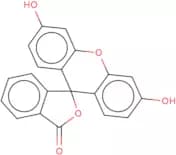
CAS:<p>Fluorogenic substrate targeting esterases , hGSTP1-1</p>Formula:C24H16O7Colore e forma:PowderPeso molecolare:416.38 g/molMethyl 4-methylumbelliferyl hexyl phosphonate
CAS:<p>Methyl 4-methylumbelliferyl hexyl phosphonate is a lipase suicide inhibitor that is a fluorogenic substrate for lipases which upon enzymatic action, binds irreversibly to the lipase and inactivates it. The substrate can be used for the determination of active sites in lipases and the fluorescent signal can be detected at Ex 363 nm and Em 465 nm.</p>Purezza:Min. 95%Peso molecolare:338.344-Methylumbelliferyl phosphate dilithium
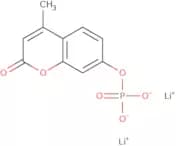
CAS:<p>4-Methylumbelliferyl phosphate dilithium is a fluorogenic substrate for alkaline phosphatase. After enzymatic cleaveage, free 4-methylumbelliferone (also known as hymecromone) is released, exhibiting blue fluorescence upon excitation with UV light. The strongest fluorescence of 4-methylumbelliferone requires deprotonation of the hydroxyl group (thus requires alkaline pH), with a maximal fluorescence intensity obtained with excitation at 350 to 370 nm and emission at 440 to 470 nm. The use of 4-methylumbelliferyl phosphate dilithiumas a substrate for measuring the alkaline phosphatase activity is used for bone metabolism disorder studies and hypophosphatasia diagnosis.</p>Formula:C10H7O6P•Li2Purezza:Min. 95%Colore e forma:PowderPeso molecolare:268.01 g/mol4-Methylumbelliferyl a-D-arabinopyranoside
<p>A fluorogenic MOSCERDAM® substrate targeting alpha-arabinofuranosidase</p>Purezza:Min. 95%Peso molecolare:308.28 g/mol4-Methylumbelliferyl b-D-celloheptaoside
CAS:<p>A fluorogenic MOSCERDAM® substrate targeting cellulases</p>Purezza:Min. 95%Peso molecolare:1,311.15 g/molAcetyl coenzyme A trilithium salt trihydrate
CAS:<p>Acetyl coenzyme A trilithium salt trihydrate (ATC) is a glutathione-dependent enzyme that catalyzes the acetylation of compounds with a thiol group. Acetyl coenzyme A trilithium salt trihydrate has been shown to acetylate recombinant human and hek293 cells as well as xenobiotic compounds such as acetaminophen, chlorzoxazone, and phenacetin. The rate of acetylation depends on the concentration of glutathione and the availability of the substrate. There is no evidence that ATC conjugates or transfers acetyllysine to other proteins. It is excreted in the urine after being expressed by recombinant human and hek293 cells.END></p>Formula:C23H35N7O17P3S·3Li·3H2OPurezza:Min. 95%Colore e forma:White PowderPeso molecolare:881.42 g/mol