Substrati fluorogenici
Trovati 217 prodotti per "Substrati fluorogenici".
- Prezzo più basso
- Prezzo più alto
- Purezza più bassa
- Purezza più alta
- Consegna più veloce
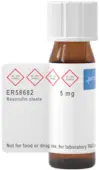
Resorufin oleate
Resorufin oleate is a fluorogenic lipase substrate.Purezza:Min. 95%Colore e forma:PowderPeso molecolare:477.64 g/molResorufin maltotriose
Resorufin maltotriose is an alpha-amylase substrate that releases the dye resorufin with red emission (lmax=585 nm) after enzyme reaction.Formula:C30H47NO18Purezza:Min. 95%Peso molecolare:709.69 g/molRef: 3D-ER58686
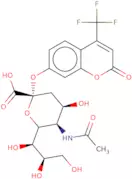
Prodotto fuori produzione4-Trifluoromethylumbelliferyl a-D-N-acetylneuraminic acid
CAS:4-Trifluoromethylumbelliferyl a-D-N-acetylneuraminic acid is a fluorescent chemiluminescent substrate that is used in the detection of beta-galactosidase activity. Beta-galactosidase catalyzes the hydrolysis of 4-trifluoromethylumbelliferyl a-D-N-acetylneuraminic acid to form 4-trifluoromethylumbelliferone and D-galactose, which emits light at approximately 480 nm. This reaction can be detected by fluorescence spectrophotometry using a fluorometer or photometer. 4TFUNA is not toxic, does not inhibit enzymes, and has been tested for toxicity and mutagenicity using bacteria and mammalian cells.
Purezza:Min. 95%Peso molecolare:521.39 g/molRef: 3D-ET04875
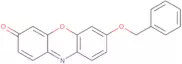
Prodotto fuori produzioneResorufin benzyl ether
CAS:Resorufin benzyl ether is a chemical compound that can be used as a substrate for cytochrome P450. It has been shown to inhibit the activity of epoxide hydrolase, an enzyme involved in the metabolism of endoperoxides. Resorufin benzyl ether has also been found to inhibit cytochrome P450 enzymes, which are responsible for oxidative metabolism of xenobiotics. This compound has been shown to have a high affinity for mouse monoclonal antibody and is used in immunoassays to detect mouse antibodies. Resorufin benzyl ether is used in biochemical assays and polymerase chain reactions (PCRs) as a fluorescence marker. In addition, this compound is used in model systems to study enzyme activities such as recombinant cytochrome p450 and protein oxidation by reactive oxygen species (ROS).
Purezza:Min. 95%Peso molecolare:303.31 g/molRef: 3D-ER31479
Prodotto fuori produzione4-Methylumbelliferyl-a-D-mannopyranoside-2-phosphoethanolamine
4-Methylumbelliferyl-a-D-mannopyranoside-2-phosphoethanolamine is a fluorescent substrate used in enzyme assays. It is an analog of the natural substrate, 4-methylumbelliferyl-alpha-D-mannopyranoside, which is a phosphoethanolamine linked to alpha-D-mannose. This product can be used as a chromogenic or fluorogenic substrate for various enzymes, including beta glucosidase, beta galactosidase, and beta lactonase. 4MUMPE can also be used for bioluminescent studies and has been shown to have high purity and quality.Purezza:Min. 95%Resorufin pentyl ether
CAS:Resorufin pentyl ether is a drug transporter that can be used as an experimental model for studying the effects of chemical pesticides on humans. Resorufin pentyl ether inhibits energy metabolism and inhibits hepatic p450 activity and polymerase chain reaction in hepatocyte-like cells in vitro. It has been shown to inhibit the enzyme activities of rat liver p450s and human cytochrome P450 3A4 (CYP3A4) at physiological levels. Resorufin pentyl ether has also been shown to be toxic in mice, with toxicity studies showing an LD50 of 4.5 mg/kg after oral administration. This drug is not active against bacteria or fungi, but it is able to inhibit protein synthesis in model systems containing mouse monoclonal antibodies or calf thymus DNA.Purezza:Min. 95%Peso molecolare:283.32 g/molRef: 3D-ER26836
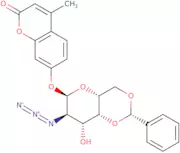
Prodotto fuori produzione4-Methylumbelliferyl 2-azido-2-deoxy-4,6-O-phenylmethylene-a-D-galactopyranoside
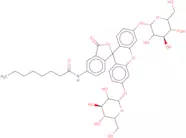
CAS:4-Methylumbelliferyl 2-azido-2-deoxy-4,6-O-phenylmethylene-a-D-galactopyranoside is a fluorogenic substrate that reacts with beta D galactosidase to produce light. This product is useful for diagnostics, conjugate production, and other applications. 4MUF 2 -Gal provides a convenient means of detecting beta D galactosidase activity in cell culture media and can be used as a chromogenic substrate for the detection of enzymes involved in glycosylation reactions. It is also used to detect staining by bioluminescence. The compound can be used in food testing and environmental testing to measure the presence of beta D galactosidase.Formula:C23H21N3O7Purezza:Min. 95%Peso molecolare:451.43 g/mol5-Octanoylaminofluoroscein di-b-D-glactopyranoside
5-Octanoylaminofluoroscein di-b-D-glactopyranoside is a chemiluminescent substrate that can be used for the detection of peroxidase activity. It is a bifunctional substrate, which means it has two reactive groups: one at the 5 position and one at the 8 position. The 5-octanoylaminofluorescein reacts with hydrogen peroxide in a 1:1 ratio, emitting light at 490 nm. The 8-position amine reacts with 2,2'-azino-bis(3-ethylbenzthiazoline)6 sulphonic acid (ABTS) to produce an orange color product that acts as a chromogen. The substrate can be used in diagnostics, food testing, and enzyme substrates.
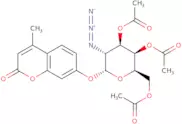
Purezza:Min. 95%Peso molecolare:797.8 g/mol4-Methylumbelliferyl 3,4,6-tri-O-acetyl-2-azido-2-deoxy-a-D-galactopyranoside
CAS:4-Methylumbelliferyl 3,4,6-tri-O-acetyl-2-azido-2-deoxy-a-D-galactopyranoside is a fluorogenic substrate for the enzyme beta galactosidase. It is used in food testing, environmental testing, and diagnostics. 4MUF3A2DGAL is an enzyme substrate that provides high quality chemiluminescence and bioluminescence signals. This product has a CAS number of 124167-43-7 and is available in both high purity and conjugate forms.Purezza:Min. 95%Peso molecolare:489.43 g/molRhodamine 110 bis-(L-aspartic acid amide) trifluoroacetic acid salt
CAS:Fluorogenic substrate targeting caspases 3 and 7
Purezza:Min. 95%Peso molecolare:788.56 g/mol4-Methylumbelliferyl acetate - 95%
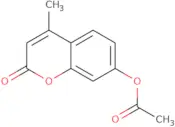
CAS:4-Methylumbelliferyl acetate is a fluorescent compound that can be used to measure the activity of cytochrome P450 enzymes. The fluorescence intensity of 4-methylumbelliferyl acetate increases when it reacts with substrates and inhibitors in vitro. This chemical has been shown to inhibit the enzyme cyclooxygenase in rat liver microsomes, which may lead to blood disorders. It also inhibits coumarin derivatives and human pathogens, such as erythromycin-resistant Staphylococcus aureus (MRSA). 4-Methylumbelliferyl acetate is used as a substrate for polymerase chain reaction (PCR) analysis because it is not susceptible to hydrolysis by esterases.Formula:C12H10O4Purezza:Min. 95%Colore e forma:PowderPeso molecolare:218.21 g/molResorufin methyl ether
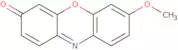
CAS:Fluorogenic substrate used to differentiate cytochrome P450 monooxygenases
Formula:C13H9NO3Purezza:Min. 95%Colore e forma:PowderPeso molecolare:227.22 g/molRef: 3D-ER11277
Prodotto fuori produzione4-Methylumbelliferyl 4-deoxy-b-D-chitobiose peracetate
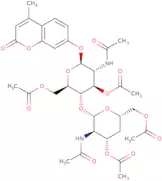
CAS:4-Methylumbelliferyl 4-deoxy-b-D-chitobiose peracetate is a chromogenic substrate used for the detection of β-galactosidase activity. It is an analog of 4-methylumbelliferone that can be hydrolyzed by β-galactosidase to produce fluorescence. This product is supplied as a white crystalline solid and can be stored at room temperature. This substrate has been shown to work well in culture media, food testing, and environmental testing.
Purezza:Min. 95%Colore e forma:Off-White PowderPeso molecolare:734.7 g/molRef: 3D-EM72460
Prodotto fuori produzione4-Methylumbelliferyl-b-D-glucose-6-phosphoethanolamine
4-Methylumbelliferyl-b-D-glucose-6-phosphoethanolamine is a fluorescent substrate that can be used to identify the presence of beta-glucosidase in biological samples, such as wine or cheese. It has been shown to offer high purity and quality, with a CAS number of 70750-68-6. This product is often used for diagnosing bacterial infections, as it will fluoresce when hydrolyzed by beta-glucosidase enzymes. 4MMUFBE can also be used for food testing, environmental testing, and chromogenic substrate reactions in the laboratory.Purezza:Min. 95%4-Methylumbelliferyl-a-D-mannopyranoside-6-phosphoethanolamine
4-Methylumbelliferyl-a-D-mannopyranoside-6-phosphoethanolamine is a synthetic fluorogenic substrate that can be used in the detection of phosphatases. This substrate is a chromogenic and fluorogenic substrate that reacts when it is cleaved by enzymes. It has been shown to work with a number of different enzyme types, including esterases, phosphatases, and proteases. 4-Methylumbelliferyl-a-D-mannopyranoside-6-phosphoethanolamine has demonstrated high quality for use in bioluminescence, food testing, and environmental testing.4Methylumbelliferyl - a - D - mannopyranoside - 6 - phosphoethanolamine has been assigned CAS No. 81771-07-2.Purezza:Min. 95%4-Methylumbelliferyl 2-azido-2-deoxy-3-O-(tetra-O-acetyl-b-D-galactopyranosyl)-4,6-O-benzylidene-a-D-galactopyranoside
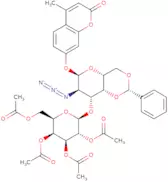
CAS:4-Methylumbelliferyl 2-azido-2-deoxy-3-O-(tetra-O-acetyl-b-D-galactopyranosyl)-4,6-O-benzylidene a D galactopyranoside is a chemiluminescent substrate for detecting ligands. It has been used to detect the presence of bacteria, fungi, and parasites in food samples and as an indicator for enzymatic activity. This product is an excellent fluorescent substrate for the detection of nucleic acids such as DNA. This product is a conjugate with high purity, which makes it suitable for use in various types of applications.Formula:C37H39N3O16Purezza:Min. 95%Peso molecolare:781.72 g/molRef: 3D-OM16471
Prodotto fuori produzioneResorufin a-D-mannopyranoside
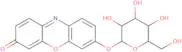
CAS:Resorufin alpha-D-glucopyranoside is a sensitive fluorogenic substrate that generates a red fluorescent product (resorufin) upon interaction with alpha-glucosidase.Purezza:Min. 95%Colore e forma:Brown PowderPeso molecolare:375.33 g/mol