Enzima
Gli inibitori enzimatici sono molecole che si legano agli enzimi e ne diminuiscono l'attività. Questi inibitori sono ampiamente utilizzati nella ricerca per studiare la cinetica enzimatica, la regolazione e il ruolo di specifici enzimi nelle vie metaboliche. Gli inibitori enzimatici sono anche fondamentali nello sviluppo di farmaci, poiché molti agenti terapeutici agiscono inibendo enzimi coinvolti in processi patologici. Mirando agli enzimi, questi inibitori possono modulare le vie biochimiche e offrire potenziali trattamenti per varie malattie. Presso CymitQuimica, offriamo una vasta selezione di inibitori enzimatici di alta qualità per supportare le tue ricerche in biochimica, farmacologia e scoperta di farmaci.
Sottocategorie di "Enzima"
- Anidrasi carbonica(197 prodotti)
- Idrossilasi(36 prodotti)
- MPO(2 prodotti)
- Riduttasi(50 prodotti)
- Tirosinasi(71 prodotti)
Trovati 3620 prodotti di "Enzima"
Ordinare per
Purezza (%)
0
100
|
0
|
50
|
90
|
95
|
100
Oxalate Oxidase, freeze-dried, from Wheat
CAS:Oxalate Oxidase, freeze-dried, from Wheat is an enzyme preparation which is derived from wheat and functions through the oxidative degradation of oxalate. This enzyme catalyzes the conversion of oxalate into carbon dioxide and hydrogen peroxide, utilizing oxygen as a co-substrate in the process. The activity of Oxalate Oxidase is crucial in biological and biochemical applications where oxalate degradation is required.Ref: 3D-ETS012.6
10U711,00€1KU4.224,00€25U551,00€2KU7.392,00€50U914,00€100U1.044,00€0.1KU921,00€0.5KU2.640,00€1000U5.429,00€2000U9.481,00€0.25KU1.627,00€Citrate lyase from klebsiella pneumonia ≥0.20 unit/mg solid
CAS:Citrate lyase (also known as ATP citrate synthase, EC 2.3.3.8) is an enzyme that catalyzes the following reaction:citrate + ATP + CoA → oxaloacetate + Acetyl-CoA + ADP + PiEnzymatic activity: One unit will convert 1.0 micromole of citrate to oxalacetate per minute at pH 7.6 and 25 °C in the presence of required cofactors. Citrate lyase is supplied lyophylized, with activity ≥0.20 unit/mg solid.Purezza:Min. 95%Urate oxidase (from Yeast)
CAS:Urate Oxidase, also known as uricase, catalizes the following reaction: Uric acid + O2 + H2O → 5-hydroxyisourate + H2O2.Formula:C18H26N5O14PPurezza:Min. 95%Peso molecolare:567.4 g/molCreatinase
Creatinase is an enzyme (EC 3.5.3.3) that catalyzes the conversion of creatine to sarcosine and urea.Cathepsin B from human placenta
CAS:<p>Cathepsin B is a lysosomal proteolytic enzyme of the cysteine protease family. It is present in all mammalian cells. It is essential for the intracellular protein turnover. Cathepsin B may be a useful tool in Alzheimer′s research, as it may have a role in the natural defense against the disease.</p>Purezza:Min. 95%Chymase
CAS:Chymase (alternative names mast cell protease 1, mast cell serine proteinase, skeletal muscle protease, EC 3.4.21.39) is a serine protease, found in mast cells and basophil granulocytes.Purezza:Min. 95%β-1,4-Galactosyltransferase 1
β-1,4-Galactosyltransferase 1 is an enzyme that catalyzes the synthesis of the glycosaminoglycan-protein linkage in proteoglycans.Cytochrome C oxidase
CAS:<p>Cytochrome C oxidase (originally assigned EC 1.9.3.1, now re-assigned EC 7.1.1.9) is an enzyme that catalyzes the following reaction: 4 Fe2+ – cytochrome c + 4 H+ + O2 → 4 Fe3+ – cytochrome c + 2 H2O</p>Ubiquitin Conjugating enzyme E2C Human Recombinant
Ubiquitin Conjugating enzyme E2C (other names UBE2C, UBCH10, dJ447F3.2, ubiquitin conjugating enzyme E2 C; EC 2.3.2.24) is an essential mediator of mitotic destruction events and cell cycle progression. It catalyzes the destruction of cyclins A and B in conjunction with the anaphase-promoting complex, and therefore, plays an important role in the control of the cell exit from mitosis This activity is essential at then end of mitosis for the inactivation of their partner kinase Cdc2 and exit from mitosis into G1 of the next cell cycle. In addition, UBE2C bears homology to yeast PAS2, a gene that is essential for biogenesis of peroxisomes. UBE2C is useful for in vitro ubiquitinylation reactions.Transglutaminase from guinea pig liver
CAS:Transglutaminase (2.3.2.13) is an enzyme that catalyzes formation of isopeptide bonds between the γ-carboxamide groups ( -(C=O)NH2 ) of glutamine side chains and amino groups. The donor of the amino group is usually (but not always) an ε-amino group ( -NH2 ) of lysine residue. The reaction also releases ammonia: Gln-(C=O)NH2 + NH2-Lys → Gln-(C=O)NH-Lys + NH3One unit of transglutaminase will catalyze the formation of 1.0 μmole transglutamination product per min at pH 6.0 and 37 °C.Purezza:Min. 95%Lipase from Candida antarctica
CAS:<p>Lipase from *Candida antarctica* is an enzyme-based biocatalyst, which is derived from the yeast *Candida antarctica*. This enzyme operates via a catalytic mechanism that involves the hydrolysis of ester bonds in lipid substrates, thereby facilitating the breakdown of fats into glycerol and free fatty acids. Its catalytic efficiency and stability in various conditions make it highly versatile for industrial applications.</p>Formula:C11H9N3O2•NaColore e forma:PowderPeso molecolare:233.10 g/molRecombinant Isocitrate Dehydrogenase
CAS:<p>Recombinant Isocitrate Dehydrogenase is a bioengineered enzyme, which is derived from microbial or eukaryotic expression systems designed to mirror its naturally occurring form. This enzyme catalyzes the oxidative decarboxylation of isocitrate to alpha-ketoglutarate, utilizing NADP+ as a cofactor in the process. Its mode of action involves the conversion of isocitrate to alpha-ketoglutarate with the concomitant reduction of NADP+ to NADPH.</p>Purezza:Min. 95%Plasmin
CAS:<p>Plasmin, human is a serin protease which present in the blood and is involved in the cleavage of cross-linked fibrin, a process known as fibrinolysis.One unit will produce one micromole of P-Nitroanilide from D-Val-Leu-Lys-P-Nitroanilide per minute at pH 7.5 at 37°C</p>Protein disulfide isomerase from bovine liver
CAS:An enzyme that catalyzes the formation and breakage of disulfide bonds in the folding of proteinsFormula:C7H5Cl2NO5SPurezza:Min. 95%Peso molecolare:286.09 g/molNeuron-specific enolase human
CAS:<p>Neuron-specific enolase human (ENO2, Enolase 2, Neural enolase, Gamma-enolase, Phosphopyruvate hydratase, 2-phospho-D-glycerate hydro-lyase; EC 4.2.1.11) is the enzyme that is catalyzes the following reaction: 2-phospho-D-glycerate ⇌ phosphoenolpyruvate + H2O One unit of enolase will convert 1.0 μmole of 2-phosphoglycerate to phosphoenolpyruvate per min.</p>Alcohol dehydrogenase, from yeast
CAS:<p>Alcohol dehydrogenase (EC 1.1.1.1) is the enzyme that catalyzes interconversion between alcohols and aldehydes or ketones, using NAD+/NADH as a cofactor in the following reaction: CH3CH2OH + NAD+ ⇔ CH3CHO + NADH + H+ One unit of alcohol dehydrogenase will convert 1.0 µmol of ethanol to acetaldehyde per minute at pH 8.8 and 25 °C.</p>Lipase 077, acidic lipase - recombinant
<p>Lipase 77 recombinantly expressed in P. pastoris comes in a spray-dried formulation. It has its pH optimum at 4-5. Lipases belong to the family of esterases and naturally act on triglycerides at lipid-water interfaces catalyzing hydrolytic reactions, esterifications and transesterification reactions in industrial and food applications. Lipase 77 was shown to hydrolyze p-Nitrophenyl esters of butyrate and triglycerides.</p>Glutathione Reductase, baker's yeast
CAS:Glutathione Reductase, baker's yeast, is an enzyme derived from the yeast species *Saccharomyces cerevisiae*. This enzyme is sourced from baker's yeast, providing a renewable and consistent product for various biochemical applications. Its mode of action involves catalyzing the reduction of glutathione disulfide (GSSG) to the sulfhydryl form glutathione (GSH), using NADPH as an electron donor. This reaction is crucial for maintaining the intracellular redox balance by regenerating GSH, the primary cellular antioxidant.Ribonuclease T1 from aspergillus oryzae
CAS:Ribonuclease T1 is an endonuclease enzyme, which is derived from the fungus Aspergillus oryzae. It specifically cleaves single-stranded RNA at the 3' end of guanosine residues, which involves hydrolyzing the phosphodiester bond to produce 3′-phosphomononucleotides and 5′-hydroxylated oligonucleotides. This enzyme’s high specificity and catalytic efficiency make it valuable for various applications.Purezza:Min. 95%α-N-Acetylglucosaminidase
CAS:α-N-Acetylglucosaminidase (recombinant Human NAGLU Protein), degrades heparan sulfate by hydrolysis of terminal GlcNAc resides in N-acetyl-alpha-D-glucosaminides of heparan sulfate.Activity is measured by its ability to hydrolyse 4-Nitrophenyl 2-acetamido-2-deoxy-a-D-glucopyranoside EN03208 or EM31027. The specific activity is >900 pmol/min/μg, as measured under the decribed conditions.Purezza:(Sds-Page) Min. 95%EUCODIS® CalB02, engineered variant of Candida antarctica Lipase B - ELCB02
<p>Lipases belong to the family of esterases and naturally act on triglycerides at lipid-water interfaces. Lipases/esterases can be used as versatile tools in hydrolytic reactions, esterifications and transesterification reactions in industrial and food applications. The CalB02 lipase has a temperature optimum in the 40 - 50 °C range and pH optimum between pH 5 and 8.</p>Formaldehyde Dehydrogenase
CAS:Formaldehyde dehydrogenase (EC 1.2.1.46) is an enzyme that catalyzes the following reaction: formaldehyde + NAD+ + H2O ⇌ formate + NADH + H+ One unit of formaldehyde dehydrogenase will convert 1.0 µmole of formaldehyde to formic acid per minute at pH 7.5 and 37°C in the presence of NAD+.NAD+ is available here.Amylase protein
Alpha Amylase (Amylase, α-Amylase, 1,4-α-D-glucan glucanohydrolase, glycogenase, ptyalin; systematic name 4-α-D-glucan glucanohydrolase; EC 3.2.1.1, CAS Number [9000-90-2]) is an enzyme that catalyses hydrolysis of large polysacharides into smaller fragments. Alpha amylase targets alpha bonds of 1→4 glycosidic linkages of poly- and oligosaccharides with three or more D-glucose units. One unit of Alpha Amylase will catalyze the hydrolysis of 1.0 μmol of 2-chloro-4-nitrophenyl-α-D-maltotrioside to yield 2-chloro-4-nitrophenol per minute at 37°C. Human salivary Alpha Amylase is supplied as clear, colorless liquid solution at ≥2000U/mL, specific activity ≥200 U/mg protein. Store at -20°C on arrival.Purezza:Min. 95%α Amylase enzyme
Alpha Amylase (Amylase, α-Amylase, 1,4-α-D-glucan glucanohydrolase, glycogenase, systematic name 4-α-D-glucan glucanohydrolase; EC 3.2.1.1, CAS Number [9000-90-2]) is an enzyme that catalyses hydrolysis of large polysacharides into smaller fragments. Alpha amylase targets alpha bonds of 1→4 glycosidic linkages of poly- and oligosaccharides with three or more D-glucose units. One unit of Alpha Amylase will catalyze the hydrolysis of 1.0 μmol of 2-chloro-4-nitrophenyl-α-D-maltotrioside to yield 2-chloro-4-nitrophenol per minute at 37°C. Human pancreatic Alpha Amylase is supplied as clear, colorless to light yellow liquid solution at ≥400U/mL, specific activity ≥100 U/mg protein.Store at 2-8 °C on arrival.Purezza:Min. 95%Glutathione peroxidase
CAS:Glutathione peroxidase (EC 1.11.1.9) is an enzyme that reduces peroxides to limit oxidative damage, by catalyzing the following reaction: 2 GSH + H2O2 → GS–SG + 2 H2O One unit of glutathione peroxidase will catalyze the conversion of 1.0 µmole of H2O2 per minute at pH 7.0 and 25 °C in the presence of reduced glutathione. Reduced glutahione is available here.Purezza:Min. 95%Peso molecolare:84,500 g/molImmobilized Lipase Kit, 7 unique immobilized EUCODIS® Lipases, immobilized by adsorption and covalent binding - ELIM Kit
Lipases belong to the family of esterases and naturally act on triglycerides at lipid-water interfaces. Lipases/esterases can be used as versatile tools in hydrolytic reactions, esterifications and transesterification reactions in industrial and food applications. The immobilized Lipase kit contains 7 different lipases, immobilised on a hydrophobic carrier either by adsorption or covalent linkage. Immobilized lipases can be utilized in various reaction types, and are optimal for all reactions in organic solvents or solvent-free systems.Protease from Streptomyces griseus
CAS:<p>Protease enzymes break down proteins and are essential for many biological processes, including digestion, cellular regulation and blood clotting. They are also used in many industrial and biotechnological applications for example in food processing and in detergents.</p>Purezza:Min. 95%Colore e forma:Powder3,4-Dihydroxybenzylamine hydrobromide
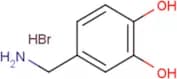
CAS:<p>3,4-Dihydroxybenzylamine hydrobromide inhibits DNA polymerase and melanoma growth, varying with tyrosinase activity.</p>Formula:C7H10BrNO2Purezza:98.49%Colore e forma:Light Beige Crystalline PowderPeso molecolare:220.06Lipase Kit, 25 unique EUCODIS® lipases, recombinant - EL Kit
<p>Lipases belong to the family of esterases and naturally act on triglycerides at lipid-water interfaces. Lipases/esterases can be used as versatile tools in hydrolytic reactions, esterifications and transesterification reactions in industrial and food applications. The Lipase kit contains 25 lipases with different pH and temperature optima and substrate specificity properties.</p>Protein phosphatase 2C
CAS:Protein phosphatase 2C is a key enzyme, which is a serine/threonine-specific phosphatase, derived from various organisms including humans, plants, and bacteria. This enzyme plays a pivotal role in cellular signaling by removing phosphate groups from serine and threonine residues on target proteins, a process known as dephosphorylation. This action is crucial for the regulation of diverse cellular functions, including stress responses, cell division, and apoptosis.L 662583
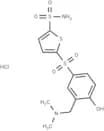
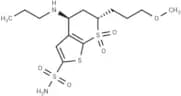
CAS:L 662583 is a topical inhibitor of carbonic anhydrase.Formula:C13H17ClN2O5S3Purezza:98%Colore e forma:SolidPeso molecolare:412.93CK1 δ/CSNK1D Protein, Human, Recombinant (Baculovirus, His)
<p>Expression system: Baculovirus<br>Length: 1-415, Full Length<br>Activity: Not Tested</p>Purezza:85%Colore e forma:Odour Lyophilized PowderRef: TM-TMPH-03771
1mg9.292,00€5µg999,00€10µg1.686,00€20µg2.863,00€50µg3.715,00€100µg4.577,00€200µg5.655,00€500µg7.509,00€(R)-Nepicastat HCl
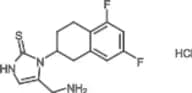
CAS:(R)-Nepicastat HCl (RS-25560-198 HCl), R-enantiomer, inhibits bovine/human dopamine-β-hydroxylase (IC50: 25.1/18.3 nM); not affecting other enzymes/receptors.Formula:C14H15F2N3S·HClPurezza:98%Colore e forma:SolidPeso molecolare:331.81L-693612 HCl
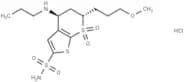
CAS:L-693612 HCl is an inhibitor of carbonic anhydrase.Formula:C14H25ClN2O5S3Purezza:98%Colore e forma:SolidPeso molecolare:433.01PPIE Protein, Human, Recombinant (His)
Peptidyl-prolyl cis-trans isomerase E, also known as Cyclophilin E, Cyclophilin-33, Rotamase E, CYP33, PPIE, is an enzyme which belongs to the cyclophilin-typeColore e forma:Lyophilized PowderPeso molecolare:34 KDa (reducing condition)Ref: TM-TMPJ-01389
1mg2.676,00€5µg119,00€10µg188,00€20µg301,00€50µg551,00€100µg802,00€200µg1.164,00€500µg1.863,00€AHR-15010
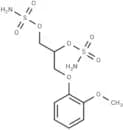
CAS:AHR-15010 is a novel anti-arthritic agent.Formula:C10H16N2O8S2Purezza:98%Colore e forma:SolidPeso molecolare:356.37WES-1
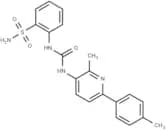
CAS:WES-1 (Compound 8g), a carbonic anhydrase IX inhibitor (Ki: 55.9 μM), exhibits broad-spectrum antiproliferative activity against various cancer cell lines,Formula:C20H20N4O3SPurezza:98%Colore e forma:SolidPeso molecolare:396.46Methazolamide-d6
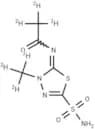
CAS:Methazolamide-d6 is a GC/LC-MS standard for measuring methazolamide, a glaucoma drug that lowers eye pressure and fluid, reduces seizures, and combats ROS.Formula:C5H2D6N4O3S2Colore e forma:SolidPeso molecolare:242.31hCAI/II-IN-4
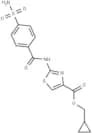
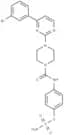
CAS:hCAI/II-IN-4 inhibits hCA I & II (Ki: 16.95 & 15.22 nM), hCA IX (Ki: 27.04 nM), has anti-hypoxia benefits and is low-toxic for AMS research.Formula:C15H15N3O5S2Colore e forma:SolidPeso molecolare:381.43FC11409B
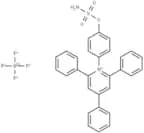
CAS:FC11409B is a CAIX inhibitor, inhibiting breast cancer invasion and metastasis.Formula:C29H23BF4N2O3SColore e forma:SolidPeso molecolare:566.38hCA I-IN-2
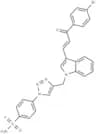
CAS:hCA I-IN-2 (6d) inhibits hCA I (Ki: 18.8 nM) more selectively over II, IX, XII (Ki: 375.1, 1721, 283.9 nM).Formula:C26H20BrN5O3SColore e forma:SolidPeso molecolare:562.44hCAXII-IN-1
CAS:hCAXII-IN-1 selectively inhibits HCA IX/XII, promising for new cancer drug development.Formula:C20H17NO5Colore e forma:SolidPeso molecolare:351.35QPRTase Protein, Human, Recombinant (His)
Nicotinate-Nucleotide Pyrophosphorylase (QPRT) belongs to the nadC/modD family.Colore e forma:Lyophilized PowderPeso molecolare:34 KDa (reducing condition)Ref: TM-TMPJ-00473
1mg2.676,00€5µg119,00€10µg188,00€20µg301,00€50µg551,00€100µg802,00€200µg1.164,00€500µg1.863,00€Carbonic anhydrase inhibitor 7
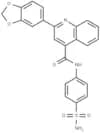
CAS:Potent hCA inhibitor; targets hCA IX, II, XII, I with Ki: 6.5, 7.1, 72.1, 255.8 nM respectively.Formula:C23H17N3O5SColore e forma:SolidPeso molecolare:447.46hCAIX-IN-14
CAS:hCAIX-IN-14 is a potent inhibitor of human CA IX with a K i value of 134.8 nM .Formula:C11H17ClN6O2SColore e forma:SolidPeso molecolare:332.81hCAIX-IN-3
CAS:hCAII-IN-3 (7e) selectively inhibits CA II/IX with Kis of 124.2/30.5 nM, showing promise for cancer treatment.Formula:C21H21BrN6O4SColore e forma:SolidPeso molecolare:533.4hCAIX/XII-IN-4
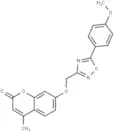
CAS:hCAIX/XII-IN-4 inhibits CAIX/XII with Ki: 4.5 nM (CAXII), 23.6 nM (CAIX), and >10000 nM (CAI/CAII).Formula:C20H16N2O5Colore e forma:SolidPeso molecolare:364.35Carbonic anhydrase inhibitor 11
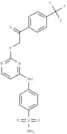
CAS:Potent carbonic anhydrase inhibitor VI targets CA II, IX, XII with Ki: 40, 39, 900 nM respectively.Formula:C19H15F3N4O3S2Colore e forma:SolidPeso molecolare:468.47Telotristat besilate
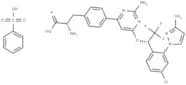
CAS:Telotristat besilate is an inhibitor of tryptophan hydroxylase.Formula:C31H28ClF3N6O6SPurezza:98%Colore e forma:SolidPeso molecolare:705.11L-693612
CAS:L-693612 is an inhibitor of carbonic anhydrase.Formula:C14H24N2O5S3Purezza:98%Colore e forma:SolidPeso molecolare:396.55