Enzima
Gli inibitori enzimatici sono molecole che si legano agli enzimi e ne diminuiscono l'attività. Questi inibitori sono ampiamente utilizzati nella ricerca per studiare la cinetica enzimatica, la regolazione e il ruolo di specifici enzimi nelle vie metaboliche. Gli inibitori enzimatici sono anche fondamentali nello sviluppo di farmaci, poiché molti agenti terapeutici agiscono inibendo enzimi coinvolti in processi patologici. Mirando agli enzimi, questi inibitori possono modulare le vie biochimiche e offrire potenziali trattamenti per varie malattie. Presso CymitQuimica, offriamo una vasta selezione di inibitori enzimatici di alta qualità per supportare le tue ricerche in biochimica, farmacologia e scoperta di farmaci.
Sottocategorie di "Enzima"
- Anidrasi carbonica(192 prodotti)
- Idrossilasi(35 prodotti)
- MPO(2 prodotti)
- Riduttasi(50 prodotti)
- Tirosinasi(72 prodotti)
Trovati 3614 prodotti di "Enzima"
Ordinare per
Purezza (%)
0
100
|
0
|
50
|
90
|
95
|
100
Alteplase
CAS:<p>Alteplase is human plasminogen activator (EC 3.4.21.68, that cleaves plasminogen into enzymatically active form, plasmin), recombinantly expressed in CHO cells. Alteplase belongs to the group of thrombolytic agents, and it has shown to be effective in restoring blood flow by breaking down clots.</p>Formula:C300H465N95O89S7Peso molecolare:7,050.95 g/molPhi29 DNA polymerase, 10U/μL buffer solution
Phi29 DNA polymerase is a polymerase enzyme which has strong strand displacement activity, making it suitable for use in a range of displacement DNA amplification proceduresChondroitinase abc from proteus vulgaris
CAS:Chondroitinase ABC is a bacterial enzyme, which is derived from Proteus vulgaris with the ability to degrade glycosaminoglycans, specifically targeting chondroitin sulfate, dermatan sulfate, and hyaluronic acid. This enzyme's mode of action involves the enzymatic cleavage of β-1,4 linkages between N-acetylgalactosamine and glucuronic acid residues in chondroitin sulfate, resulting in the breakdown of these polyanionic molecules into disaccharides.Protocatechuate 3,4-dioxygenase from pseudomonas sp.
CAS:<p>Protocatechuate 3,4-dioxygenase is a bacterial enzyme, which is sourced from Pseudomonas sp. This enzyme operates by catalyzing the cleavage of aromatic rings in protocatechuate, a derivative of catechol. Its mode of action involves the incorporation of oxygen into protocatechuate, resulting in the formation of beta-carboxy-cis,cis-muconate. This reaction is crucial for the microbial degradation of aromatic compounds, thereby playing a significant role in the biodegradation pathways of lignin-derived aromatic pollutants.</p>Purezza:Min. 95%Glucosyltransferase 204-freeze dried
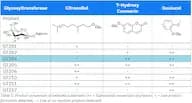
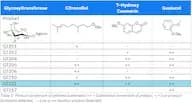
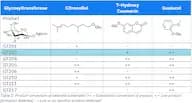
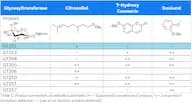
CAS:Glucosyltransferase (GTase) is the enzyme that transfers glucose to another organic molecule (aglycon), establishing glycosidic linkage. UDP-glucose dependent GTases are part of the enzyme family of glucosyltransferases, they are versatile tools in glucosylation reactions. Different GTases have different substrate specificities. For the specificity of GT204 Glucosyltransferase, please see Table 1 that lists the available GTases with GT204 highlighted.Color: beigeForm: lyophilisateProtein content: 0.5 mg/mgThe glucosyltransferase was tested in a glucosylation reaction of a preferred substrate. High conversion after up to 24 h reaction time was observed. Not sure which GTase to choose? Consider our Glucosyltransferase kit, which contains all 8 Glucosyltransferases.Glucosyltransferase 211-freeze dried
CAS:<p>Glucosyltransferase (GTase) is the enzyme that transfers glucose to another organic molecule (aglycon), establishing glycosidic linkage. UDP-glucose dependent GTases are part of the enzyme family of glucosyltransferases, they are versatile tools in glucosylation reactions. Different GTases have different substrate specificities. For the specificity of GT211 Glucosyltransferase, please see Table 1 that lists the available GTases with GT211 highlighted.Color: beigeForm: lyophilisateProtein content 0.7 mg/mgThe glucosyltransferase was tested in a glucosylation reaction of a preferred substrate. High conversion after up to 24 h reaction time was observed.<br>Not sure which GTase to choose? Consider our Glucosyltransferase kit, which contains all 8 Glucosyltransferases.</p>Glucosyltransferase 227-freeze dried
CAS:Glucosyltransferase (GTase) is the enzyme that transfers glucose to another organic molecule (aglycon), establishing glycosidic linkage. UDP-glucose dependent GTases are part of the enzyme family of glucosyltransferases, they are versatile tools in glucosylation reactions. Different GTases have different substrate specificities. For the specificity of GT227 Glucosyltransferase, please see Table 1 that lists the available GTases with GT227 highlighted.Color: beigeForm: lyophilisateProtein content: 0.8 mg/mgThe glucosyltransferase was tested in a glucosylation reaction of a preferred substrate. High conversion after up to 24 h reaction time was observed. Not sure which GTase to choose? Consider our Glucosyltransferase kit, which contains all 8 Glucosyltransferases.Peroxidase Kit, 2 peroxidases with different substrate specificities
<p>Peroxidases can be utilized as enzymes catalyzing e.g. aromatic ring hydroxylation, epoxidation, halogenation, N- or S-oxidation, ether cleavage and alcohol/aldehyde oxidation reactions. The Peroxidase Kit contains 2 recombinant peroxidases of bacterial and fungal origin with a temperature optimum in the 20-40 °C range and pH optimum between pH 5 and 8.</p>Purezza:Min. 95%Glucosyltransferase 203-freeze dried
CAS:<p>Glucosyltransferase (GTase) is the enzyme that transfers glucose to another organic molecule (aglycon), establishing glycosidic linkage. UDP-glucose dependent GTases are part of the enzyme family of glucosyltransferases, they are versatile tools in glucosylation reactions. Different GTases have different substrate specificities. For the specificity of GT203 Glucosyltransferase, please see Table 1 that lists the available GTases with GT203 highlighted.Color: beigeForm: lyophilisateProtein content: 0.5 mg/mgThe glucosyltransferase was tested in a glucosylation reaction of a preferred substrate. High conversion after up to 24 h reaction time was observed.<br>Not sure which GTase to choose? Consider our Glucosyltransferase kit, which contains all 8 Glucosyltransferases.</p>Glucosyltransferase 210-freeze dried
CAS:Glucosyltransferase (GTase) is the enzyme that transfers glucose to another organic molecule (aglycon), establishing glycosidic linkage. UDP-glucose dependent GTases are part of the enzyme family of glucosyltransferases, they are versatile tools in glucosylation reactions. Different GTases have different substrate specificities. For the specificity of GT210 Glucosyltransferase, please see Table 1 that lists the available GTases with GT210 highlighted.Color: beigeForm: lyophilisateProtein content: 0.8 mg/mg The glucosyltransferase was tested in a glucosylation reaction of a preferred substrate. High conversion after up to 24 h reaction time was observed. Not sure which GTase to choose? Consider our Glucosyltransferase kit, which contains all 8 Glucosyltransferases.NEK9 Protein, Human, Recombinant (His)
Expression system: E. coli<br>Length: 52-308, Partial<br>Activity: Not TestedPurezza:85%Colore e forma:SoildPeso molecolare:36.5 kDa (Predicted); 37 kDa (Reducing conditions)Glucosyltransferase 201-freeze dried
CAS:Glucosyltransferase (GTase) is the enzyme that transfers glucose to another organic molecule (aglycon), establishing glycosidic linkage. UDP-glucose dependent GTases are part of the enzyme family of glucosyltransferases, they are versatile tools in glucosylation reactions. Different GTases have different substrate specificities. For the specificity of GT201 Glucosyltransferase, please see Table 1 that lists the available GTases with GT201 highlighted.Color: beigeForm: lyophilisateProtein content: 0.5 mg/mgThe glucosyltransferase was tested in a glucosylation reaction of a preferred substrate. High conversion after up to 24 h reaction time was observed. Not sure which GTase to choose? Consider our Glucosyltransferase kit, which contains all 8 Glucosyltransferases.Glucosyltransferase 205-freeze dried
CAS:<p>Glucosyltransferase (GTase) is the enzyme that transfers glucose to another organic molecule (aglycon), establishing glycosidic linkage. UDP-glucose dependent GTases are part of the enzyme family of glucosyltransferases, they are versatile tools in glucosylation reactions. Different GTases have different substrate specificities. For the specificity of GT205 Glucosyltransferase, please see Table 1 that lists the available GTases with GT205 highlighted.Color: beigeForm: lyophilisateProtein content: 0.5 mg/mgThe glucosyltransferase was tested in a glucosylation reaction of a preferred substrate. High conversion after up to 24 hr reaction time was observed.<br>Not sure which GTase to choose? Consider our Glucosyltransferase kit, which contains all 8 Glucosyltransferases.</p>Enteropeptidase
CAS:<p>Enteropeptidase (historic name entorokinase; EC 3.4.21.9) is a proteolytic enzyme (proteinase) that activates trypsinogen into its active form, trypsin. One unit of enteropeptidase will produce 1.0 nmole of trypsin from trypsinogen per min at pH 5.6 and 25 °C.</p>Purezza:Min. 95%L-Glutamic dehydrogenase (nadp) from proteus sp.
CAS:<p>L-Glutamic dehydrogenase (NADP+ dependent, from proteus sp., EC 1.4.1.4) is an enzyme that catalyzes the following reaction: L-glutamate + H2O + NADP+ ⇌ 2-oxoglutarate + NH3 + NADPH + H+ One unit of L-Glutamic dehydrogenase will generate 1.0 μmole of 2-oxoglutarate from L-glutamate per min at pH 8.3, 30 °C and the presence of NADPH and ammonium. NADP+ is available here and NADPH is available here, depending on whether you require the reaction to proceed from left to right or from righ to left, respectively.</p>Purezza:Min. 95%Peso molecolare:300 g/molLacBuster® - S 2000 IU, β-lactamase I & II, lyophilized, γ irradiated - EBL023.2
LacBuster®-S 2000 is a solid and Gamma-irradiated, freeze-dried, broad range beta-lactamase formulation with 2000 IU beta-lactamase II and 20000 IU beta-lactamase I activity per vial.Glutaminase from escherichia coli
CAS:Glutaminase (glutaminase I, L-glutaminase, glutamine aminohydrolase; EC 3.5.1.2) is an enzyme that catalyzes the following reaction: L-glutamine + H2O → L-glutamate + NH4+ One unit of glutaminase will convert 1.0 μmole of L-glutamine into L-glutamate per min at pH 4.9 and 37 °C.Purezza:Min. 95%Sucrose phosphorylase, recombinant, expressed in E. coli, ≥45 units/mg
CAS:Sucrose phosphorylase (sucrose glucosyltransferase, disaccharide glucosyltransferase, systemic name Sucrose:orthophosphate α-D-glucosytransferase; EC 2.4.1.7) is an enzyme that catalyzes the following reaction: sucrose + Pi ⇌ D-fructose + α-D-glucose-1-phosphate One unit of Sucrose phosphorylase will produce 1.0 μmole of D-fructose per minute in the presence of sucrose and phosphate at pH 7.6 and 25 °C.Neuraminidase from Vibrio Chloerae
CAS:<p>Neuraminidase (Exo-α-sialidase, sialidase, systematic name acetylneuraminyl hydrolase; EC 3.2.1.18) is an enzyme that catalyzes hydrolysis of glycosidic linkages of neuraminic acids. As it is exo-hydrolase, it hydrolyzes terminal N- or O- acylneuramic acid units, that are linked by α2,3-, α2,6-, and α2,8- glycosidic bonds. One unit of neuraminidase will hydrolyze 1 μmol N-acetyl-neuraminosyl-D-lactose under optimal conditions.</p>Formula:C21H25NO11Purezza:(Activity U/Ml) ≥ 0.00Peso molecolare:467.42 g/molODC1 Protein, Human, Recombinant (His)
Ornithine decarboxylase (ODC1) is an enzyme which belongs to the Orn/Lys/Arg decarboxylase class-II family.Colore e forma:Lyophilized PowderPeso molecolare:25 &58 KDa (reducing condition)