Enzima
Gli inibitori enzimatici sono molecole che si legano agli enzimi e ne diminuiscono l'attività. Questi inibitori sono ampiamente utilizzati nella ricerca per studiare la cinetica enzimatica, la regolazione e il ruolo di specifici enzimi nelle vie metaboliche. Gli inibitori enzimatici sono anche fondamentali nello sviluppo di farmaci, poiché molti agenti terapeutici agiscono inibendo enzimi coinvolti in processi patologici. Mirando agli enzimi, questi inibitori possono modulare le vie biochimiche e offrire potenziali trattamenti per varie malattie. Presso CymitQuimica, offriamo una vasta selezione di inibitori enzimatici di alta qualità per supportare le tue ricerche in biochimica, farmacologia e scoperta di farmaci.
Sottocategorie di "Enzima"
- Anidrasi carbonica(192 prodotti)
- Idrossilasi(35 prodotti)
- MPO(2 prodotti)
- Riduttasi(50 prodotti)
- Tirosinasi(72 prodotti)
Trovati 3614 prodotti di "Enzima"
Ordinare per
Purezza (%)
0
100
|
0
|
50
|
90
|
95
|
100
3,4-Dihydroxybenzylamine hydrobromide
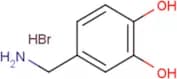
CAS:<p>3,4-Dihydroxybenzylamine hydrobromide inhibits DNA polymerase and melanoma growth, varying with tyrosinase activity.</p>Formula:C7H10BrNO2Purezza:98.49%Colore e forma:Light Beige Crystalline PowderPeso molecolare:220.06Glutathione Reductase, baker's yeast
CAS:<p>Glutathione Reductase, baker's yeast, is an enzyme derived from the yeast species *Saccharomyces cerevisiae*. This enzyme is sourced from baker's yeast, providing a renewable and consistent product for various biochemical applications. Its mode of action involves catalyzing the reduction of glutathione disulfide (GSSG) to the sulfhydryl form glutathione (GSH), using NADPH as an electron donor. This reaction is crucial for maintaining the intracellular redox balance by regenerating GSH, the primary cellular antioxidant.</p>Deoxycytidine Kinase, human, recombinant
<p>Deoxycytidine kinase (dCK, EC 2.7.1.74) is an enzyme that catalyzes the following reaction: dC + ATP → dCMP + ADP It can also use UTP as a donor of the phosphate group, and it can phosphorylate other deoxyribonucleosides (e.g. dA, dG) as well as nucleoside analogues (like clofarabine). One unit of dCK will convert 1.0 µmole of dC and ATP to dCMP and ADP per minute at pH 7.5 and 37°C.</p>Purezza:Min. 95%Luciferase from Vibrio fischeri
CAS:<p>Luciferase enzymes sourced from Vibrio fischeri</p>Colore e forma:PowderSphingomyelinase from bacillus cereus
CAS:<p>Sphingomyelinase (SMase, Sphingomyelin phosphodiesterase, systematic name sphingomyelin cholinephosphohydrolase; EC 3.1.4.12) is an enzyme that hydrolyses sphingomyelin into phosphocholine and ceramide. One unit of sphingomyelinase will hydrolyze 1.0 µmole of chromogenic substrate analogue per minute at pH 7.4 and 37 °C.</p>Purezza:Min. 95%Asparaginase, from E.coli, recombinant, lyophilized - EASP001
Asparaginase (EC 3.5.1.1) is an enzyme that catalyzes the following reaction: Asparagine + H2O → Aspartate + NH4+ Industrially, asparaginase is used to reduce the formation of acrylamide in starch-containing food ingredients and products during production processes. Asparaginase has a temperature optimum in the 30 – 50 °C range and pH optimum between pH 8 and 9. One unit will yield 1.0 μmole of ammonia from asparagine per min.Phosphorylase B from rabbit muscle
CAS:<p>Phosphorylase B is an enzymatic protein, specifically an isoform of glycogen phosphorylase, derived from rabbit muscle. This enzyme plays a critical role in glycogen metabolism by catalyzing the phosphorolytic cleavage of α(1→4) glycosidic bonds in glycogen, releasing glucose-1-phosphate. The rabbit muscle source provides a well-studied model due to its high enzyme activity and availability, facilitating in-depth biochemical and structural analysis.</p>Purezza:Min. 95%Ribonuclease T1 from aspergillus oryzae
CAS:<p>Ribonuclease T1 is an endonuclease enzyme, which is derived from the fungus Aspergillus oryzae. It specifically cleaves single-stranded RNA at the 3' end of guanosine residues, which involves hydrolyzing the phosphodiester bond to produce 3′-phosphomononucleotides and 5′-hydroxylated oligonucleotides. This enzyme’s high specificity and catalytic efficiency make it valuable for various applications.</p>Purezza:Min. 95%Formaldehyde Dehydrogenase
CAS:Formaldehyde dehydrogenase (EC 1.2.1.46) is an enzyme that catalyzes the following reaction: formaldehyde + NAD+ + H2O ⇌ formate + NADH + H+ One unit of formaldehyde dehydrogenase will convert 1.0 µmole of formaldehyde to formic acid per minute at pH 7.5 and 37°C in the presence of NAD+.NAD+ is available here.Amidase, from Rhodococcus sp., recombinant, lyophilized - EAM02
CAS:Amidase (EC 3.5.1.4) is a hydrolase acting on carbon-nitrogen bonds in linear amides and can be used in the hydrolysis of amides to acids. Amidase 02 is of bacterial origin (R. erythropolis and has been produced in E.coli).Protease from Streptomyces griseus
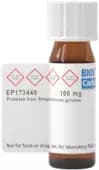
CAS:<p>Protease enzymes break down proteins and are essential for many biological processes, including digestion, cellular regulation and blood clotting. They are also used in many industrial and biotechnological applications for example in food processing and in detergents.</p>Purezza:Min. 95%Colore e forma:PowderCarboxypeptidase Y, from S. cerevisiae, recombinant, lyophilized - ECPY001
CAS:Carboxypeptidase Y (EC 3.4.16.1) is an exopeptidase enzyme. It hydrolyzes peptide bonds of C-terminal residues and it remains active in the presence of urea at low to moderate concentrations. One unit of the Carboxypeptidase Y will hydrolyze 1.0 μmole of a chromogenic peptide substrate, releasing C-terminal alanine and generating a light-absorbing product. Carboxypeptidase Y has been obtained from yeast S. cerevisiae, has a broad substrate specificity and can therefore be used in sequence analysis of proteins. Carboxypeptidase Y has a temperature optimum in the 20 – 30 °C range and pH optimum between pH 6 and 7.Proteinase, Bacillus subtilis, sutilain
CAS:Proteinase, Bacillus subtilis, sutilain is a proteolytic enzyme, which is derived from the bacterium Bacillus subtilis. This enzyme exhibits a serine-type mechanism of action, characterized by its ability to cleave peptide bonds in proteins efficiently. It catalyzes the hydrolysis of proteins into peptides and amino acids, facilitating the breakdown of complex proteins into simpler, soluble forms.Purezza:Min. 95%Colore e forma:PowderC. rugosa Lipase 01, CRL 1 from Candida rugosa - ELCR01
Lipases belong to the family of esterases and naturally act on triglycerides at lipid-water interfaces. Lipases/esterases can be used as versatile tools in hydrolytic reactions, esterifications and transesterification reactions in industrial and food applications. The Lipase 01 from the yeast Candida rugosa has a temperature optimum in the 30 - 50 °C range and pH optimum between pH 7 and 8.C. rugosa Lipase 03, CRL 3 from Candida rugosa - ELCR03
Lipases belong to the family of esterases and naturally act on triglycerides at lipid-water interfaces. Lipases/esterases can be used as versatile tools in hydrolytic reactions, esterifications and transesterification reactions in industrial and food applications. The Lipase 03 from the yeast Candida rugosa has a temperature optimum in the 30 - 50 °C range and pH optimum between pH 7 and 8.Ribonuclease A
CAS:<p>Ribonuclease A (RNase A) is widely used to break down RNA in DNA purification. RNase A catalyzes the endonucleolytic cleavage of phosphodiester bonds of RNA.</p>Chymase
CAS:Chymase (alternative names mast cell protease 1, mast cell serine proteinase, skeletal muscle protease, EC 3.4.21.39) is a serine protease, found in mast cells and basophil granulocytes.Purezza:Min. 95%Serratiopeptidase
CAS:<p>Serratiopeptidase (serratio peptidase, serratia peptidase, serrapeptidase, serratia E-15 protease, serralysin, serrapeptase; EC 3.4.24.40) is a proteolitic enzyme (proteinase) that is produced by Serratia marcescens.</p>Purezza:Min. 95%Colore e forma:PowderC. rugosa Lipase 02, CRL 2 from Candida rugosa - ELCR02
Lipases belong to the family of esterases and naturally act on triglycerides at lipid-water interfaces. Lipases/esterases can be used as versatile tools in hydrolytic reactions, esterifications and transesterification reactions in industrial and food applications. The Lipase 02 from the yeast Candida rugosa has a temperature optimum in the 30 - 50 °C range and pH optimum between pH 7 and 8.Chloroperoxidase, aqueous suspension
CAS:<p>Chloroperoxidase (also known as chloride peroxidase, systemic name chloride:hydrogen-peroxide oxidoreductase, EC 1.11.1.10) is an enzyme that catalyzes chlorination of organic compounds. Overall reaction is the following:R-H + Cl− + H2O2 + H+ → R-Cl + 2 H2O; reaction intermediate is hypochlorous acid (HOCl). One unit of chloroperoxidase will convert 1.0 μmole of substrate per minute.</p>Colore e forma:Powder